
What Is a Runabout Boat? A Beginner’s Guide to the Most Versatile Powerboat on the Water
If you’ve been browsing boat rentals or shopping for your first powerboat, you’ve probably run across the term “runabout” and wondered what it actually means. So, what is a runabout boat? In short, it’s a small, open-deck motorboat – typically 16 to 30 feet long – built for general-purpose day use. Think cruising, watersports, fishing, and sandbar hopping, all from the same hull.
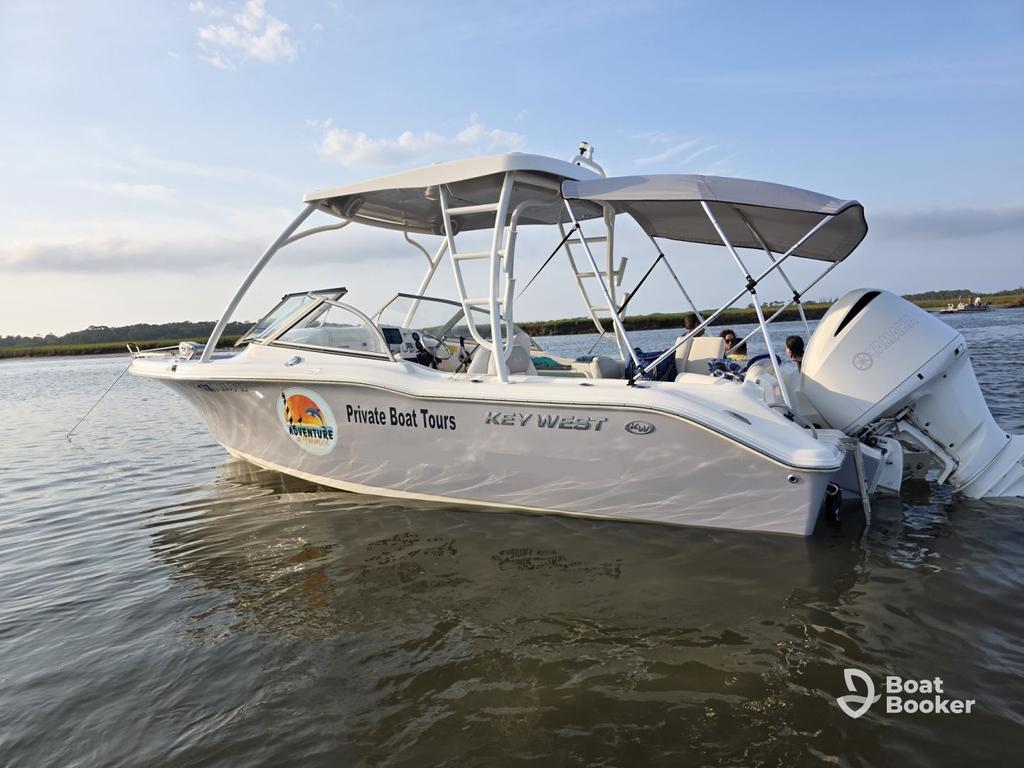
Here’s the part that trips most people up: “runabout” isn’t a single boat design. It’s an umbrella term. Bowriders, deck boats, jet boats, and cuddy cabins are all runabouts. They share a few core traits – they’re powerboats, they’re relatively small, they carry four to eight passengers, and they don’t have a full cabin for overnight stays.
Beyond that, the designs vary quite a bit. This guide breaks down the different types, compares runabouts to the boats people most often confuse them with, covers what they cost, and explains what chartering one is actually like.
What Is a Runabout Boat?
A runabout is any small motorboat designed to “run about” – hop from spot to spot on a lake, river, or coastal waterway without a specific single purpose. Most runabouts sit between 16 and 30 feet in length, carry four to eight people, and run on either an outboard motor or a sterndrive (inboard/outboard) setup.
What defines them is versatility. Unlike a bass boat built purely for fishing or a wakeboard boat engineered for towsports, a runabout handles a little bit of everything reasonably well. You can tow a tube in the morning, anchor at a sandbar for lunch, and cruise into a sunset – all without switching boats.
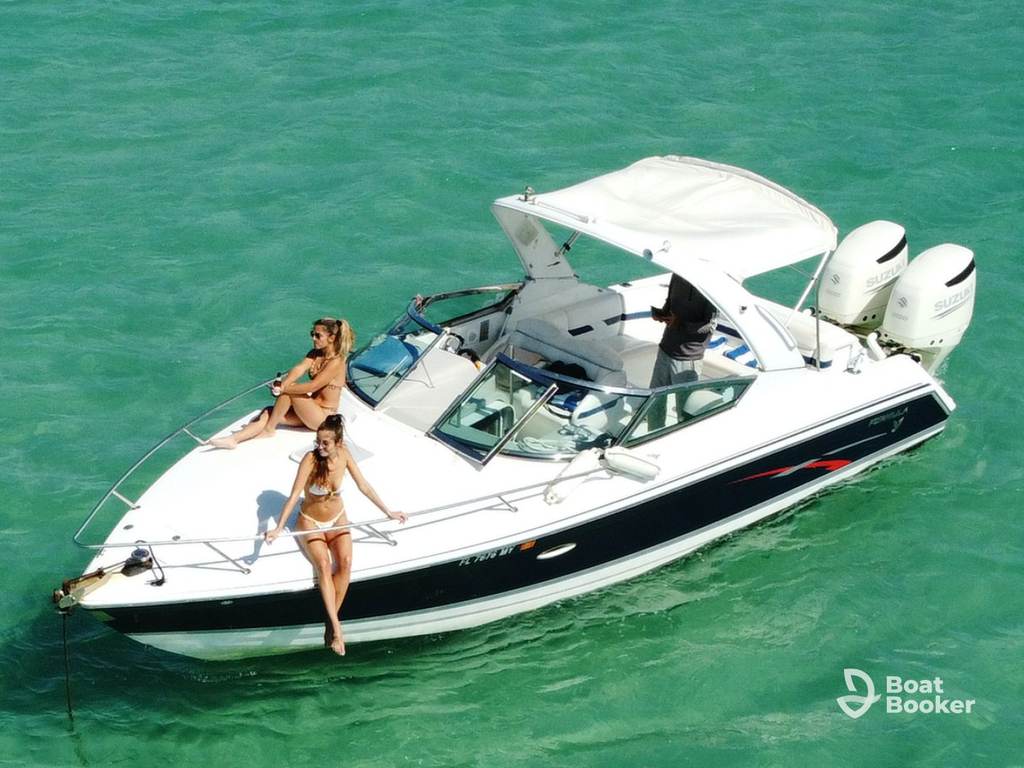
Most are also light enough to trailer behind a standard SUV or truck. That makes them popular with families who boat on different lakes throughout the season.
The open-deck layout is another hallmark. There’s no enclosed cabin blocking your view or eating up deck space. Some subtypes (like the cuddy cabin) tuck a small sheltered compartment under the bow, but you’re still fundamentally out in the open air. That’s part of the appeal – and part of the limitation, since runabouts aren’t built for overnight trips or rough offshore conditions.
A Brief History of Runabout Boats
The first runabouts appeared in the 1920s as small, fast, beautifully varnished wooden boats built to take advantage of newly available outboard motors. Builders like Chris-Craft and Gar Wood turned out mahogany hulls that doubled as status symbols – they were sometimes called “gentleman’s racers.” If you’ve ever seen a glossy wooden speedboat at a marina or a vintage boat show, that’s the lineage.
After World War II, aluminum hulls entered the picture. They were cheaper to produce and easier to maintain than wood, which opened runabouts up to a much wider audience. But the real revolution came in the 1960s with fiberglass. Fiberglass hulls didn’t rot, didn’t need varnishing, and could be molded into shapes that improved performance. Within a decade, fiberglass runabouts dominated the market – and they still do today.
One fun piece of trivia: the world’s largest runabout, Pardon Me, stretches 48 feet long and lives at the Antique Boat Museum in Clayton, New York. It was built in 1948 and originally powered by a 1,500-horsepower Allison aircraft engine. Most runabouts you’ll encounter are considerably more modest.
Types of Runabout Boats
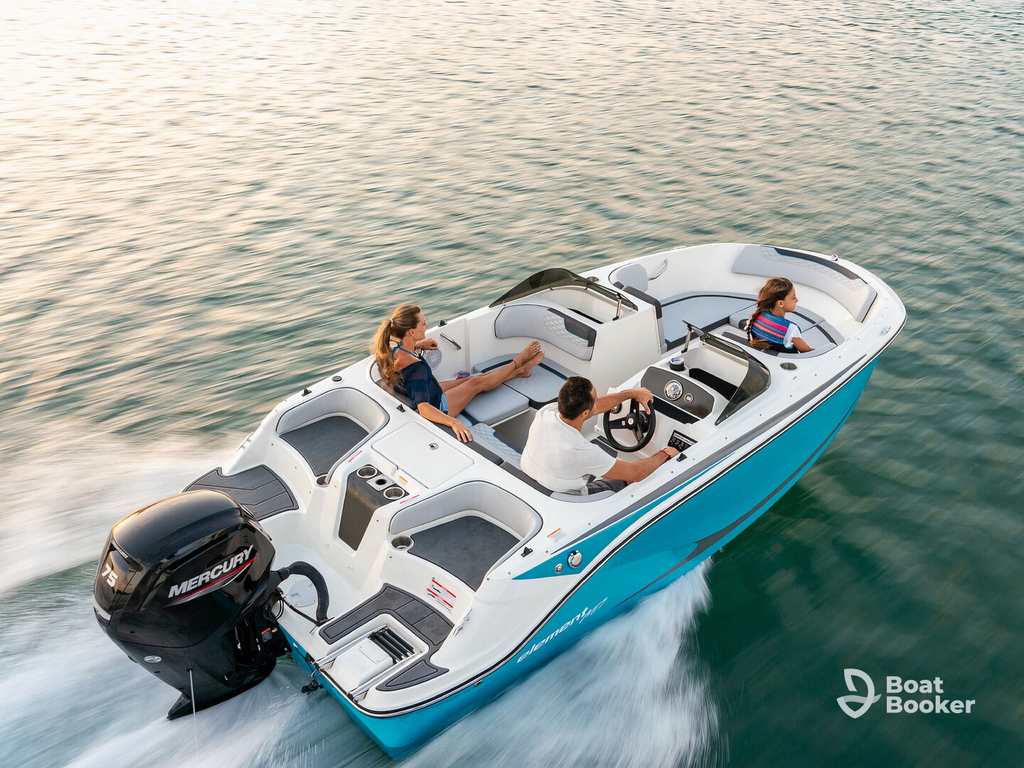
Since “runabout” covers a range of designs, it helps to know the four main subtypes. Each one tweaks the basic formula in a different direction.
Bowrider
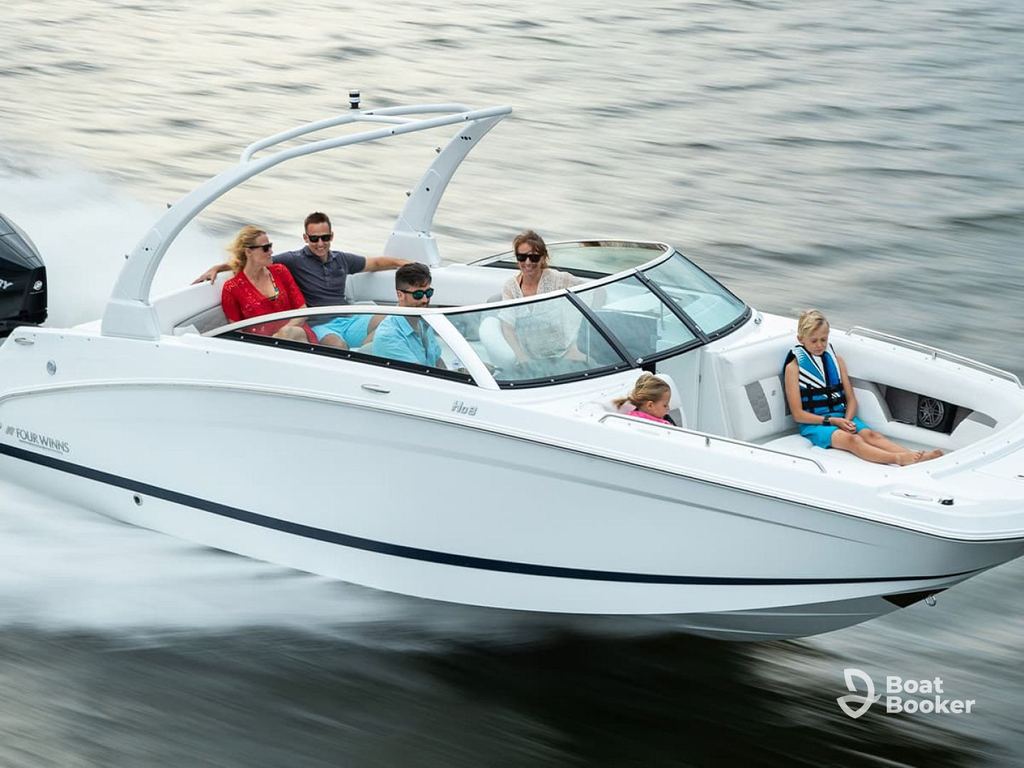
The bowrider is the most common type of runabout you’ll see on the water. Its defining feature is an open bow area with built-in seating, so passengers can sit up front and enjoy the view and the breeze. Bowriders typically have a V-shaped hull that cuts through chop well, which makes them feel sporty and responsive at the helm.
Most bowriders range from 17 to 27 feet. They’re the go-to choice for families who want a mix of cruising, swimming, and light watersports. If someone says “runabout” without any other qualifier, they’re usually picturing a bowrider.
Deck Boat
A deck boat takes the runabout concept and widens it out. The beam (width) is noticeably broader than a bowrider’s, and the bow flares into a more open, flattened shape. The result is more deck space and higher passenger capacity – some deck boats carry 10 to 12 people comfortably.
The trade-off is handling. That wider hull doesn’t slice through waves as cleanly as a bowrider’s V-hull, so deck boats feel a bit less nimble at speed. They shine on calm lakes and rivers where stability and elbow room matter more than sporty cornering.
Cuddy Cabin
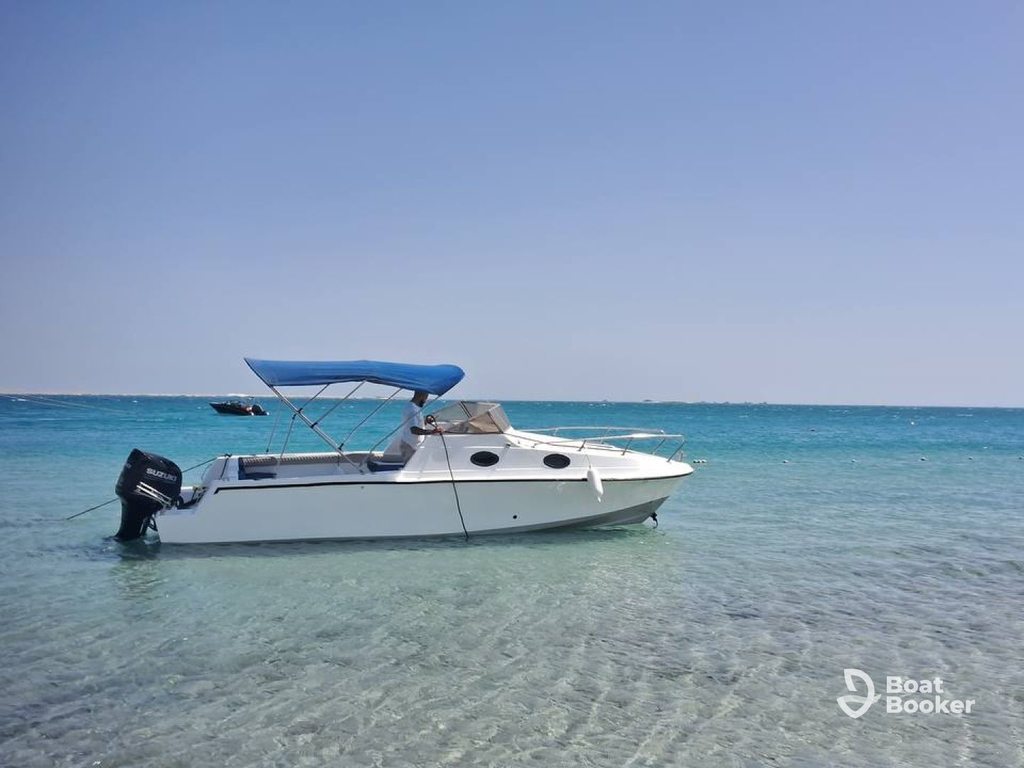
A cuddy cabin runabout tucks a small enclosed compartment beneath the bow. It’s not a full cabin – you won’t find a galley or a head in most of them – but it gives you a lockable space to stow gear, escape a rain shower, or let a kid nap out of the sun. Some larger cuddies squeeze in a basic V-berth for a quick overnight, though comfort is minimal.
The cuddy’s downside is that the enclosed bow eliminates the open seating area you’d get on a bowrider. You’re trading social space for shelter and storage.
Jet Boat
Jet boats replace the traditional propeller with a jet drive – water is sucked in through an intake and shot out the back at high pressure. This makes them extremely maneuverable. They can spin in tight circles, stop quickly, and operate in shallow water without worrying about a prop striking the bottom.
Jet boats are popular on rivers and in watersports-heavy areas. They tend to be noisier than prop-driven runabouts at cruising speed, and they’re less fuel-efficient at lower speeds. But for sheer fun and safety around swimmers (no exposed propeller), they’re hard to beat.
What Can You Do on a Runabout?
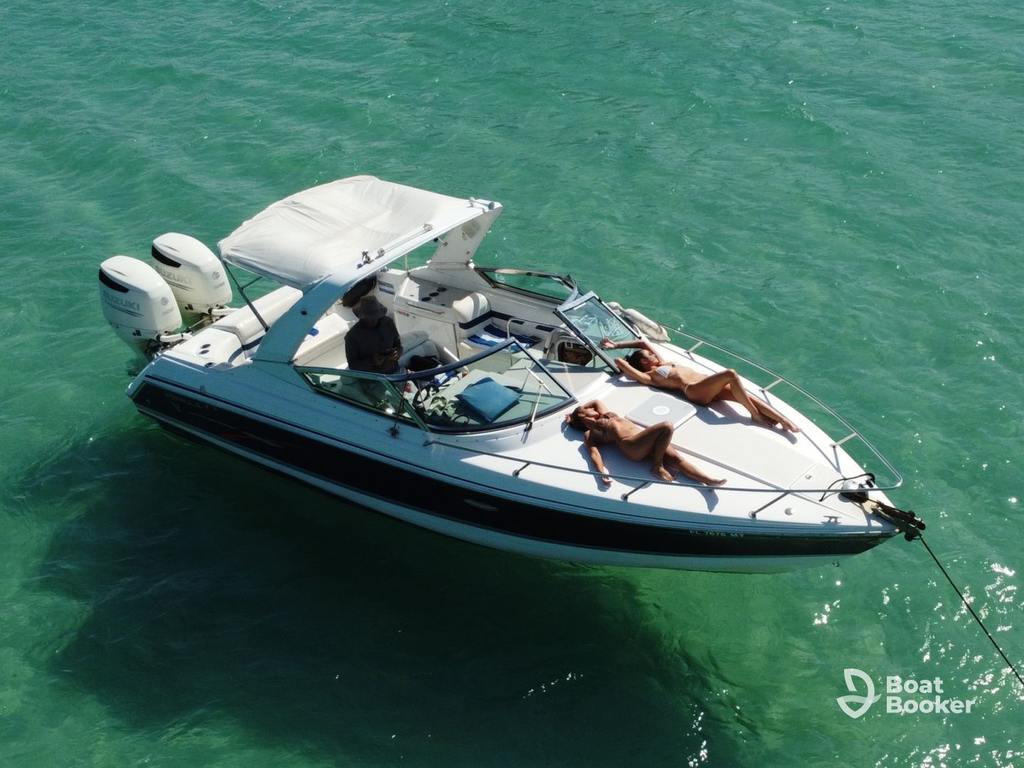
This is where the runabout earns its “most versatile powerboat” reputation. A single afternoon on a runabout can cover a surprising range of activities.
- Watersports are the obvious one. Most runabouts have enough power and the right hull shape to tow tubes, water skis, and wakeboarders. Many come with a tow pylon or ski tow bar either standard or as an add-on.
- Day cruising is probably the most popular use. Pick a destination – a waterfront restaurant, a swimming cove, a neighboring marina – and just go. Runabouts are fast enough to cover real distance in a half-day. They’re also small enough to feel manageable for newer boaters.
- Fishing works too, even though runabouts aren’t purpose-built for it. The open deck gives you room to cast, and you can add a rod holder or a small livewell without much trouble. You won’t have the specialized features of a bass boat or center console, but for casual fishing with friends, a runabout does the job.
- Sandbar hopping and swimming round out the list. Anchor up in shallow water, hop off the swim platform, and float. This is what most runabout owners actually spend most of their time doing – and it’s exactly the kind of day you’ll get on a typical runabout charter.
Runabout vs. Bowrider vs. Deck Boat vs. Pontoon
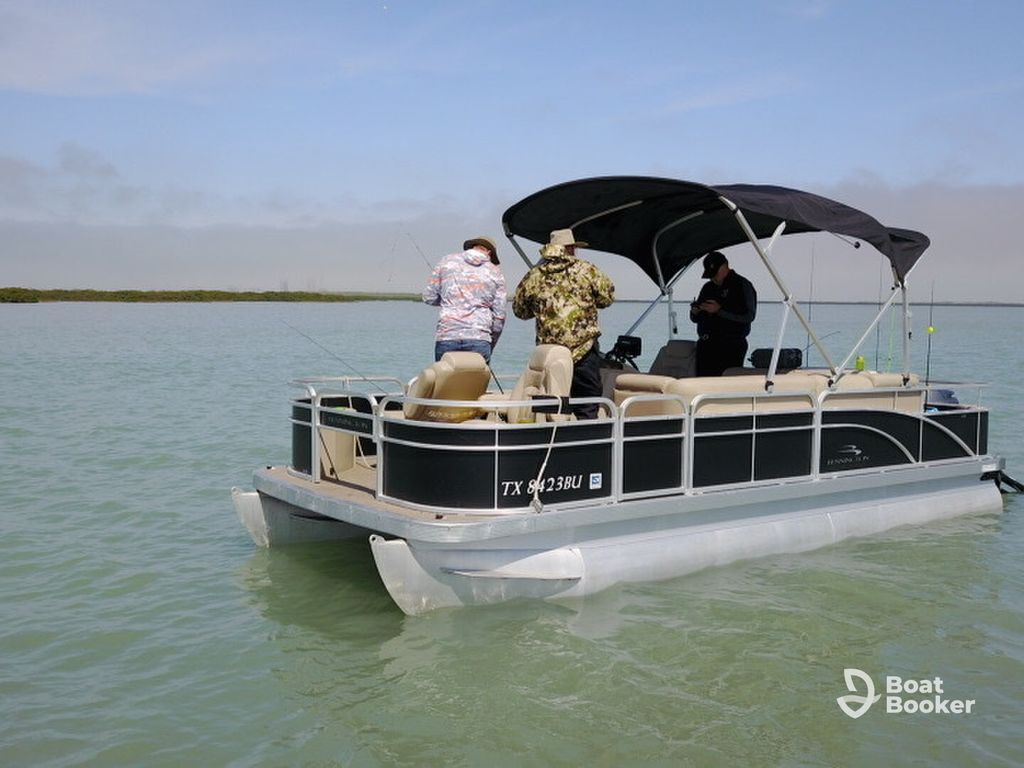
These comparisons come up constantly, so let’s clear them up.
- Runabout vs. bowrider: A bowrider is a runabout. It’s the most popular subtype. When people search “runabout vs. bowrider,” they’re usually comparing the broad category to its most common member – which is a bit like asking “what’s the difference between a car and a sedan?” Every bowrider is a runabout, but not every runabout is a bowrider.
- Runabout vs. deck boat: Deck boats are also runabouts, but they prioritize space over speed. A deck boat’s wider beam and flatter bow give you more room for passengers and gear. A bowrider-style runabout, on the other hand, gives you a sportier ride and better handling in choppy water. Choose a deck boat if your priority is hosting a crowd on a calm lake. Choose a bowrider if you want more agility across conditions.
- Runabout vs. pontoon: This is the most common point of confusion. Pontoons ride on two or three aluminum tubes (pontoons) rather than a traditional hull. They’re wider, more stable, and carry more people – often 10 to 15. But they’re slower, less maneuverable, and not built for watersports beyond gentle tubing. A runabout is faster, sportier, and better in open water. A pontoon is essentially a floating patio – great for relaxing, less great for pulling a wakeboarder.
If you’re curious about center console boats as well, those are a different category entirely – designed primarily for fishing, with the helm in the middle of the boat and 360-degree deck access for casting.
How Much Does a Runabout Cost?
If you’re thinking about buying, here’s the general landscape:
- Entry-level (16–18 ft): $20,000–$40,000 new. These are basic but capable boats from brands like Bayliner and Tahoe.
- Mid-range (18–22 ft): $40,000–$70,000 new. More power, better upholstery, upgraded electronics.
- Premium (22–26 ft+): $70,000–$150,000+. Think Cobalt, Boston Whaler, or Yamaha jet boats with all the options.
The average price of a new runabout lands around $35,000 to $55,000, depending on size and brand. The used market is considerably friendlier – you can find solid boats starting at $5,000 to $10,000, though condition, engine hours, and age vary widely.
Buying isn’t the only option, of course. Chartering or renting a runabout lets you skip the purchase price, insurance, storage, and maintenance entirely. A day charter typically runs $300 to $800 depending on the location, boat size, and whether a captain is included. For people who boat a few times a year rather than every weekend, renting often makes more financial sense.
Pros and Cons of Runabout Boats
Pros:
- Affordable entry point. Runabouts are among the least expensive powerboats to buy or rent.
- Easy to learn. The controls are straightforward, and the size is manageable for first-time operators.
- Trailerable. Most runabouts can be towed behind a mid-size SUV or truck, so you’re not locked into one body of water.
- Versatile. One boat covers cruising, swimming, fishing, and watersports without specialized rigging.
- Fun to drive. The responsive handling and planing speed make runabouts genuinely enjoyable at the helm.
Cons:
- No overnight capability. Without a real cabin, you’re heading back to shore when the day ends. (Cuddy cabins offer a bare-minimum exception.)
- Rough-water limitations. Runabouts handle moderate chop fine, but they’re not offshore boats. Larger waves will slow you down and soak your passengers.
- Higher fuel use. Planing hulls burn more fuel than displacement hulls (like sailboats) or pontoons at low speed. Budget accordingly for longer trips.
- Limited storage. There’s only so much room for coolers, gear, and towables on a 20-foot open deck.
- Exposure to weather. The open layout means no escape from rain, wind, or strong sun beyond what a bimini top provides.
What to Expect on a Runabout Charter
If you’d rather rent than buy – or you just want to try a runabout before committing – chartering is a great way to get a feel for the boat.
Most runabout charters run as half-day (4 hours) or full-day (6–8 hours) trips. Half-days are enough for a cruise around a harbor, some swimming, and a bit of tubing. Full days let you cover more water and combine multiple stops – a morning cove, a lunch spot at a waterfront restaurant, and an afternoon of watersports.
Captained vs. Self-Drive
Captained vs. self-drive is the big decision. A captained charter means a licensed captain handles the boat while you relax. This is ideal if you’re new to boating or unfamiliar with local waters. Self-drive (bareboat) charters let you operate the boat yourself, which usually requires a boating safety certificate or license depending on your state. Some rental companies also offer a brief orientation before handing over the keys.
Charters typically include fuel, basic safety gear (life jackets, fire extinguisher), and sometimes extras like a Bluetooth speaker, cooler, or snorkeling gear. Watersports equipment – tubes, skis, wakeboards – is often available as an add-on for $50 to $100.
Frequently Asked Questions about Runabout Boats
Have you spent time on a runabout – whether renting one for a lake day or owning one yourself? We’d love to hear what you used it for and whether the versatility lived up to the hype. If you’ve got tips for first-timers or think anything in this guide could use an update, drop a comment below.