
What Is a Pontoon Boat? A Beginner’s Guide to the Most Popular Charter Boat in America
If you’ve spent any time near a lake, river, or coastal bay, you’ve seen a pontoon boat – wide, flat, and full of people having a good time. But what exactly makes a pontoon boat a pontoon boat, and why has this style become the most popular platform for guided tours and rentals across the US? Whether you’re planning a dolphin watching trip in Florida or a sunset cruise on the Chesapeake Bay, here’s everything you need to know before you book.
What Makes a Pontoon Boat Different
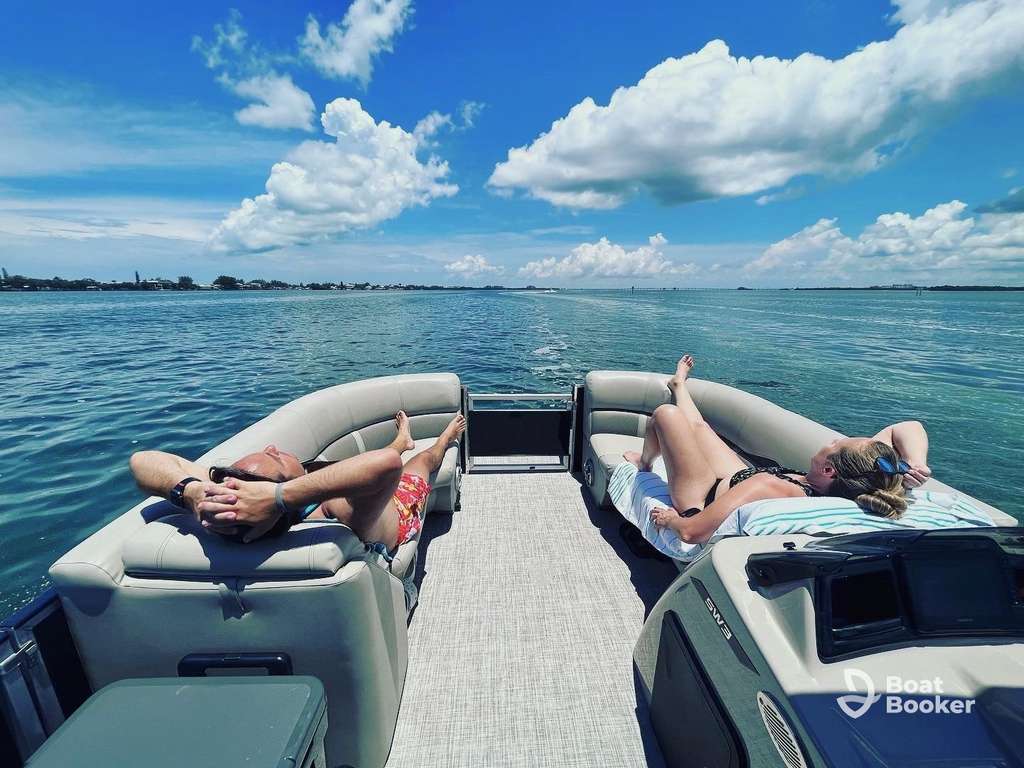
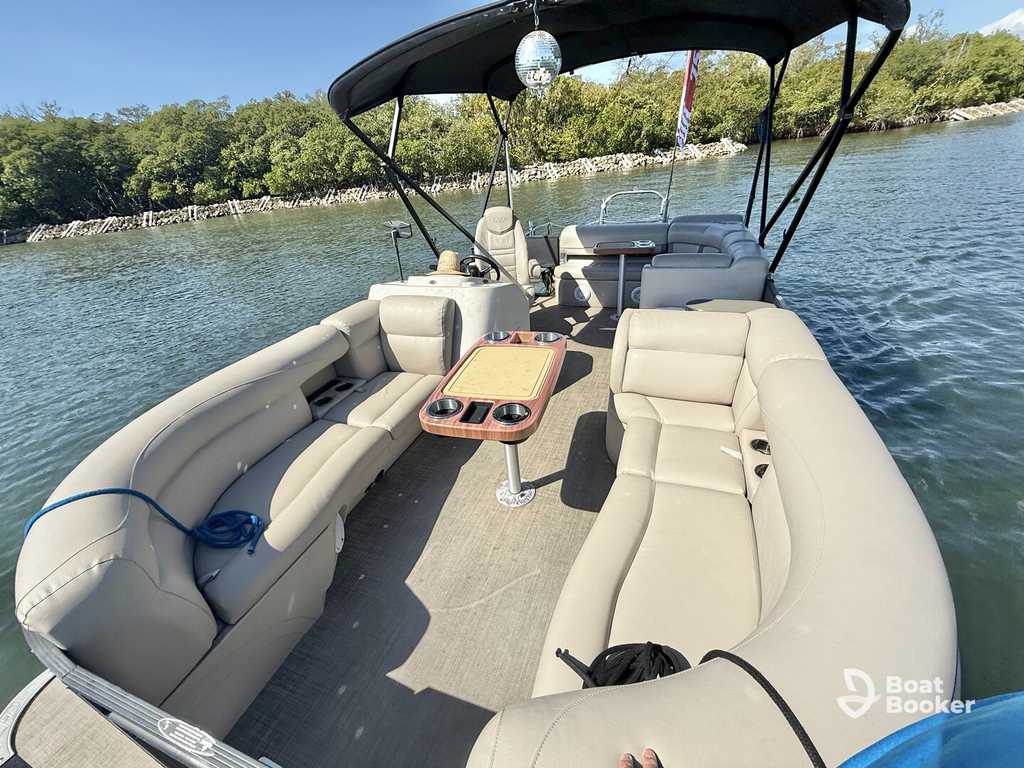
A pontoon boat gets its name from the two hollow aluminum tubes – called pontoons or logs – that run lengthwise beneath the deck. Instead of a traditional hull that cuts through the water, a pontoon floats on top of it, supported by those tubes. The result is an exceptionally wide, flat platform with far more usable deck space than a similarly sized conventional boat.
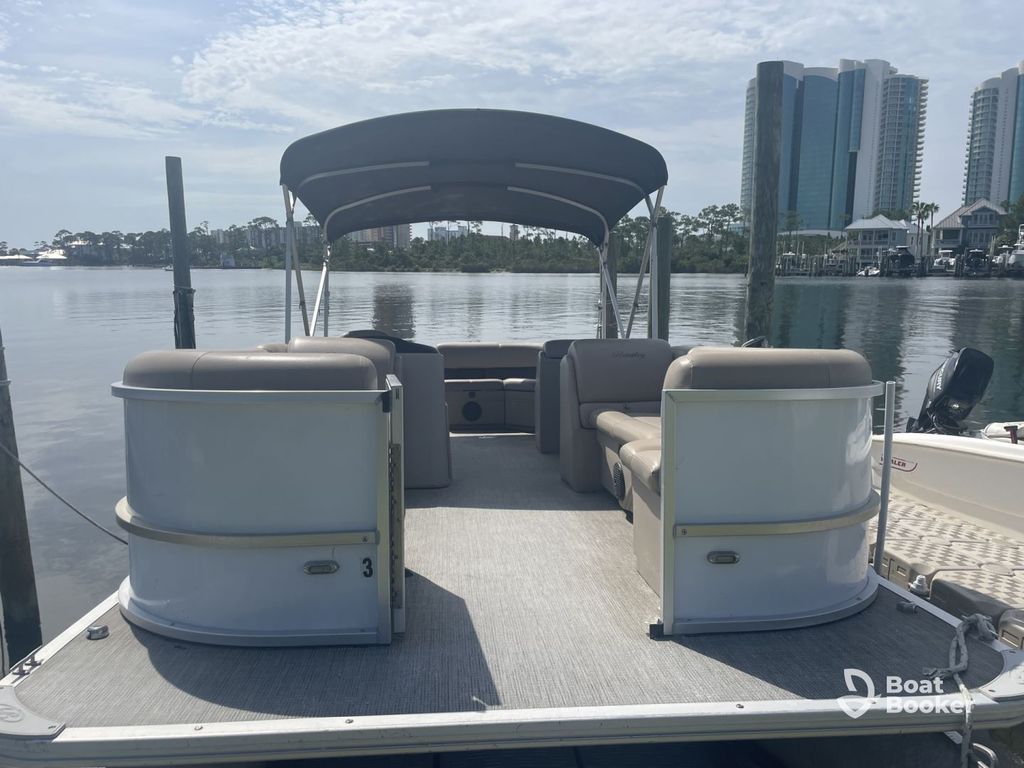
Most pontoon boats range from 18 to 25 feet in length and sit as shallow as 8 inches off the waterline. This is a draft low enough to pull up close to shore without worrying about running aground. The open deck layout typically seats 8 to 13 people comfortably. In addition, you’ll often have built-in lounge seating, a sun pad, and on larger models, a small onboard bathroom.
What Can You Do on a Pontoon Boat?
Quite a lot, actually. Pontoon boats are the workhorses of the charter industry because they can be configured for almost any activity. As such, they work for almost any group.
Common charter types include wildlife and dolphin watching cruises, where the stable, spacious deck gives everyone a clear sightline to the water. Also common are sunset and evening cruises ideal for couples or groups celebrating something. In addition, pontoons are great for island hopping and sandbar visits along sheltered coastal waterways. And last but not least, fishing trips on a pontoon boat gives multiple anglers room to cast without getting tangled up, because of the broad flat deck.
For families, pontoons are a popular choice for tubing and light watersports – the wide deck doubles as a swim platform between runs. And for birthday parties, bachelorette outings, or corporate team days, the layout naturally becomes a floating social space.
Pontoon vs. Tritoon – What’s the Difference?
Some pontoon boats have three tubes instead of two – these are called tritoons. The extra tube adds buoyancy and stability, which allows the boat to carry larger outboard engines and handle choppier conditions more confidently. While a standard two-tube pontoon typically tops out around 35–40 mph, a well-equipped tritoon can reach 50 mph and tow water skiers at full speed without flinching.
For most guided charter experiences, the distinction matters less than it sounds. Both types offer a wide, stable deck and work well for sightseeing, wildlife tours, and casual cruising. If a listing specifies a tritoon, it generally means a slightly more premium experience with better performance on open water.
Pontoon vs. Deck Boat – Which Should You Book?
Deck boats are sometimes confused with pontoons, but they’re built on a different principle. Unlike a pontoon boat, a deck boat uses a traditional V-shaped fiberglass hull. It’s designed to cut through water at speed and handle rougher conditions, but at the cost of interior space. A pontoon, floating on tubes, creates a wider and flatter platform with more room for passengers and gear.
For the vast majority of charter and tour experiences, the pontoon wins on comfort and capacity. It holds more people, provides more deck room, and delivers a smoother ride in calm water. If you’re specifically after high-speed runs in open ocean conditions, a speedboat may be a better fit. On the other hand, for guided tours on lakes, rivers, bays, and sheltered coasts, the pontoon is the right call for most groups.
How Fast Does a Pontoon Boat Go?
Most standard pontoon boats cruise comfortably between 18 and 25 mph and top out around 35–40 mph with a larger engine. That’s fast enough for a pleasant cruise and adequate for tubing or casual watersports.
Charter pontoons typically run at the lower end of that range, since the priority is a smooth, comfortable experience for the group rather than covering distance quickly. For a relaxed sightseeing cruise or a wildlife tour where slow drifting is part of the experience, that pace is more than enough.
How Many People Can Fit on a Pontoon Boat?
Every modern pontoon boat displays a Coast Guard capacity plate near the helm that specifies the maximum number of passengers and weight it can legally carry. As a general guide by boat size:
- 18-foot pontoon: up to 8 people
- 20–22-foot pontoon: up to 10–12 people
- 24–26-foot pontoon: up to 13–15 people
Charter operators list the passenger capacity in their booking listings. One practical note: running one or two passengers under the stated limit tends to be noticeably more comfortable on a longer trip, especially once you factor in coolers and gear.
Are Pontoon Boats Good for Beginners?
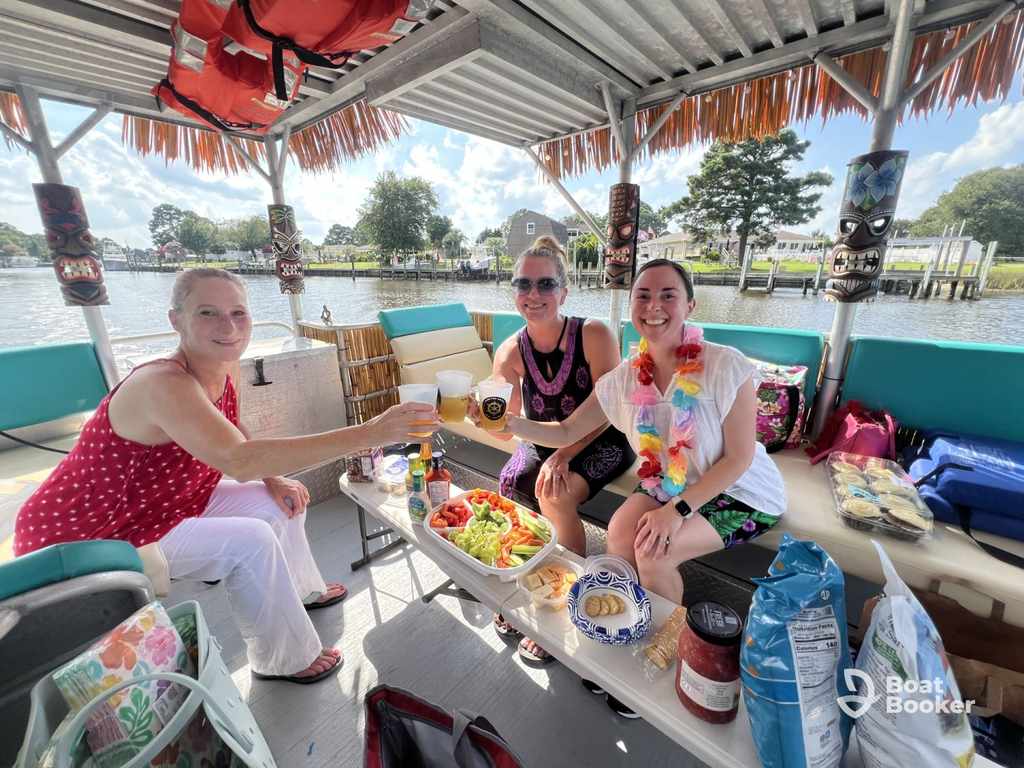
They’re arguably the most beginner-friendly boat type on the water. The wide, flat deck is inherently stable and forgiving – there’s little of the rocking you’d feel on a V-hull boat in mild chop – and pontoons steer intuitively with predictable handling. That’s why first-timers, families with young kids, and anyone who’s a little nervous about being on the water consistently report feeling most at ease on a pontoon.
Book a captained charter and that equation improves further. You show up, the captain handles the navigation, and your only job is to enjoy the trip.
Can You Take a Pontoon Boat in the Ocean?
Pontoon boats are designed for sheltered water – lakes, rivers, bays, inlets, and protected coastal areas. Their flat-bottomed design doesn’t handle ocean swells well, and they’re not good for open-ocean conditions.
That said, a large share of pontoon charter activity happens in coastal saltwater environments – Tampa Bay, Biscayne Bay, the Chesapeake, the intracoastal waterways of the Carolinas. These are technically ocean-adjacent, but sheltered enough for pontoon boats to operate safely and comfortably. If you’re booking a coastal tour, check whether the trip operates in protected waters – for pontoon charters, that’s almost always the case.
How Much Does It Cost to Rent a Pontoon Boat?
You can find pontoon rentals and captained charters everywhere, and pricing varies by location, boat size, and whether a captain guides the boat.
For self-drive rentals, expect to pay roughly $75 to $175 per hour for a standard pontoon, $250 to $600 for a half-day, and $500 to $1,200 for a full day – with premium boats or high-demand markets like South Florida sitting toward the upper end.
Captained charters cost more per hour but include a local guide who knows the best spots, handles the boat, and can narrate everything from dolphin behavior to coastal history. For first-time visitors to an area, that’s usually worth the difference.
To put it in perspective: a new pontoon boat costs between $18,000 and $60,000, with ownership adding $1,500–$2,500 per year in docking fees and $1,000 or more in annual maintenance. Booking a charter is a significantly cheaper way to spend a day on the water – with none of the ownership headaches attached. Discover Boating has a useful breakdown of what to expect if you do eventually decide to buy.
Pontoon boat tours across the US are bookable through BoatBooker, with options ranging from captained tours and fishing trips to self-drive day rentals. You can filter by location, group size, and trip type to find something that fits your plans.
Have you been on a pontoon charter? Whether it was a wildlife cruise along a Florida bay, a sunset sail with the whole group, or a lazy afternoon tubing on a Midwest lake – drop your experience in the comments below. And if you spot anything in this guide that needs updating, corrections are always welcome.