
Sailing in Greece: A First-Timer’s Guide to Routes, Costs, and What to Expect
Sailing in Greece is one of those trips that sounds too good to be true – over 6,000 islands, 8,000 miles of coastline, and warm turquoise water that stays calm enough for beginners in the right spots. But it can also catch you off guard. Depending on where and when you go, conditions range from glassy bays perfect for a family float to open-water channels with 30-knot winds that’ll test even experienced crews.
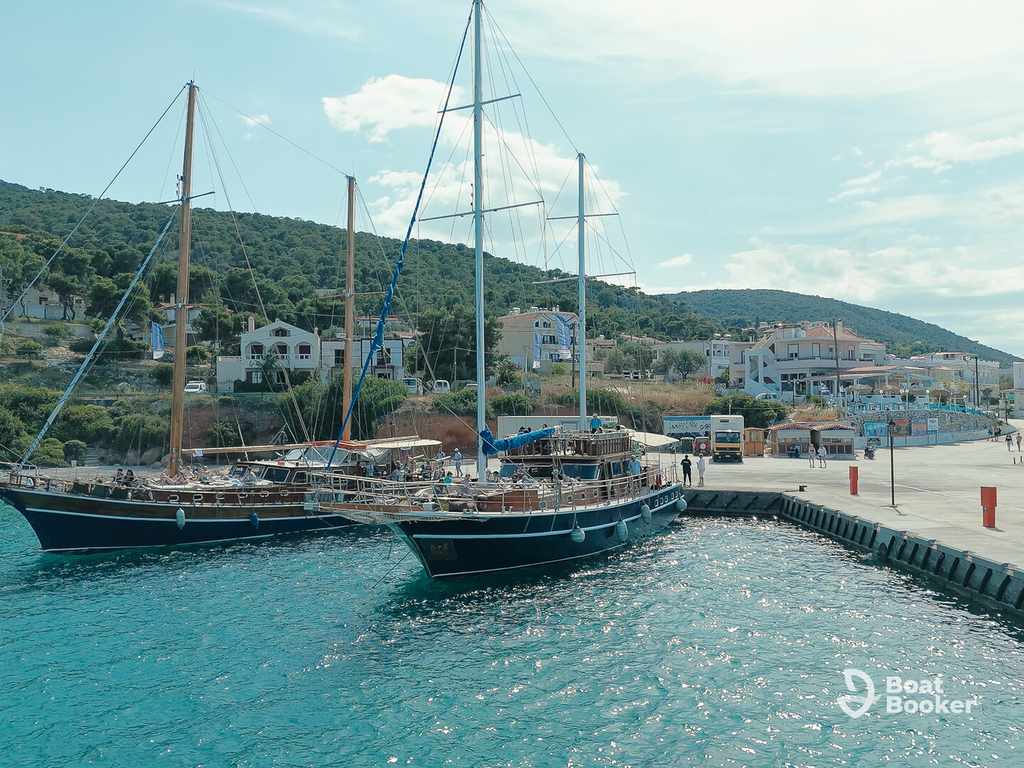
This guide covers what you actually need to know before your first Greek sailing trip. We’ll walk through the four main regions and their difficulty levels, break down realistic costs, and explain the Meltemi wind (and why it matters for your route). We’ll also help you decide whether to go bareboat, skippered, or fully crewed. Whether you’re planning a week of island-hopping with friends or a gentle family cruise through sheltered waters, the goal is to get you on the water with the right expectations.
If you’re brand new to sailing terms, our Sailing 101 guide covers the basics before you dive into route planning.
Why Greece Is One of the Best Places to Sail
Greece has one of the largest charter fleets in the Mediterranean – over 5,600 boats available for hire. There’s a reason for that: the conditions are genuinely hard to beat.
Water temperatures hover around 75–80°F from June through September. Tidal ranges are negligible – so you won’t deal with the current calculations that make places like the English Channel or the US East Coast trickier. Visibility underwater regularly hits 100 feet, which means every anchorage doubles as a snorkeling spot.
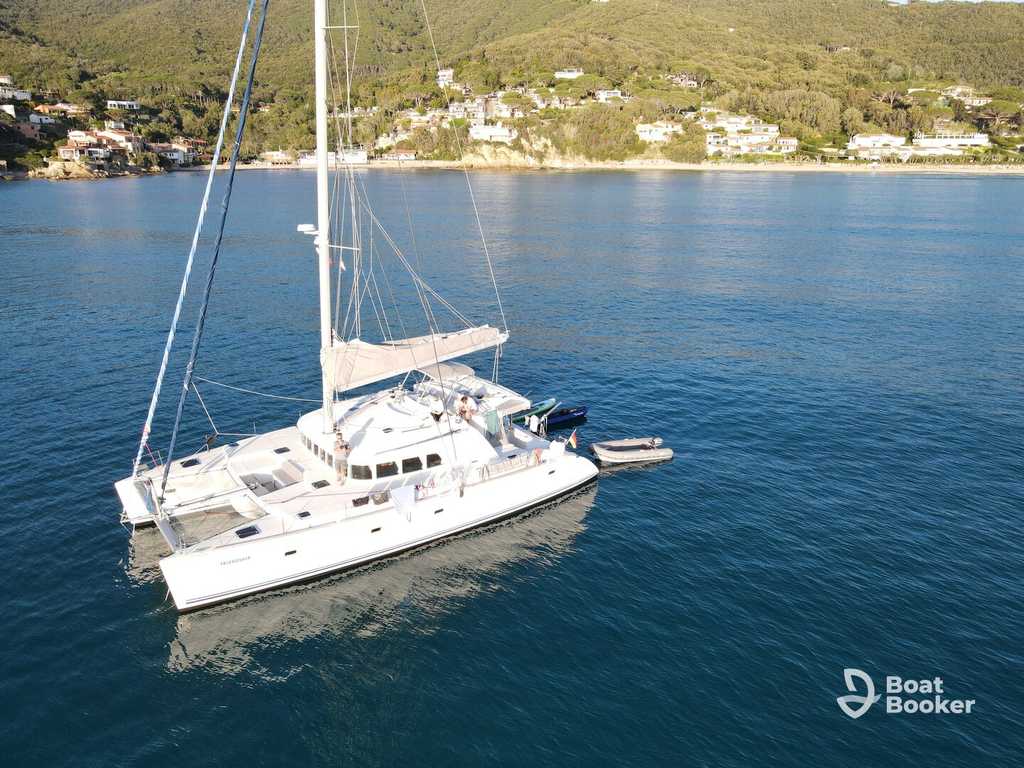
The real draw, though, is the geography. Islands are close together. In the Saronic Gulf, you might sail just 10–15 nautical miles between stops. Even in the Cyclades, most hops are under 30 miles. That means short sailing days, plenty of time ashore, and the freedom to change plans if a cove catches your eye. Add in waterfront tavernas at practically every harbor, and you’ve got a daily rhythm that’s hard to find anywhere else.
The Four Main Sailing Regions (and How to Choose)
Not all Greek water is created equal. The country’s sailing grounds split into four broad regions, each with its own character, wind patterns, and difficulty level. Picking the right one matters more than picking the right islands.
The Saronic Gulf
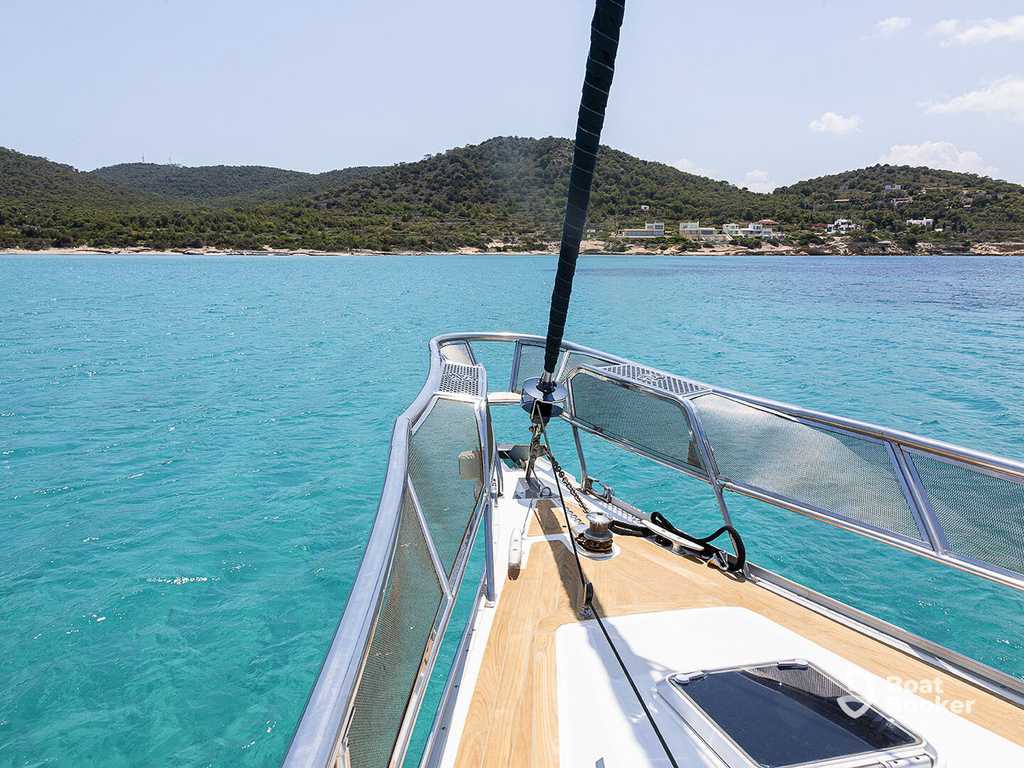
The Saronic Gulf is Greece’s sailing nursery. Tucked between the Attica peninsula and the Peloponnese, it’s sheltered from the Aegean’s bigger winds – typically two Beaufort forces lower than what you’d find in the Cyclades. Islands like Aegina, Poros, Hydra, and Spetses sit within short hops of each other. You can base out of Athens marinas like Alimos or Lavrion.
This is the best region for absolute beginners and families with young kids. Distances are short, seas are calm, and you’re never far from the mainland if plans change.
The Ionian Islands
Greece’s west coast is a different world from the Aegean. The Ionian islands – Corfu, Lefkada, Kefalonia, Ithaca, and Zakynthos – are lush and green, with gentle Maistro winds that blow at 10–20 knots in summer. The Meltemi doesn’t reach here, so the Ionian is a reliable choice for relaxed sailing from May through October.
Lefkada is the most popular charter base, with Nidri and Lefkada Town offering easy access to sheltered channels. Families and groups who want beautiful scenery without white-knuckle sailing days tend to end up here.
The Cyclades
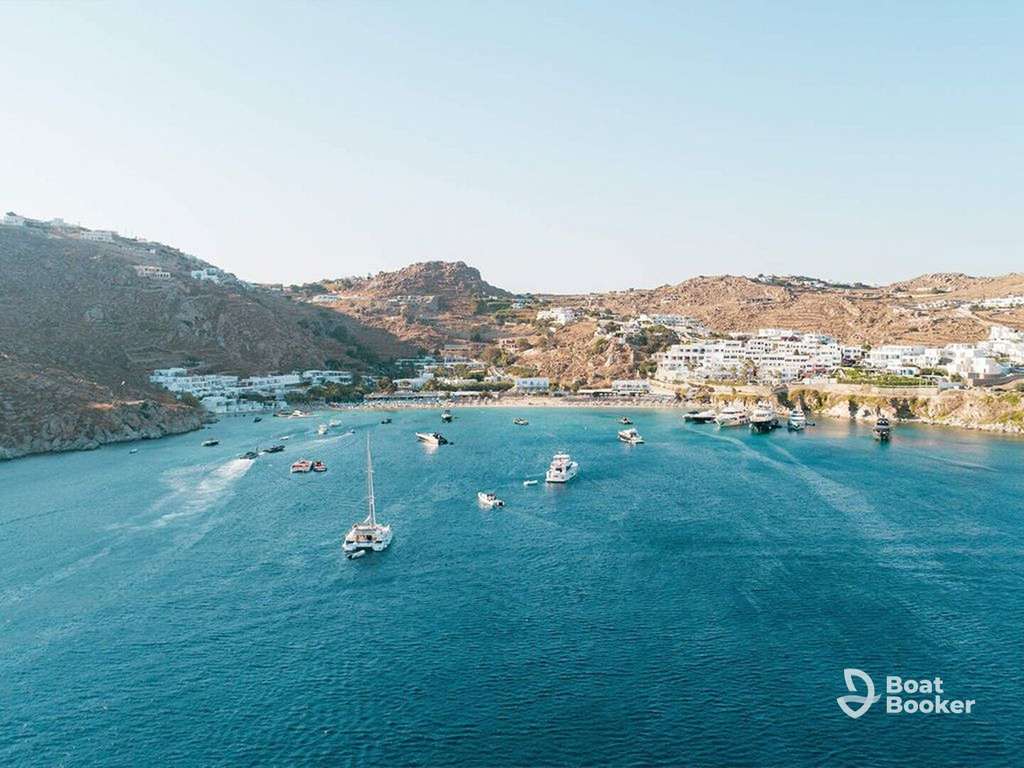
This is the Greece you see on postcards. Mykonos, Santorini, Paros, Milos, Naxos, and Ios are iconic for a reason. But the Cyclades are also home to the Meltemi wind, which can blow 25–35 knots in July and August. Open-water crossings between islands are longer and more exposed than in the Saronic or Ionian.
If you’re experienced, the Cyclades are spectacular. If you’re a first-timer, book a skippered charter or visit in June or September when the Meltemi is milder.
The Dodecanese and Sporades
These two archipelagos are worth considering if you want fewer crowds. The Dodecanese – Rhodes, Kos, Symi – sit in the southeastern Aegean near Turkey, with a mix of moderate winds and rich history. The Sporades – Skiathos, Skopelos, Alonnisos – are northeast of the mainland, greener and quieter, with pine-forested coastlines and marine-protected waters.
Both offer a middle ground: more interesting sailing than the Saronic, yet less intense than the Cyclades in peak summer.
When to Go – The Best Time to Sail in Greece
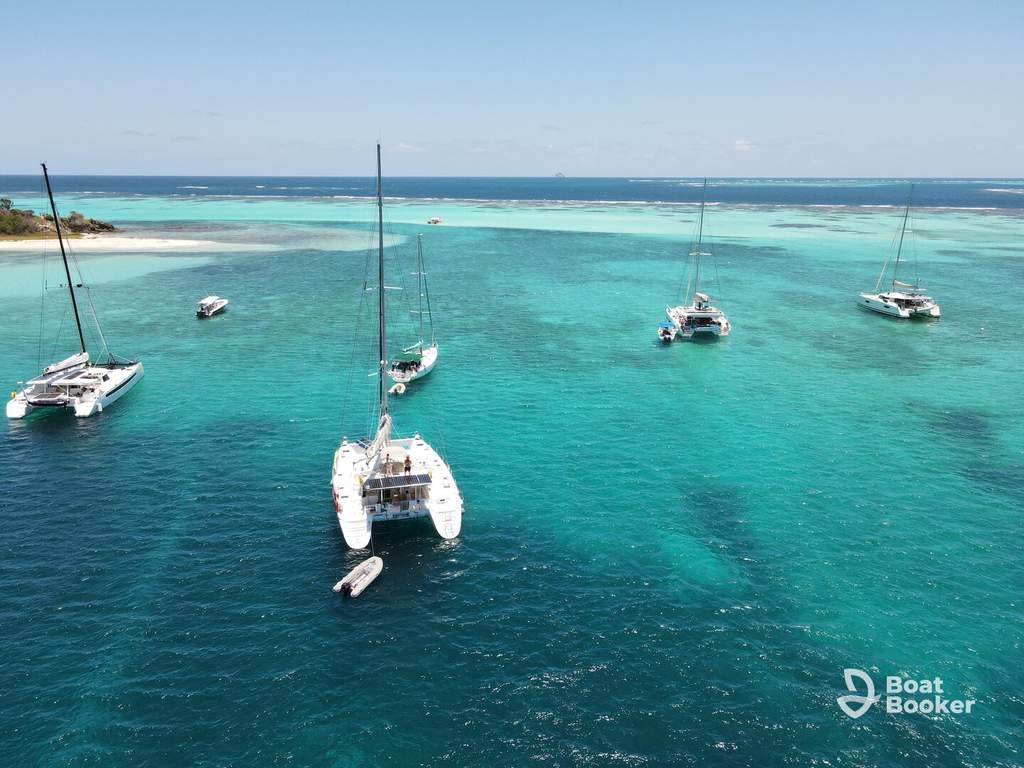
Greece’s sailing season runs from April through October. But the experience varies a lot depending on which month you pick.
- April–May is shoulder season. Winds are light, seas are calm, and harbors are uncrowded. Water temperature is still cool (around 65–68°F), and some charter bases don’t open until mid-May. It’s a great window for couples who want peace and quiet.
- June and September are the sweet spot for most first-timers. Air temperatures sit in the high 70s to low 80s. The Meltemi hasn’t peaked yet (June) or is winding down (September), and charter prices are noticeably lower than in July and August. September is especially good value.
- July–August is peak season. Temperatures push into the upper 80s, marinas fill up, and prices hit their highest. In the Aegean, the Meltemi blows at its strongest. If you’re set on sailing the Cyclades in August, expect challenging conditions – or hire a skipper.
- October is late shoulder season. Crowds thin, prices drop, and the weather is still warm enough for swimming. Some bases start closing by mid-October, so check availability early.
The bottom line: if this is your first time, aim for June or September. You get warm weather, swimmable water, manageable wind, and better prices.
Understanding the Meltemi Wind
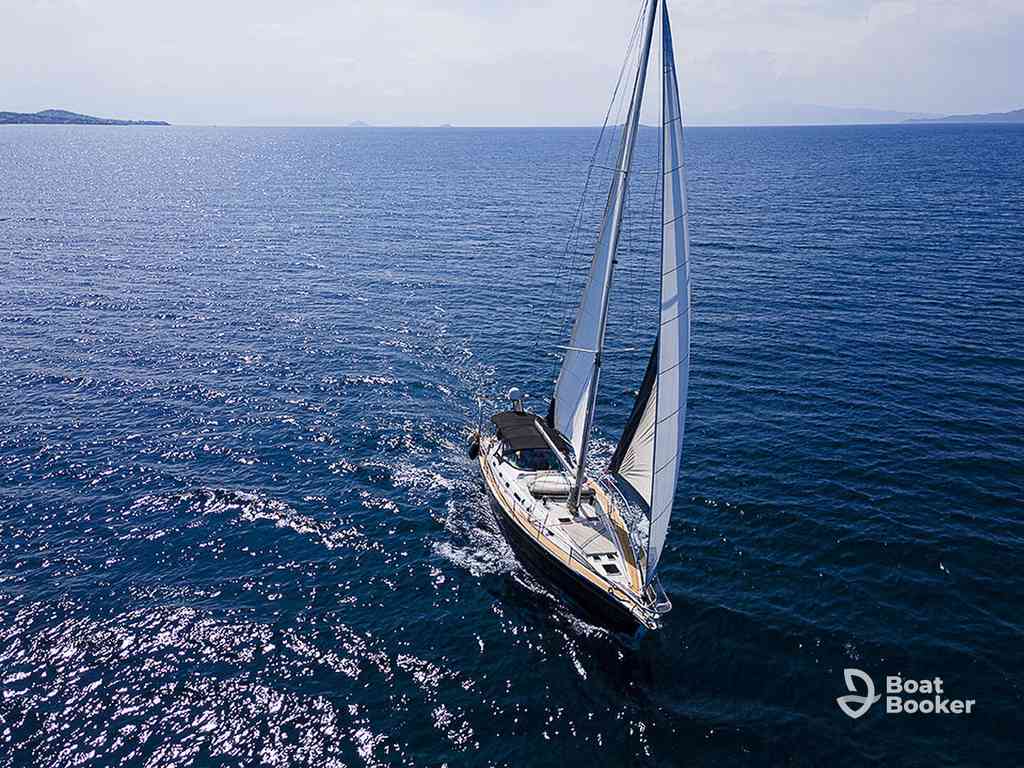
The Meltemi is a strong, dry northerly wind that blows across the Aegean Sea every summer. High pressure over the Balkans and low pressure over Turkey drive it, and it funnels through the Cyclades and eastern Aegean like a natural wind tunnel.
It typically starts in June, peaks in July and August, and fades by late September. About 70% of Meltemi days fall between June and September. On a typical Meltemi day, the wind picks up in the early afternoon – usually reaching Force 4–5 (11–21 knots) – and dies out around sunset. However, it can easily hit Force 7 (28–33 knots) during peak events, sometimes lasting several days straight.
What does this mean for your trip? In the Cyclades and eastern Aegean, the Meltemi is a real planning factor. It can pin you in harbor, make crossings uncomfortable, or force route changes. Because it blows from the north, southbound legs are generally fast and exciting, while northbound returns can be rough.
The Ionian and Saronic Gulf are largely unaffected. If you’re a first-timer and the Meltemi sounds stressful, those western and sheltered regions are the simple solution. If you still want the Cyclades, either go in June or September when the Meltemi is weaker, or book a skippered charter with a captain who knows how to read the forecasts. Tools like Windy.com and the POSEIDON weather system from the Hellenic Centre for Marine Research are useful for tracking wind patterns before and during your trip.
How Much Does It Cost to Sail in Greece?
Let’s talk real numbers. Greece is competitive with other Mediterranean sailing destinations, but costs add up quickly beyond the base charter fee.
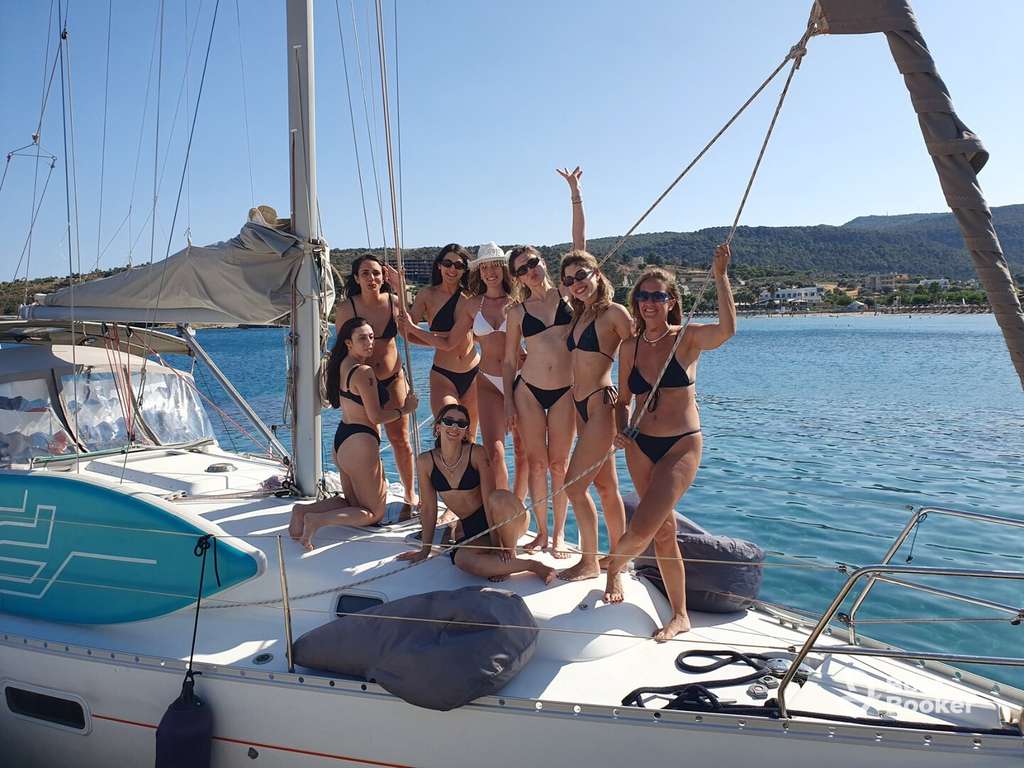
Charter Prices
Rates depend on boat type, size, and season:
- Sailing yacht (monohull, 38–50 ft): €1,500–€5,500/week in low season (April–May, October), €3,200–€8,600/week in high season (July–August)
- Catamaran (40–50 ft): €3,200–€10,300/week in low season, €6,300–€19,500+ in high season
A catamaran gives you more deck space and stability – ideal for families or groups who want comfort over sailing performance. Monohulls are more affordable and give a more traditional sailing feel.
Additional Costs to Budget For
- Skipper: ~€150–€200/day, plus you cover their meals
- Fuel: €100–€300/week depending on engine use and generator hours
- Provisioning: €200–€500/week depending on how much you eat aboard vs. ashore
- Marina fees: €5–€65/night, though many anchorages are free
- Transit log: Required for bareboat charters in Greece, typically €50–€100
- APA (Advance Provisioning Allowance): For crewed charters, typically 25–35% of the charter fee
September consistently offers the best value – warm water, manageable wind, and charter rates 30–40% lower than peak August.
For a group of 6–8 splitting a mid-range catamaran with a skipper in June or September, expect to pay roughly €600–€1,200 per person for the week, not including flights, meals ashore, or provisioning. That’s competitive with a resort vacation – and a lot more memorable.
Bareboat vs. Skippered vs. Crewed – Which Charter Type Is Right for You?
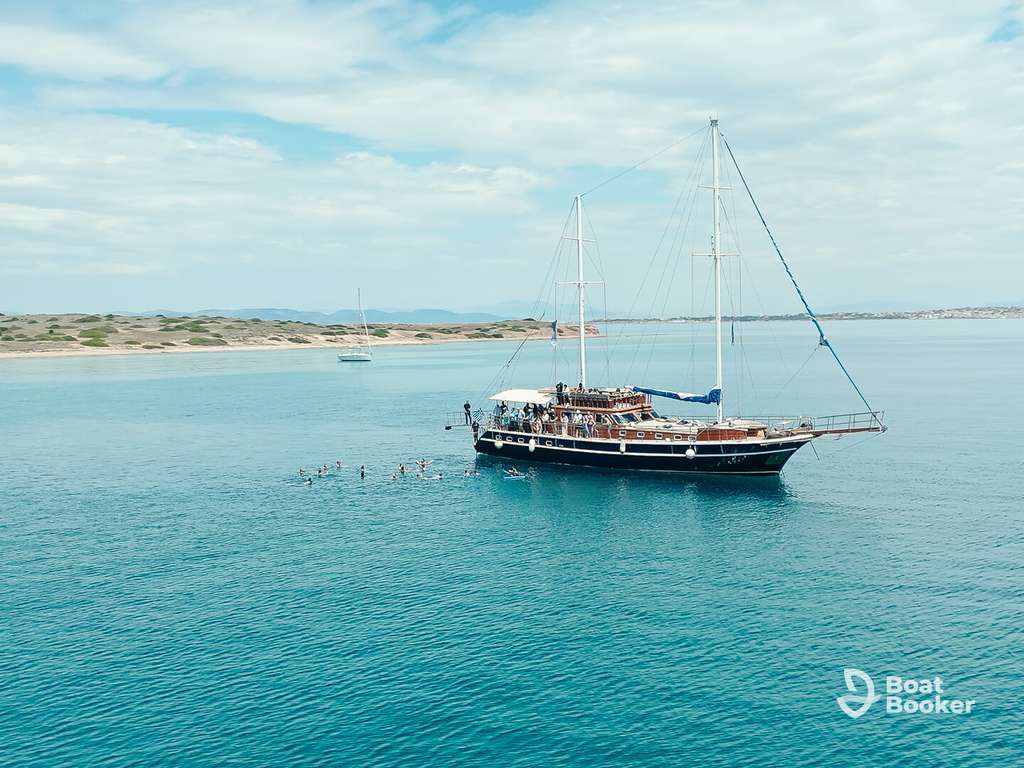
This decision shapes your entire trip, so it’s worth getting right.
Bareboat
Bareboat means you’re the captain. You rent the boat, plan your route, and handle everything from anchoring to docking. In Greece, bareboat charters require at least one certified skipper and one experienced crew member, both over 18. Accepted certifications include the ASA 104+ (US), RYA Day Skipper (UK), or ICC (International Certificate of Competence).
You’ll also need to show a VHF radio license. Bareboat is the most affordable option and gives you total freedom – but you need real sailing experience, especially if you’re headed to the Cyclades.
Skippered
Skippered charters add a professional captain who knows local waters, handles navigation, and takes the stress out of docking in tight Greek harbors. The skipper typically costs €150–€200/day. This is the best option for first-timers, groups of friends who want to relax, and families who’d rather swim than stress about weather routing. You still choose where to go – the skipper just gets you there safely.
Crewed
Crewed charters include a skipper plus a hostess or chef (sometimes both). Think of it as a floating boutique hotel. Prices are significantly higher, but for special occasions or groups who want a luxury experience without lifting a finger, it’s worth considering.
Our Honest Take
If you’re reading a “first-timer’s guide,” go skippered. The cost is modest when split among a group, and having a local expert aboard transforms the trip. You’ll discover hidden coves, avoid crowded harbors, and actually relax.
What to Expect on a Typical Day
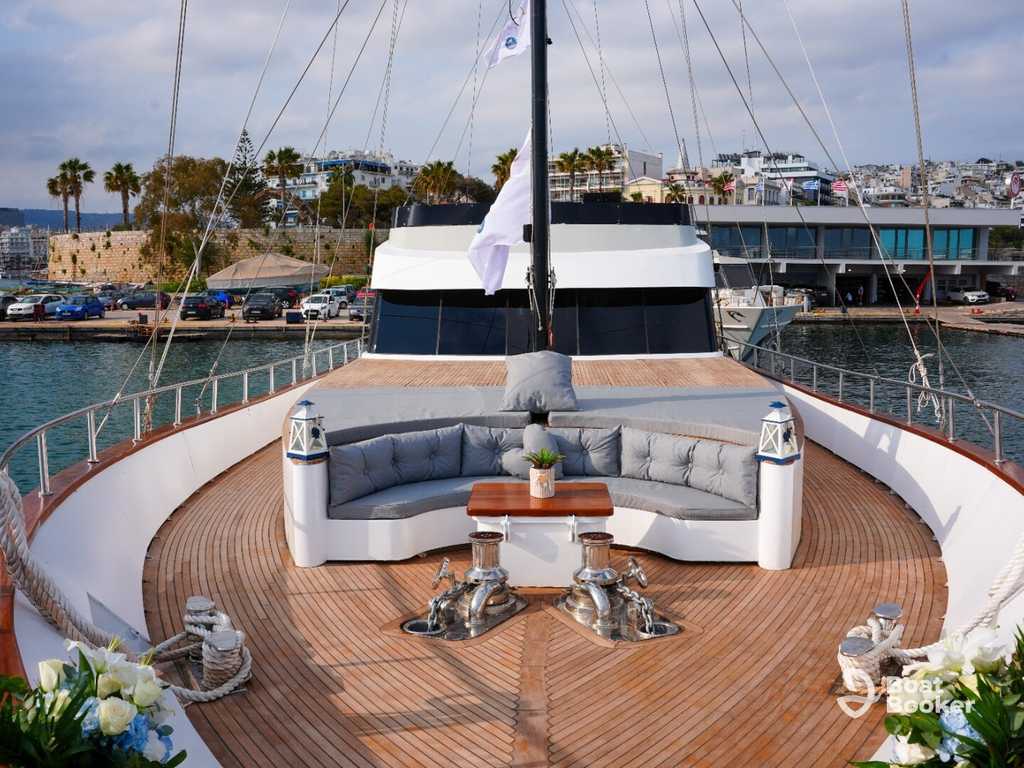
One of the best things about sailing in Greece is the rhythm. Days fall into a natural pattern that’s easy to love.
You’ll wake up around 8 or 9, usually anchored in a quiet bay. Morning starts with coffee in the cockpit, a swim off the back of the boat, maybe breakfast on deck. By mid-morning, you weigh anchor and set sail for your next stop – typically 2–4 hours away.
Sailing usually happens before lunch, while the wind is still building. By early afternoon you’ve reached a new bay or harbor. Drop anchor, swim, snorkel, then eat lunch on board or at a nearby beach taverna. Afternoons are for exploring ashore – wandering a village, hiking to a viewpoint, or just reading in the shade.
Evenings are the highlight. You tie up at a harbor wall or stay at anchor, dinghy ashore, and find a waterfront taverna for grilled fish and cold beer. You’re back on the boat by 10 or 11, sleeping under more stars than you’ve ever seen.
Packing and Practical Tips
Pack in soft bags, not hard suitcases – storage on a sailboat is tight. Provision for breakfasts and lunches before departure; most crews eat dinner ashore. Bring reef-safe sunscreen, a lightweight windbreaker, and shoes with non-marking soles. Space is cozy, so manage expectations – this isn’t a cruise ship, and that’s the point.
Book a Sailing Tour in Greece
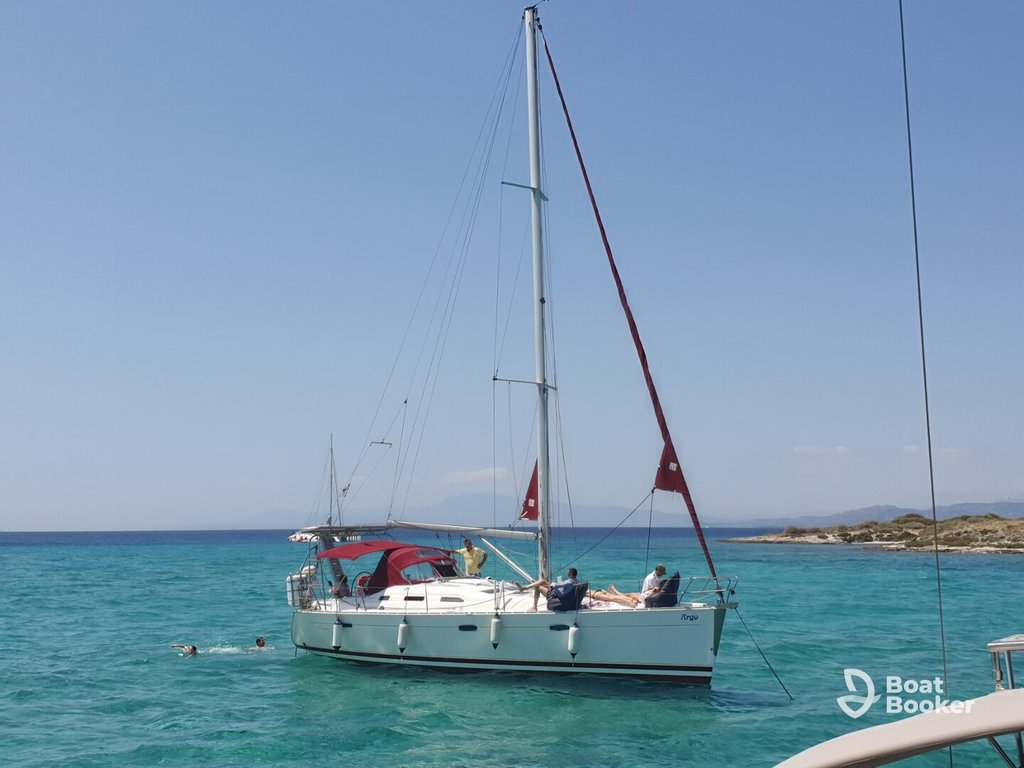
BoatBooker lists skippered sailing tours and catamaran charters across Greece’s most popular islands. Browse sailing tours from Athens, or explore destinations like Santorini, Crete, and Corfu for day trips, sunset sails, and multi-day charters.
Frequently Asked Questions about Sailing in Greece
Have you sailed in Greece – or are you in the middle of planning your first trip? We’d love to hear which region you chose (or are leaning toward) and how the Meltemi treated you. If anything in this guide is outdated or off, drop a note in the comments so we can keep it accurate for the next reader.