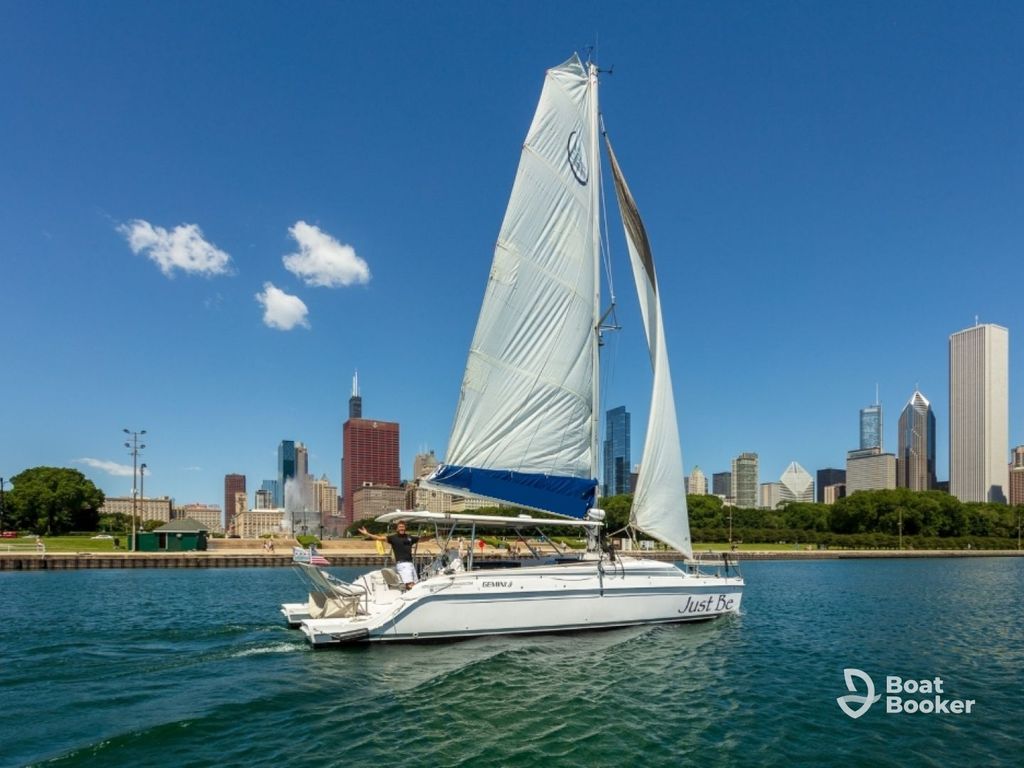

Sailing 101: A Beginner’s Guide to Everything You Need to Know Before You Set Sail
So you’ve been invited on a sailing trip – or maybe you’re browsing sailing charters and wondering what you’re getting into. Either way, welcome to sailing 101. This guide covers the basics: how sailboats work, the terms you’ll hear on deck, what to wear, and how to get your first taste of sailing without buying a boat or earning a certification.
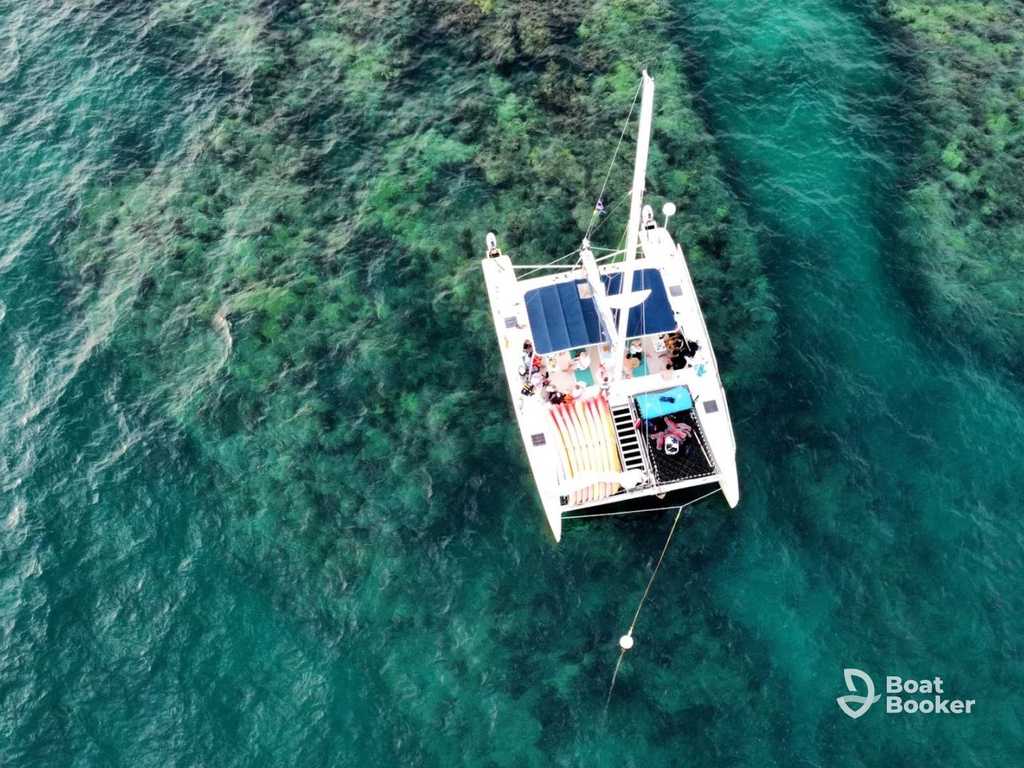
You don’t need years of training to enjoy a day on a sailboat. Thousands of people step aboard skippered sailing charters every week with zero experience. But knowing a few fundamentals makes the whole experience more fun – how the wind moves the boat, what the captain means when they say “ease the jib sheet,” which side is port. That’s what this guide is for.
What Is Sailing?
At its simplest, sailing is using wind to move a boat across water. People have been doing it for thousands of years – first for trade and exploration, now mostly for recreation and sport. Modern sailing ranges from casual sunset cruises to competitive racing, and from solo ocean crossings to family day trips.
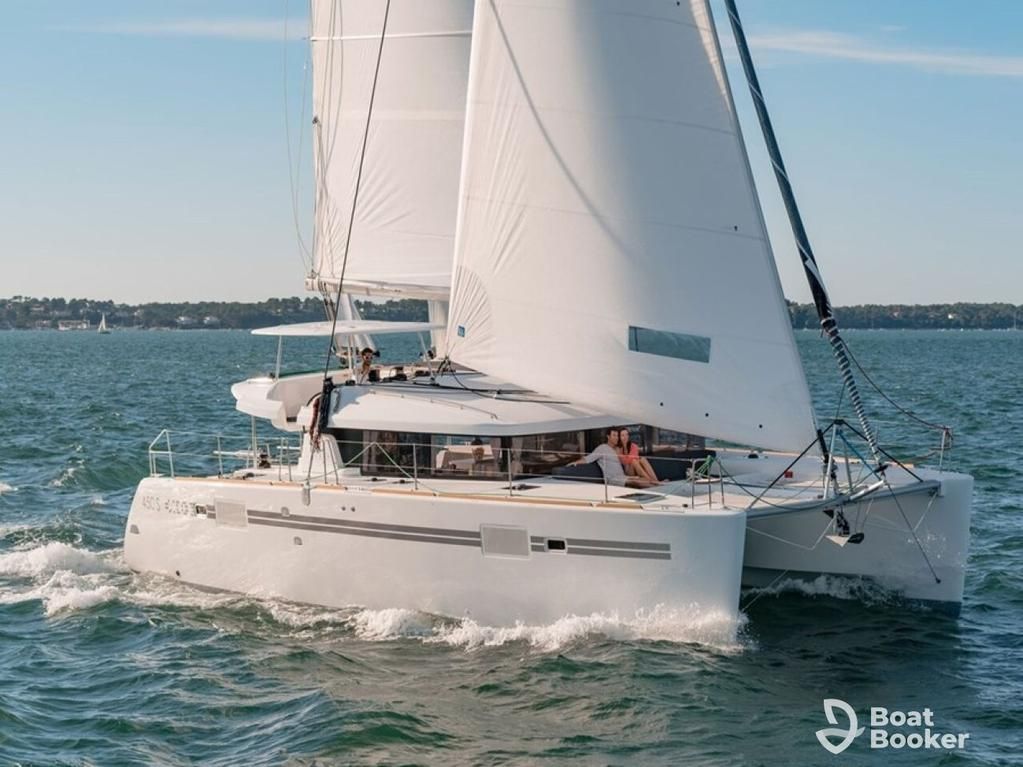
Here’s the part that matters if you’re reading this: you don’t need to own a sailboat to go sailing. Chartering a boat with a skipper is one of the easiest ways to try it. The captain handles navigation and safety. You can sit back and enjoy the ride – or get hands-on and learn the ropes (literally).
Many sailing charters actively encourage guests to help trim sails, steer, and learn as they go.
Parts of a Sailboat Every Beginner Should Know
Sailing has its own vocabulary, and it can feel overwhelming at first. You don’t need to memorize every term before your first trip, but knowing the main parts of a sailboat will help you follow what’s happening on deck.
The hull is the body of the boat – the part that sits in the water. Underneath, the keel is a heavy fin that keeps the boat from sliding sideways and prevents it from tipping over. Think of it as the boat’s counterweight.
Rising from the deck is the mast – the tall vertical pole that supports the sails. The boom is the horizontal pole attached to the bottom of the mast. It swings side to side when the boat changes direction, so your skipper will shout “watch your head” during turns.
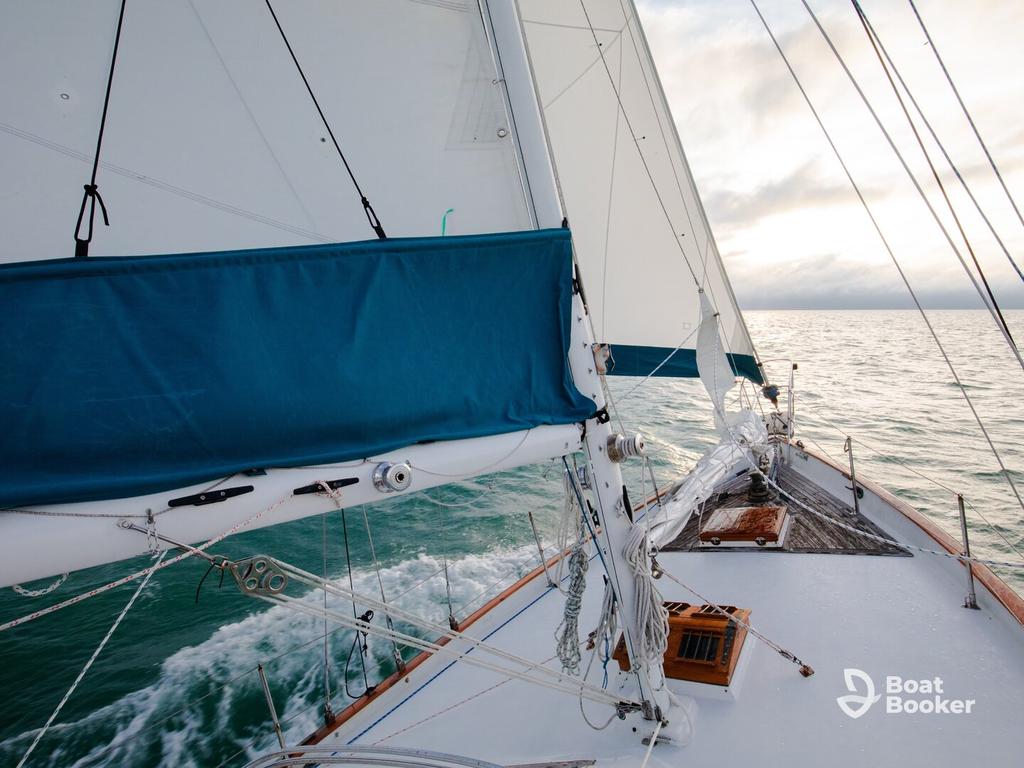
Most sailboats carry two primary sails. The mainsail is the large sail attached to the mast and boom. The jib (sometimes called a headsail) is the smaller sail at the front. When your captain asks you to “ease the jib sheet,” they want you to let out the line – the rope – that controls that front sail.
The front of the boat is the bow. The back is the stern. Facing forward, the left side is port and the right side is starboard. A simple trick: “port” and “left” both have four letters.
The rudder is a flat blade under the stern that steers the boat. It’s controlled from the helm – either a tiller (a lever you push) on smaller boats or a wheel (like a car’s steering wheel) on larger ones.
Common Sailing Terms
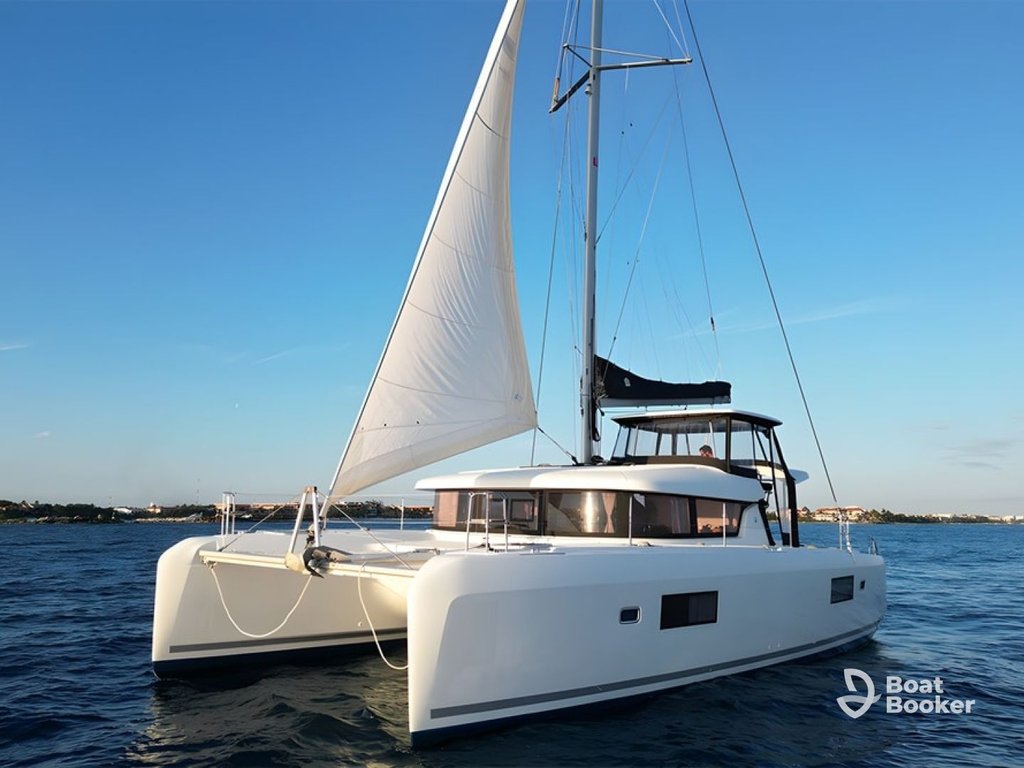
Sailing has its own language. You don’t need to memorise every word before your first trip, but knowing the operational vocabulary helps you follow what the skipper is doing – and actually enjoy it.
- Windward – the side of the boat facing into the wind.
- Leeward (pronounced “loo-ward”) – the sheltered side, away from the wind.
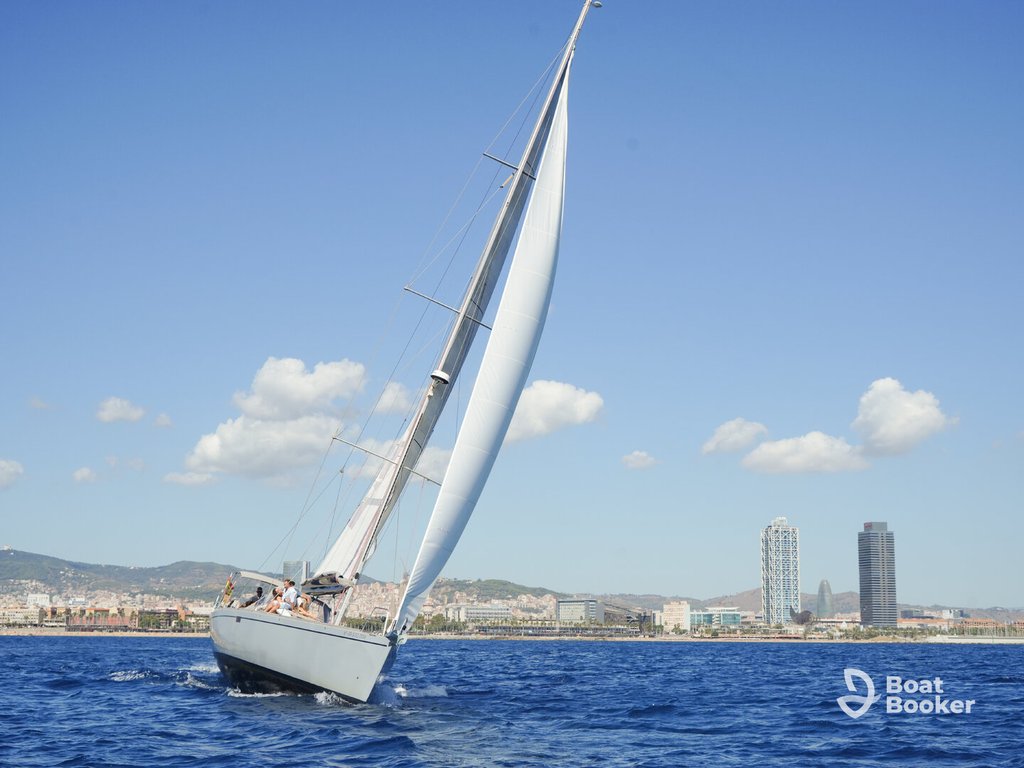
- Heel – the angle the boat leans to when sailing. Some heel is normal and expected, especially when sailing close to the wind.
- Sheet – not a sail, but the rope that controls a sail’s angle. Easing the sheet lets the sail out; trimming it pulls the sail in. So when someone says “ease the jib sheet,” they want you to let the front sail out, not haul it in.
- Halyard – the line used to raise and lower a sail up the mast.
- Cleat – a metal fitting used to lock a line in place. The cleat hitch is the knot you’ll use every time you tie off at a dock.
- Spar – any pole or beam that supports the sails. The mast, boom, and bowsprit are all spars. When a sailor talks about the spar on a sailing boat, they usually mean the mast or boom.
- Tack – as a noun, the direction the boat is sailing relative to the wind (port tack or starboard tack). As a verb, to tack is to turn the bow through the wind to switch sides. It’s the core manoeuvre for sailing upwind.
- Jibe (or gybe) – turning the stern through the wind while sailing downwind. The boom swings across with more force than in a tack, so your skipper will give a clear warning before it happens.
- Trim – to adjust the sails so they generate maximum forward force at the current wind angle. A well-trimmed sail has a smooth curve with no flapping at its leading edge. When you hear “trim the jib,” pull the jib sheet in until the luffing stops.
- No-go zone – the arc of roughly 30–45 degrees directly into the wind where a sailboat can’t generate forward motion. Sailing into this zone causes the sails to collapse. Tacking is how you make progress toward a destination inside that zone.
How Does Sailing Actually Work?
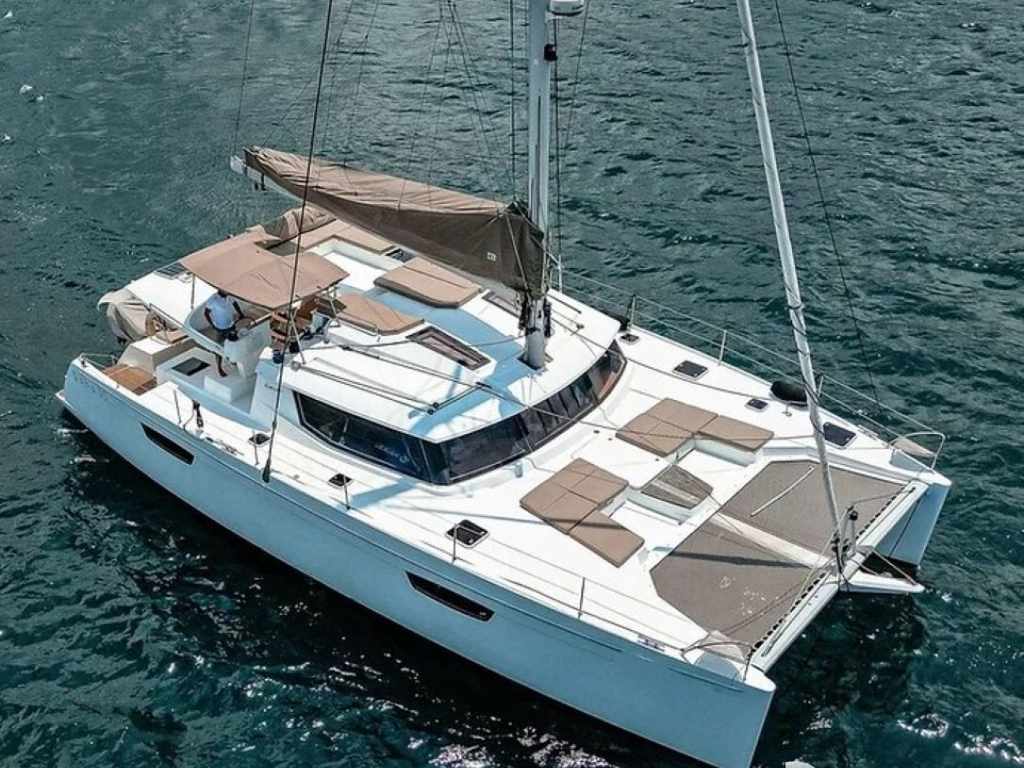
This is the question most beginners are curious about. How does a sailboat move forward using wind – and how can it possibly sail toward the wind?
When wind flows across a curved sail, it creates a difference in air pressure on each side. The high-pressure side pushes while the low-pressure side pulls. The result is a force called lift – the same principle that keeps airplane wings in the air. That lift drives the boat forward.
Sailing with the wind behind you is straightforward: the wind simply pushes the sails and the boat moves. Sailing at an angle to the wind is where lift does the heavy work. The sail acts like an airfoil, generating forward force even when the wind comes from the side.
The one direction a sailboat can’t go is directly into the wind. This zone – roughly 30 to 45 degrees on either side of the wind’s direction – is called the no-go zone. To make progress toward the wind, sailors zigzag back and forth at an angle. That zigzag maneuver has a name, and it’s the most important concept in the next section.
Points of Sail – The Directions You Can Go
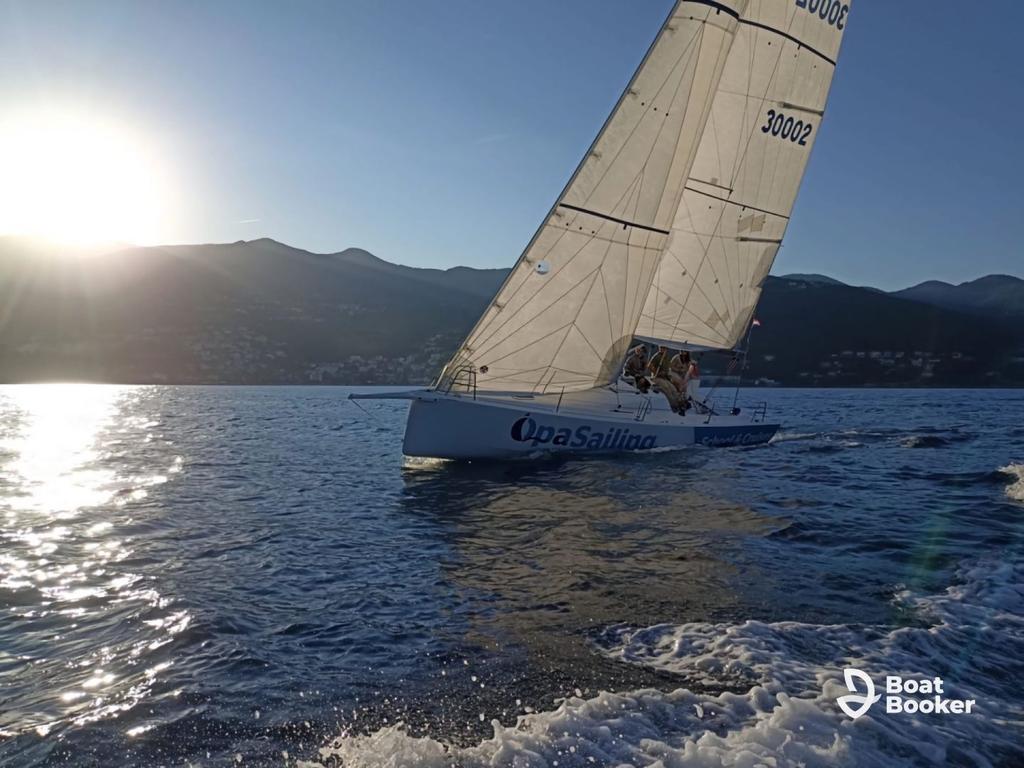
The “points of sail” describe the angles between the boat’s heading and the wind direction. Understanding them helps you see why the skipper keeps adjusting the sails and changing course.
- Close-hauled is as close to the wind as you can sail – roughly 30 to 45 degrees off the wind. The sails are pulled in tight, and the boat often heels (leans) noticeably. This is the most technical point of sail.
- Close reach is a slightly wider angle off the wind. The sails ease out a bit, the boat flattens, and the ride gets more comfortable.
- Beam reach means the wind is hitting the boat from the side – perpendicular to your direction of travel. Many sailors consider this the fastest and most enjoyable point of sail.
- Broad reach puts the wind behind and to one side. The sails are let out far, and the boat picks up speed.
- Running (also called downwind sailing) is when the wind blows directly from behind. The mainsail swings wide, sometimes with the jib on the opposite side in a setup called “wing-on-wing.”
- Tacking is how you zigzag toward the wind. The bow turns through the wind so it switches from one side of the boat to the other. It’s a controlled maneuver – you’ll duck under the boom as it swings across. Jibing (or gybing) is the reverse: the stern passes through the wind while sailing downwind. Jibing puts more force on the boom, so the captain usually gives a clear warning before it happens.
Types of Sailboats for Beginners
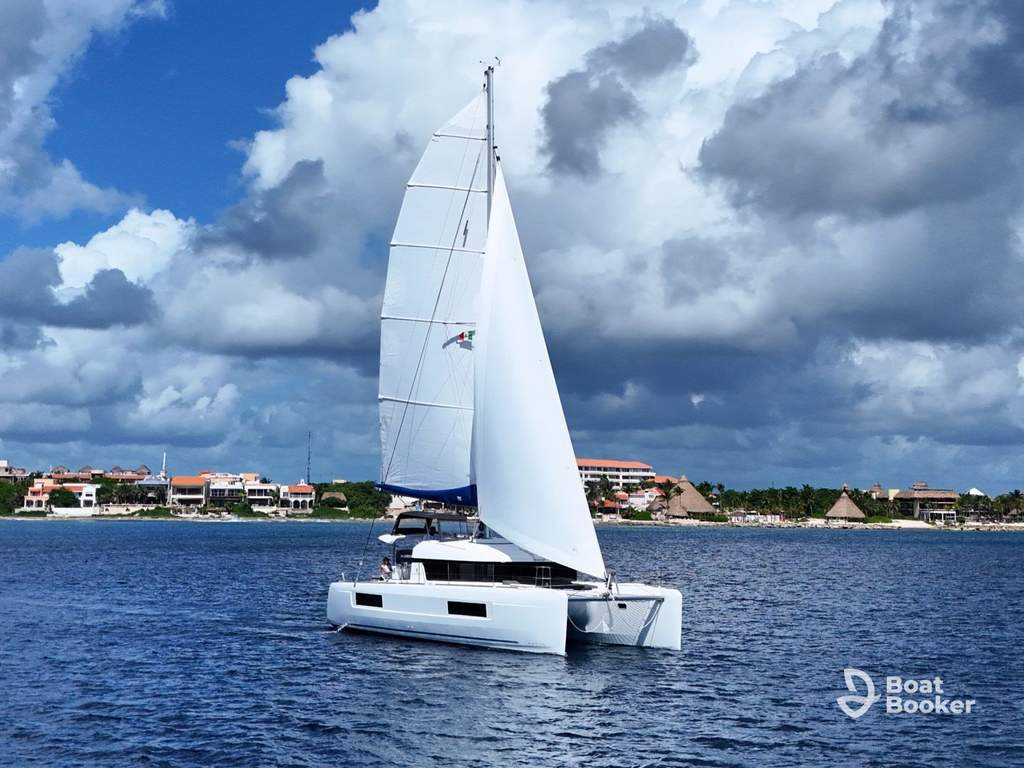
Not all sailboats are created equal. The type you’ll encounter depends on whether you’re taking a sailing lesson, joining a charter, or just exploring options.
- Dinghies are small, open sailboats – usually under 15 feet. They’re the go-to training boats at most sailing schools because they respond immediately to every adjustment. Boats like the Sunfish, Laser, and Optimist are classics. They capsize easily (and intentionally in lessons), which teaches you how the boat reacts. Don’t worry – you’ll learn to right them in minutes.
- Keelboats are larger – typically 18 to 27 feet for beginners – and far more stable. The weighted keel makes capsizing extremely unlikely. These are the boats used in ASA 101 certification courses. They feel more like “real” sailing to most newcomers because you can move around the cabin and cockpit comfortably.
- Catamarans have two hulls instead of one, which gives them a wider, more stable platform. They’re popular for charters because they offer more deck space and a smoother ride. If you’re booking a sailing tour in the Caribbean or Mediterranean, there’s a good chance it’ll be on a catamaran. BoatBooker has a full guide on what a catamaran is if you want to dig deeper.
- Monohulls – traditional single-hull sailboats – are what most people picture when they think of sailing. They heel more than catamarans, which some sailors love and others find unsettling at first. On a skippered charter, the captain will keep the heel angle comfortable.
Is Sailing Hard to Learn?
Honest answer: the basics aren’t hard, but mastering sailing takes time.
Most people feel comfortable steering a boat and trimming sails within a few outings. The American Sailing Association reports that over 600,000 students have learned to sail through their programs. Most ASA 101 courses – the entry-level certification – take just a single weekend. That weekend won’t make you an expert, but it covers enough to handle a small keelboat in moderate conditions.
The steeper learning curve comes with reading wind shifts, managing currents, docking, and handling rough weather. Those skills develop over months or years of practice. For that reason, beginners should aim for moderate wind conditions – between 5 and 15 knots – while building confidence.
If all of this sounds like more commitment than you’re after, that’s perfectly fine. Booking a skippered sailing charter lets you enjoy everything that’s great about sailing while a professional handles the technical work. You can be as involved or as relaxed as you want.
What to Wear Sailing
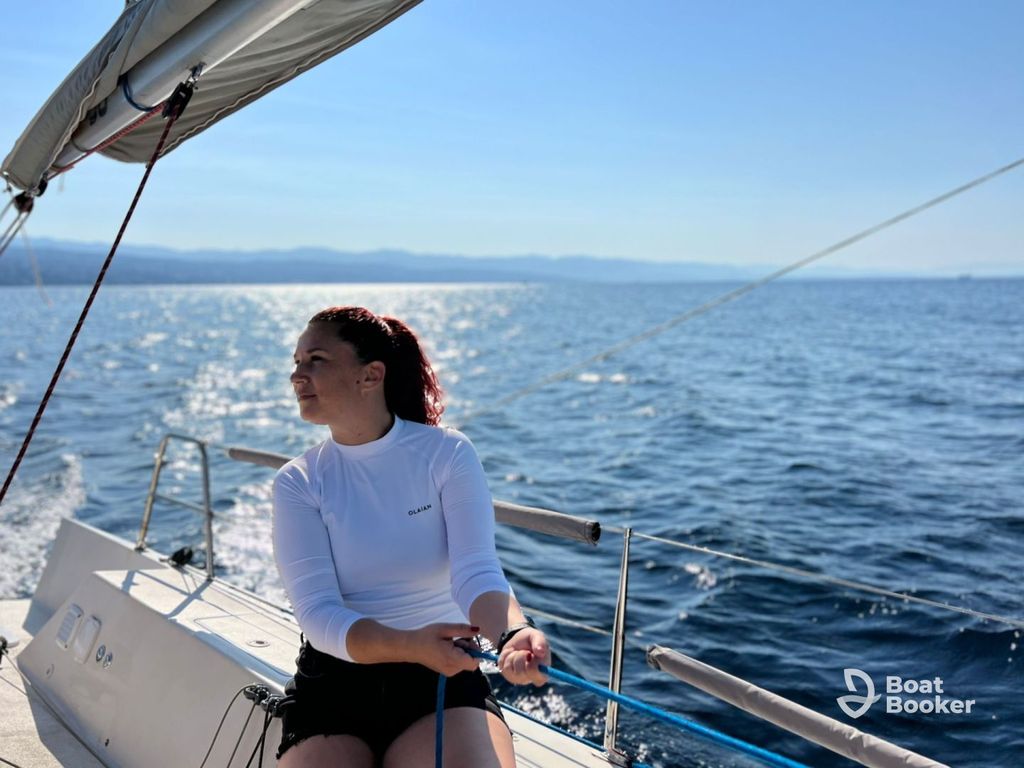
Conditions on the water change fast. It’s almost always windier and cooler on the boat than it was at the dock, even on a warm day. So dress in layers.
Start with a moisture-wicking base layer – synthetic or merino wool, not cotton. Then add a fleece or light jacket for warmth. Also pack a waterproof outer layer even if the forecast looks clear, because spray from waves and occasional splashes are part of sailing.
Wear closed-toe shoes with non-marking soles. Boat shoes or sneakers with rubber soles work well. Avoid flip-flops – they’re slippery and won’t protect your feet from lines or hardware on deck.
Sun protection matters more than most people expect. Water reflects UV, so you’ll burn faster than on land. Bring sunscreen (SPF 30+), polarized sunglasses with a retainer strap, and a hat that won’t blow off easily. For a more detailed breakdown, check out our full guide on what to wear on a boat.
How to Get Started – Lessons, Certifications, and Charters
There are three main paths into sailing, and they’re not mutually exclusive.
- Take a course. The ASA 101 (Basic Keelboat Sailing) is the most popular entry-level certification in the U.S. It typically runs over a weekend and costs $400–$700 depending on the school and location. US Sailing also offers its own certification track with a similar format. Both programs are widely recognized.
- Join a local sailing club. Many yacht clubs and community sailing centers offer introductory memberships, group lessons, and access to club boats. This is often the most affordable way to get regular time on the water, and it’s also a great way to meet other beginners.
- Book a skippered charter. This is the fastest path from “curious” to “on a sailboat.” A skippered charter comes with a licensed captain who handles everything. You show up, step aboard, and sail. Many skippers are happy to teach as they go – just ask. It’s especially appealing for couples and families who want the experience without the prerequisite coursework.
One thing to know: in the wider Mediterranean – Greece, Croatia, Turkey, Spain, Italy – sailing qualifications are required if you want to charter a boat without a skipper. So if you’re dreaming of bareboat sailing in the Greek islands, you’ll need certification first. However, a skippered charter has no such requirement.
Best Places to Book a Sailing Tour
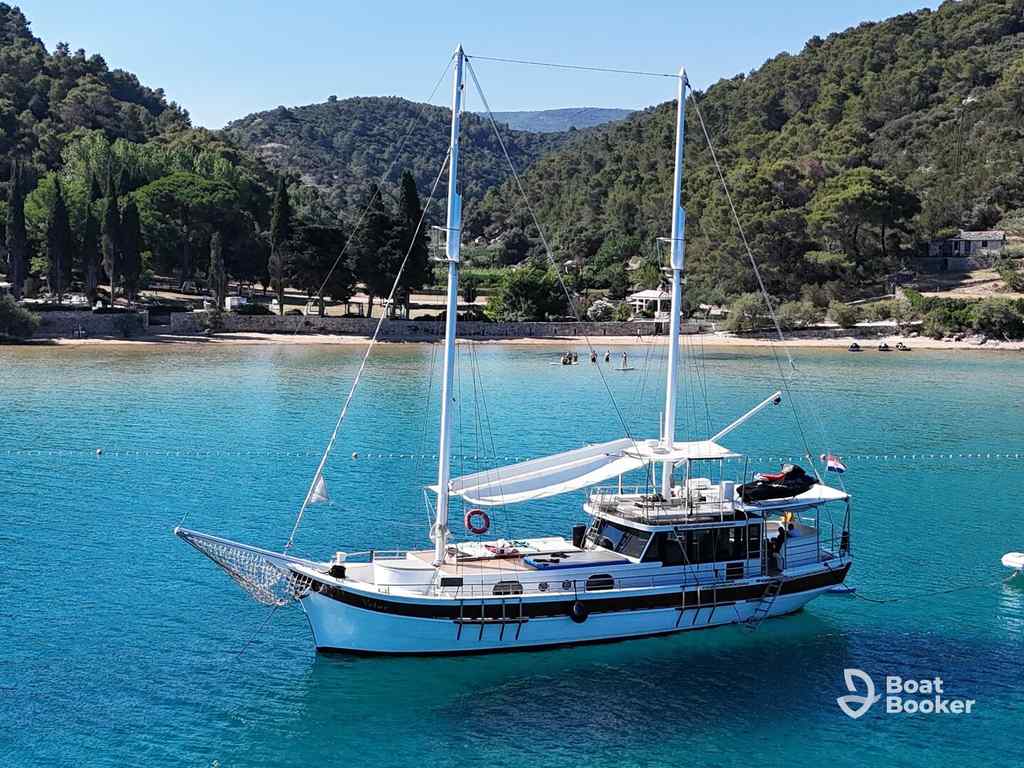
If you’re ready to get on the water, these destinations offer some of the best sailing conditions for first-timers – with tours bookable through BoatBooker.
- Key West, Florida – Warm, shallow waters and steady trade winds make Key West one of the easiest places to enjoy a first sailing trip. Most charters here are catamarans, and sunset sails through the Gulf of Mexico are a local tradition.
- San Diego, California – Reliable afternoon breezes, calm harbor waters, and views of the Coronado Bridge make San Diego ideal for a half-day sail. It’s also home to several ASA-certified sailing schools if you want to combine a charter with a lesson.
- Honolulu, Hawaii – Sailing off Waikiki with Diamond Head in the background is hard to beat. Warm Pacific water and consistent winds mean year-round sailing, and many tours include snorkeling stops along the way.
- Nassau, Bahamas – Clear turquoise water that lets you see the bottom at 30 feet. Day sails from Nassau often include stops at sandbars and secluded cays, and the protected waters are forgiving for beginners.
- Barcelona, Spain – Sail along the Catalonian coastline with views of the city skyline, then anchor for a swim in the Mediterranean. Barcelona’s port is a major sailing hub with charters ranging from sporty monohulls to spacious catamarans.
- Dubrovnik, Croatia – The Adriatic Sea around Dubrovnik is calm, warm, and dotted with islands. Sailing here lets you explore the Elaphiti Islands – a chain just off the coast that feels a world away from the Old Town crowds.
Frequently Asked Questions about Sailing
Have you been on your first sailing trip? Still trying to figure out whether to take a course or just book a charter and learn as you go? We’d love to hear how you got started – or if you’re still on the fence, drop your questions in the comments. And if anything in this guide is off or outdated, flag it so we can fix it.