
What Is a Jet Ski? A Beginner’s Guide to Types, Speeds, and What to Expect on Your First Ride
So you’ve seen people zipping across the water on those sleek, motorcycle-like machines and wondered – what exactly is a jet ski? Whether you’re thinking about booking a jet ski tour on your next vacation or just curious about how these things work, you’re in the right place. This guide covers everything from what a jet ski actually is (hint: it’s a brand name) to how fast they go, how much they cost, and what to expect if you’ve never ridden one before.
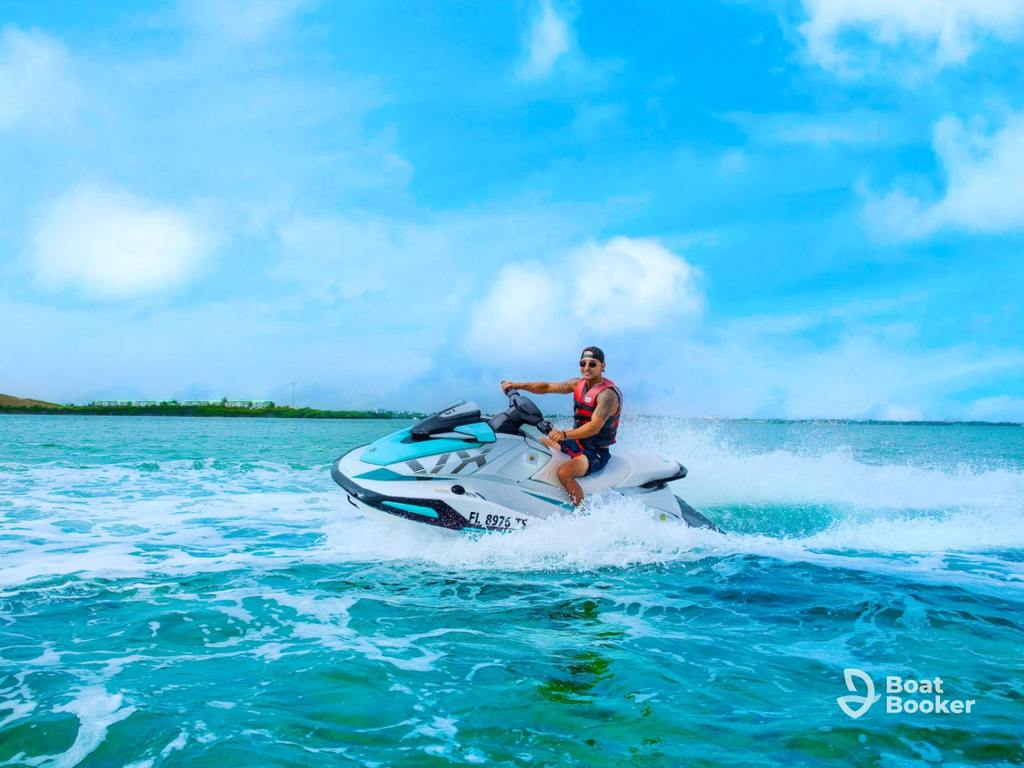
The short answer: a jet ski is a small, powerful watercraft you ride like a motorcycle on water. But there’s more to it than that – including a surprisingly interesting branding story and some practical details that matter if you’re planning your first ride.
What Is a Jet Ski?
A jet ski is a type of personal watercraft (PWC) – a small, jet-propelled boat typically under 12 feet long. The United States Coast Guard classifies personal watercraft as jet-drive boats less than 12 feet in length, so they sit in their own distinct category from larger motorboats.
Here’s the part most people don’t know: “Jet Ski” is actually a brand name owned by Kawasaki. It’s become a generic term for all personal watercraft – the same way “Kleenex” means any tissue or “Band-Aid” means any adhesive bandage. When someone says “let’s go jet skiing,” they probably aren’t talking about a Kawasaki specifically. They just mean riding a PWC.
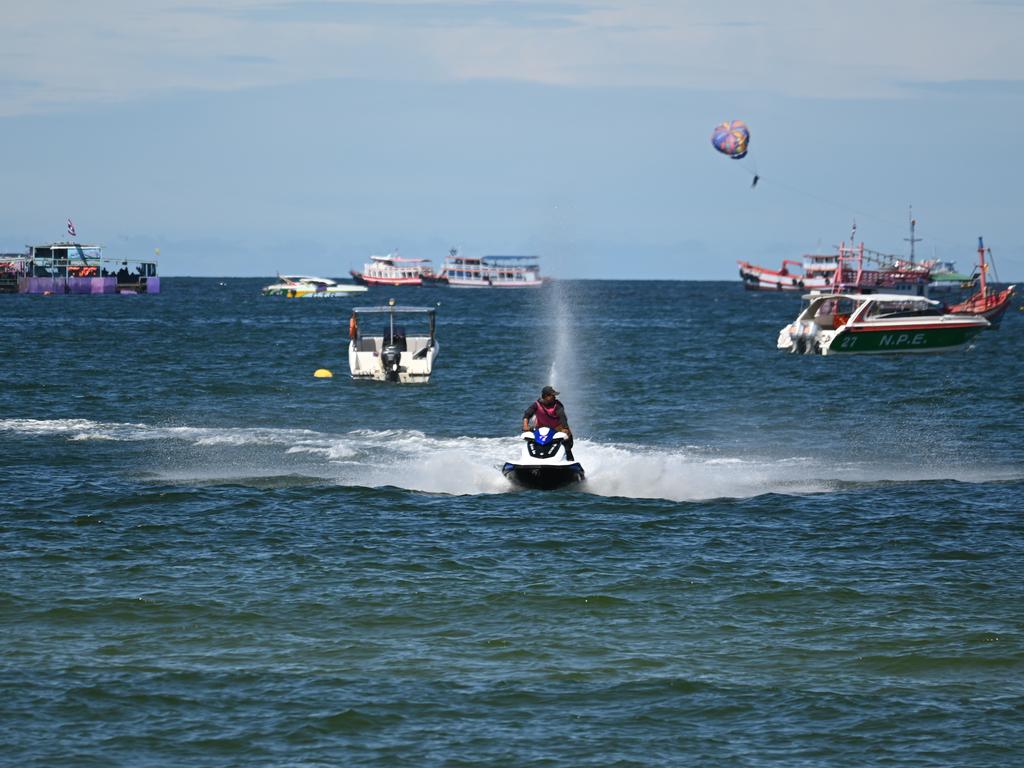
Kawasaki released the first Jet Ski in 1972, making it the first commercially successful personal watercraft in America. That original model was a stand-up design – no seat, just a platform you balanced on while gripping the handlebars. Today the term covers everything from nimble stand-up models to three-seat touring machines with built-in speakers and GPS.
Jet Ski vs. WaveRunner vs. Sea-Doo: What’s the Difference?
Three major brands dominate the personal watercraft market, and their names get thrown around interchangeably – which causes a lot of confusion. Here’s the simple breakdown:
- Jet Ski – Kawasaki’s brand name for its PWC lineup
- WaveRunner – Yamaha’s brand name for its PWC lineup
- Sea-Doo – BRP’s (Bombardier Recreational Products) brand name for its PWC lineup
That’s really it. They’re all personal watercraft. The difference is who makes them, not what they fundamentally are. It’s like asking the difference between an iPhone, a Galaxy, and a Pixel – different manufacturers, same basic category of device.
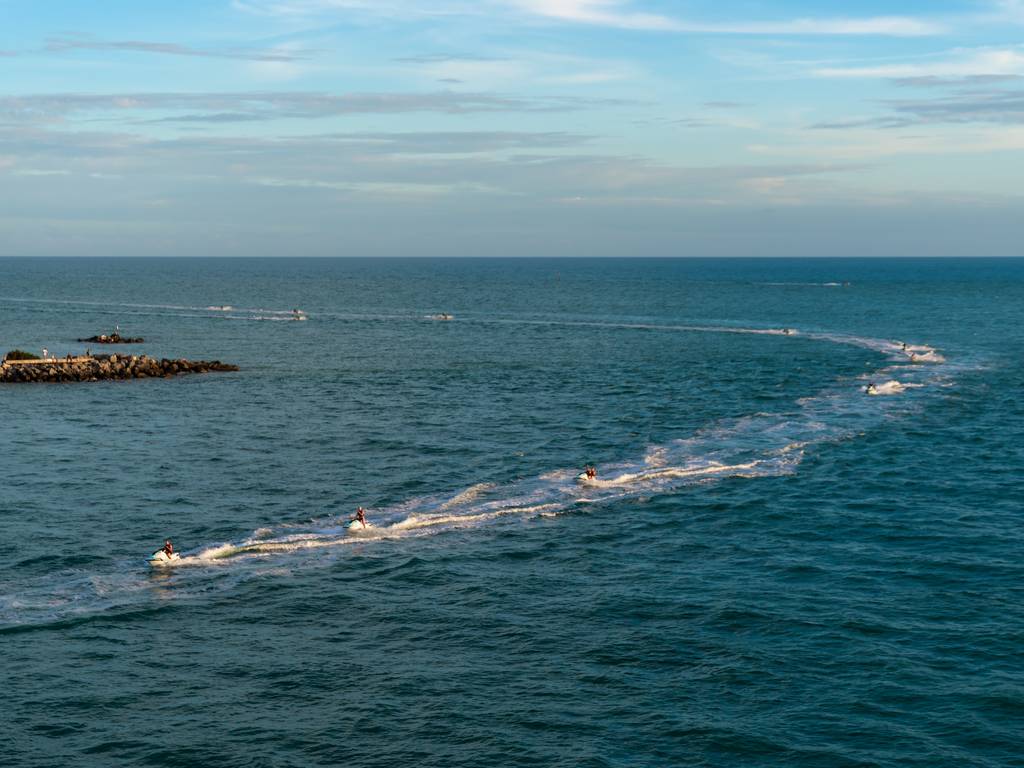
There is one historical quirk worth mentioning. The original Kawasaki Jet Ski was a stand-up model, while Yamaha’s WaveRunner debuted as a sit-down craft. That distinction led some people to believe “jet ski” meant stand-up and “waverunner” meant sit-down. Today all three brands make both styles, so the distinction no longer holds.
If you’re booking a tour or rental, the brand on the hull rarely matters. Tour operators choose whichever models suit their fleet, and the riding experience across brands is very similar. You might see “jet ski tour” and show up to find WaveRunners – and you won’t notice the difference.
Types of Jet Skis
Not all jet skis are built for the same purpose. Here are the main categories you’ll encounter:
Stand-Up
The original style. You ride standing on a flat platform, gripping handlebars to steer. These are smaller, lighter, and far more physically demanding. They’re popular with trick riders and racers, but you won’t typically find them on a rental dock.
Sit-Down Recreation
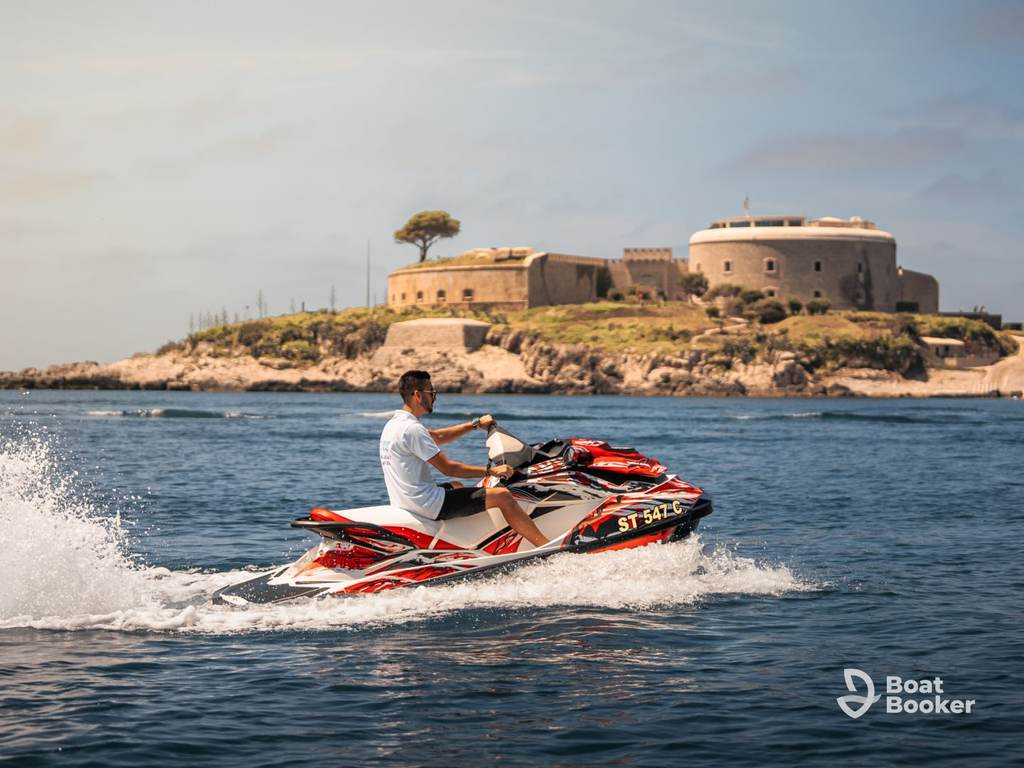
This is the most common type and what you’ll ride on most jet ski tours anywhere. These seat one to three people, are stable enough for beginners, and are built for casual cruising. If you’re new to riding, this is your starting point.
Performance
Built for speed. Performance models have bigger engines, sharper handling, and can hit 65–70+ mph. They’re designed for experienced riders who want an adrenaline rush, not for leisurely sightseeing.
Touring and Luxury
Think of these as the SUVs of the jet ski world. Touring models offer larger fuel tanks, comfortable seating for two or three, built-in storage, and features like GPS, Bluetooth speakers, and cruise control. They’re made for longer rides and open-water comfort.
Sport Fishing
A niche but growing category. These come equipped with rod holders, fish finders, cooler storage, and sometimes even trolling capability. Because they draw so little water, they give anglers access to shallow spots that larger fishing boats can’t reach.
How Does a Jet Ski Work?
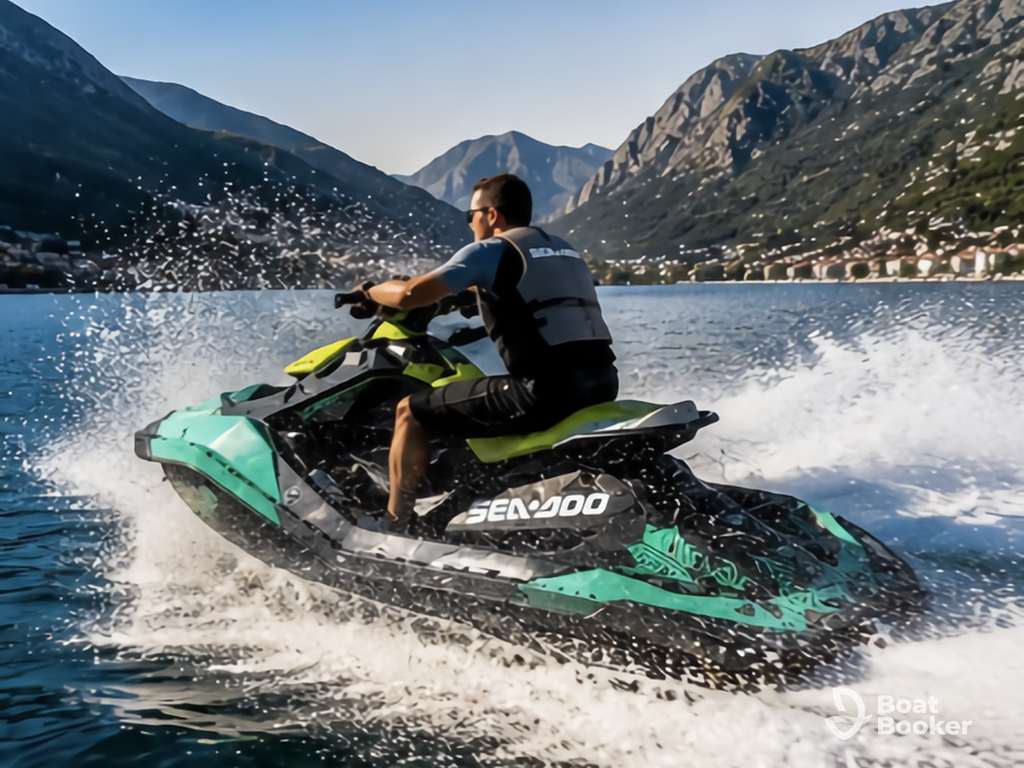
Jet skis use jet propulsion – the same basic principle that moves a jet airplane, just applied to water instead of air.
Here’s how it works: an internal combustion engine powers an impeller – a screw-shaped rotor inside the hull. The impeller draws water in through an intake grate on the bottom of the craft. Then it forces that water out at high pressure through a steerable nozzle at the back. That pressurized stream of water is what pushes the jet ski forward.
Steering works by pivoting the direction of the nozzle. Turn the handlebars left, and the nozzle points left, pushing the back of the jet ski to the right – which turns the nose to the left. This is important to understand: you need to be giving the engine some throttle to steer. At idle with no water flowing through the nozzle, turning the handlebars doesn’t do much.
There’s no exposed propeller underneath, so jet skis are safer than prop-driven boats for riders who fall off. Every jet ski also comes with a kill switch lanyard – a cord you attach to your wrist or life jacket. If you fall off, the lanyard pulls out and the engine cuts immediately. Tour operators will show you how this works before you head out. For more on staying safe on the water, check out these boating safety tips.
How Fast Do Jet Skis Go?
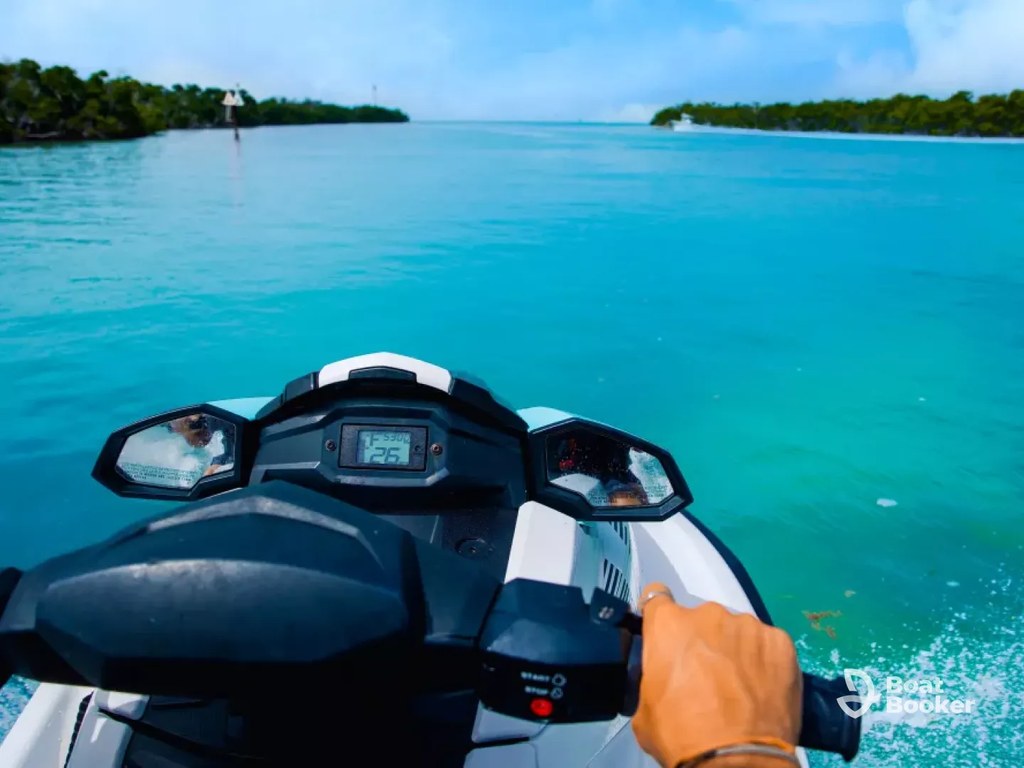
Most recreational jet skis top out between 40 and 55 mph. That might not sound dramatic on paper, but 50 mph on open water – with wind in your face, spray hitting your arms, and nothing but a handlebar between you and the surface – feels genuinely fast.
Performance models push that further. High-end machines from all three major brands can hit 65–70+ mph, and some supercharged models creep past that in ideal conditions.
If you’re booking a tour or rental, expect lower speeds. Most tour operators limit their machines to around 30–45 mph for safety and insurance reasons. Still, that’s plenty thrilling for a first-timer. You’ll have more than enough speed to feel the rush without needing racing experience.
How Much Does a Jet Ski Cost?
New jet ski prices in 2025–2026 cover a wide range depending on the category:
- Entry-level (e.g., Sea-Doo Spark): starting around $6,999–$8,000
- Mid-range recreation (e.g., Kawasaki STX 160X): $12,000–$16,000
- Performance and luxury (e.g., Kawasaki Ultra 310LX): $19,000–$22,649+
Used jet skis range from about $2,000 to $15,000 depending on year, condition, and model. Keep in mind that ownership costs add up fast – trailer, registration, insurance, maintenance, winterizing, and storage can easily run $1,000–$2,500 per year on top of the purchase price.
For most people – especially those who ride a few times a year on vacation – renting or booking a guided tour makes more financial sense. Typical jet ski rental rates run $75–$150 per hour depending on location and season. A guided jet ski tour in Dubai, for instance, gives you the ride, the views, and the safety briefing without the five-figure commitment.
Do You Need a License to Drive a Jet Ski?
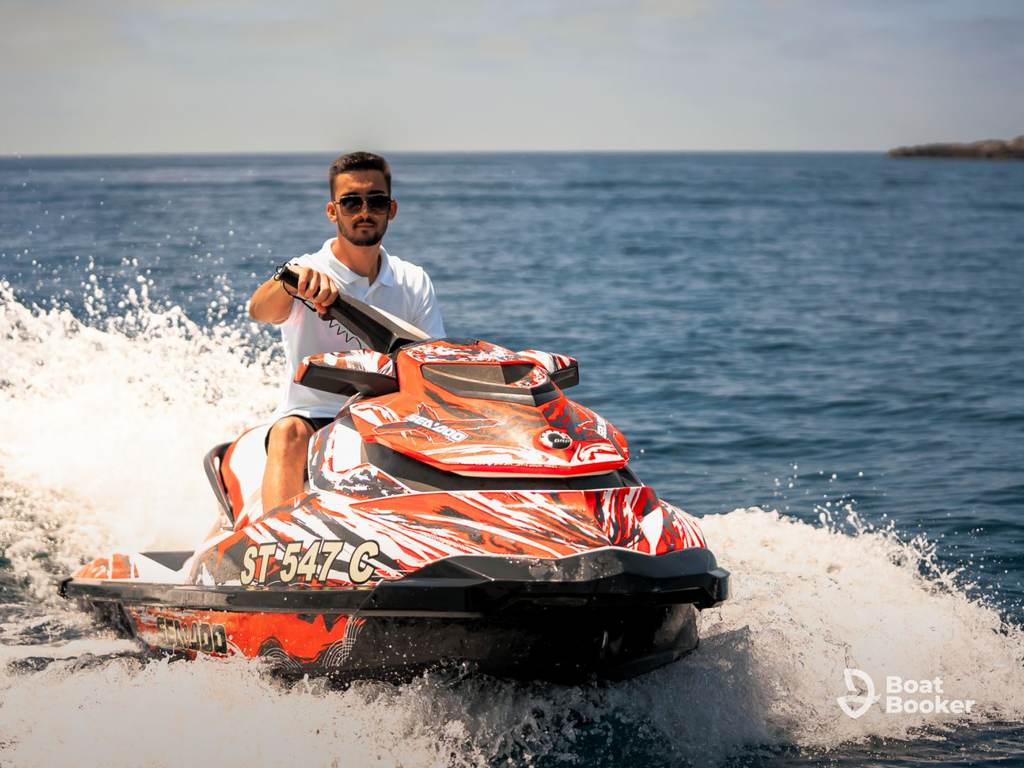
The answer depends on where you’re riding. In most US states, you don’t need a special “jet ski license” – but you do need a boating safety certificate. This is usually an online course that takes a few hours and costs $20–$50. Requirements vary by state: some mandate the certificate for all ages, others only for operators under a certain age, and a few states have no education requirement at all.
Age minimums vary too. Most states require riders to be at least 14–16 years old to operate a jet ski alone, though younger teens can sometimes ride with an adult. If you’re planning to ride in Florida, you can learn about the specific requirements in BoatBooker’s Florida boating license guide. Heading to Texas instead? Here’s the Texas boating license breakdown.
The National Association of State Boating Law Administrators (NASBLA) maintains a state-by-state directory of boating education requirements, so you can check your specific location before you go.
Here’s the good news for tour-goers: when you book a guided jet ski tour, the operator handles the regulatory side. You’ll still need to meet minimum age and sometimes weight requirements, and you’ll get a safety briefing. But you won’t need to show up with a boating certificate in hand. That’s one of the big advantages of a guided experience over renting on your own.
Best Places to Book a Jet Ski Tour
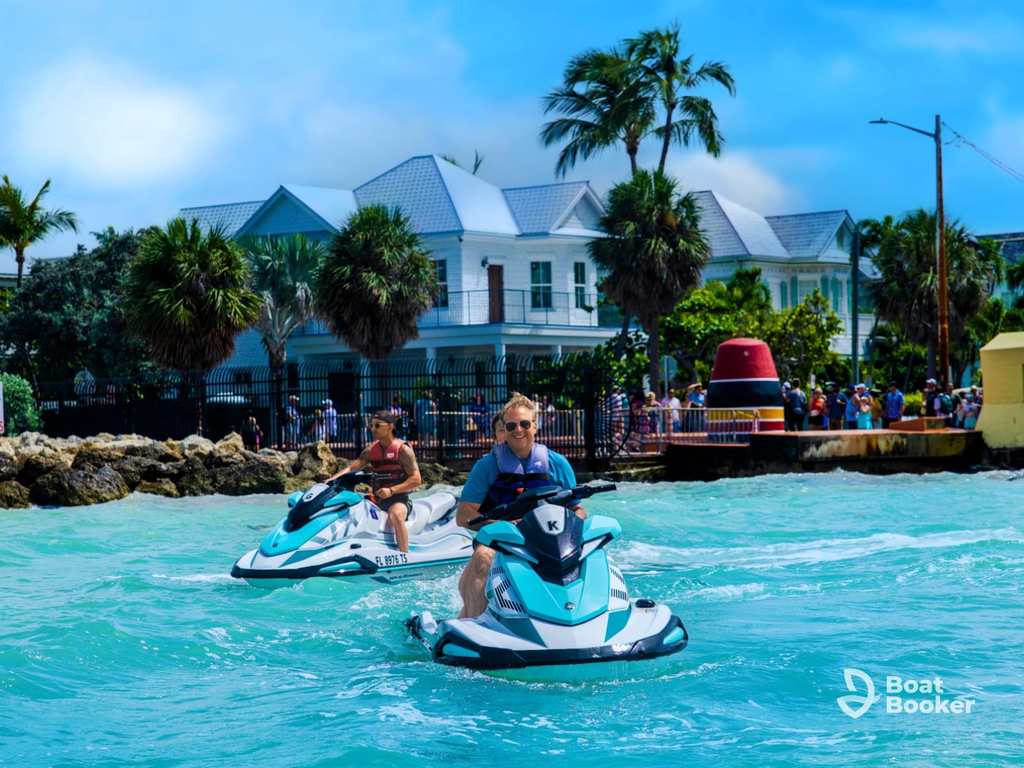
If you’d rather ride than buy, here are some of the top destinations where you can book a jet ski tour through BoatBooker:
- Miami, Florida – Cruise past the iconic skyline of downtown Miami and across Biscayne Bay, with views of Star Island’s celebrity mansions and the turquoise shallows around Virginia Key. Miami’s warm water and calm bay conditions make it ideal for first-time riders.
- Key West, Florida – The southernmost point in the continental US offers clear water, mangrove-lined channels, and the chance to spot sea turtles and rays as you ride. Many Key West tours also include stops at sandbars and backcountry islands.
- Cancún, Mexico – Ride along the Hotel Zone’s Caribbean coastline with its bright blue water and white sand backdrop. Some Cancún tours combine jet skiing with snorkeling stops at nearby reefs.
- Dubai, UAE – Jet skiing past the Burj Al Arab and along the Palm Jumeirah feels like riding through a postcard. Dubai’s calm Persian Gulf waters and year-round warm weather make it a reliable pick any time of year.
- Nassau, Bahamas – The Bahamian capital offers some of the clearest water in the Western Hemisphere. Tours often loop around Paradise Island and the harbor, with the water so transparent you can see the sandy bottom beneath you.
Frequently Asked Questions about Jet Skis
Have you ever ridden a jet ski – on a tour, a rental, or your own? We’d love to hear where you went and whether the experience lived up to expectations. If you’re a first-timer still deciding, drop your questions in the comments and we’ll do our best to help. And if anything in this guide is outdated or off, let me know – this stuff changes fast and we want to keep it accurate.