
Best Boating Lakes in Colorado: 10 Lakes to Explore This Summer
Colorado doesn’t have an ocean, but it more than makes up for it with hundreds of reservoirs and a handful of natural lakes scattered across the Rockies and the Front Range. From alpine gems sitting above 8,000 feet to lower-elevation reservoirs where the water actually warms up enough for a comfortable swim, the state offers a surprising range of boating experiences. Peak season runs from May through September, though some lakes stay accessible into October if the weather cooperates.
What you’ll find here is a mix of easy day trips from Denver and remote mountain destinations worth building a weekend around. Some of these lakes are built for wakeboarding and tubing. Others are better suited to a quiet pontoon cruise with a fishing rod. Whether you’re a family looking for a mellow afternoon on the water or a group of friends chasing tow sports, there’s a Colorado lake that fits. Here are 10 of the best boating lakes in Colorado, ranked by nothing except how much fun you’ll have there.
What Makes Colorado Boating Different
Boating at altitude comes with a few quirks you won’t encounter at sea level. At 8,000–9,000 feet, UV exposure is significantly more intense – sunscreen and a hat aren’t optional. Even in July, reservoir temperatures rarely exceed 65–68°F, so a wetsuit or dry bag with warm layers is smart planning.
Afternoon thunderstorms roll in like clockwork between 1:00 and 4:00 p.m. during summer, often bringing lightning. Experienced Colorado boaters aim to be off the water by early afternoon. If you’re trailering a motorized boat or sailboat, you’ll need a Colorado Aquatic Nuisance Species (ANS) stamp before you launch. It costs $25 and helps prevent the spread of invasive mussels between waterways.
Out-of-state boats can operate for up to 60 days with a current home-state registration, and anyone driving a motorboat must be at least 18 (ages 14–17 can operate with a boater safety certificate). Every person on board needs a Coast Guard–approved life jacket, and kids 12 and under must wear one at all times. For more on staying safe on the water, check out our boating safety tips.
Grand Lake
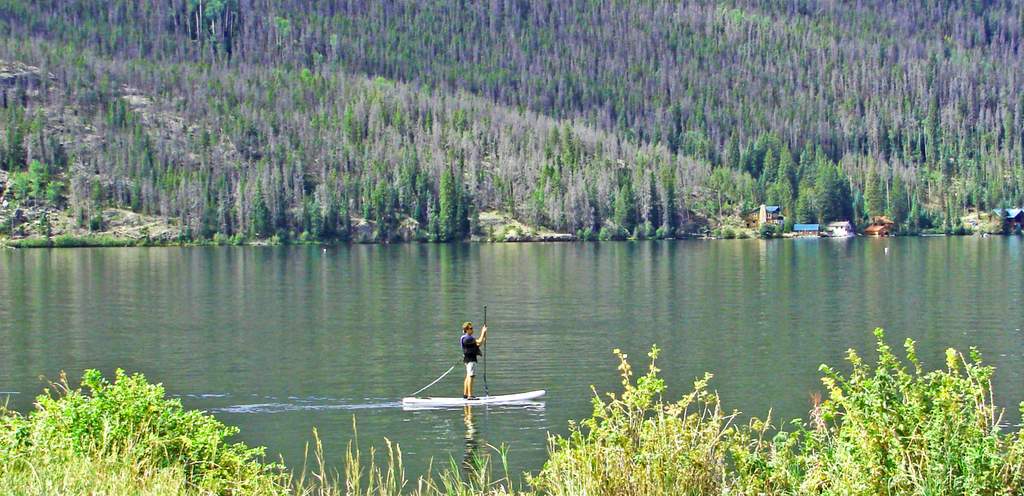
Grand Lake is Colorado’s largest and deepest natural lake, and it feels like it. Sitting at 8,369 feet on the western edge of Rocky Mountain National Park, the lake is framed by peaks that still hold snow well into June. The town of Grand Lake is small and walkable. It has a wooden boardwalk lined with shops, restaurants, and ice cream spots that makes for an easy post-boating stroll.
The lake itself is open to motorized boats, and the Grand Lake Marina rents pontoons, fishing boats, and kayaks. Because it’s a natural lake rather than a reservoir, the shoreline stays consistent – no ugly drawdown rings. Pontoon cruises here are all about the scenery: forested ridgelines, osprey circling overhead, and water so clear you can see the rocky bottom in the shallows. A pontoon boat is a good fit for lake days like this, because of its stability and space – perfect for families with younger kids.
On land, the town serves as the western gateway to Rocky Mountain National Park. Trail Ridge Road – the highest continuous paved road in North America – is a 20-minute drive from the marina. Grand Lake is about 100 miles from Denver, roughly a two-hour drive through some of the state’s best mountain scenery.
Blue Mesa Reservoir
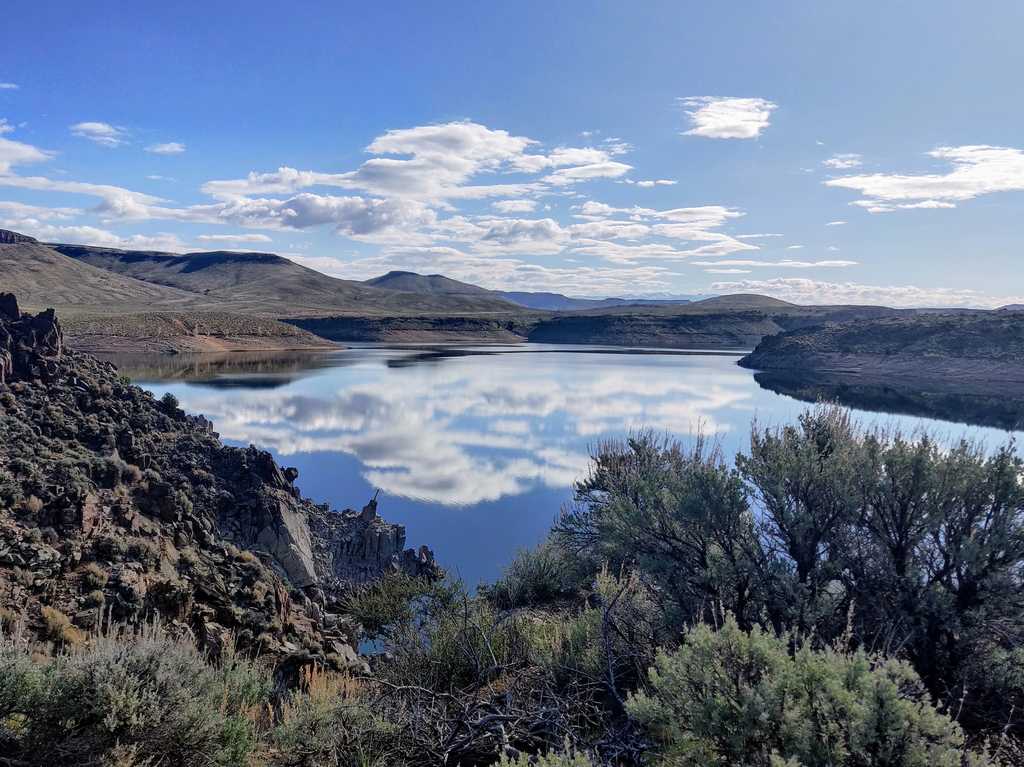
Blue Mesa Reservoir is the largest body of water in Colorado, and it’s not close. Stretching across 9,180 acres within the Curecanti National Recreation Area, the reservoir offers more than 96 miles of shoreline for powerboating, sailing, and fishing. The surrounding landscape is dramatic. The dark volcanic mesas and sage-covered hillsides look more like southern Utah than the Colorado you see on postcards.
Two full-service marinas – Elk Creek and Lake Fork – rent pontoons, fishing boats, and kayaks. Houseboating is a genuine option here, and multi-day rentals let you explore coves and inlets that are impossible to reach by car. The reservoir is also one of the state’s premier kokanee salmon fisheries, so expect to see plenty of anglers. Water temperatures hover in the mid-50s to low 60s even in summer, which means swimming is brisk at best.
Blue Mesa sits about four hours from Denver near Gunnison, so it’s more of a weekend destination than a day trip. That said, the lack of crowds compared to Front Range reservoirs is a major draw. The NPS campgrounds along the shore are well-maintained, and the Black Canyon of the Gunnison – one of Colorado’s most underrated national parks – is just 30 minutes west.
Horsetooth Reservoir
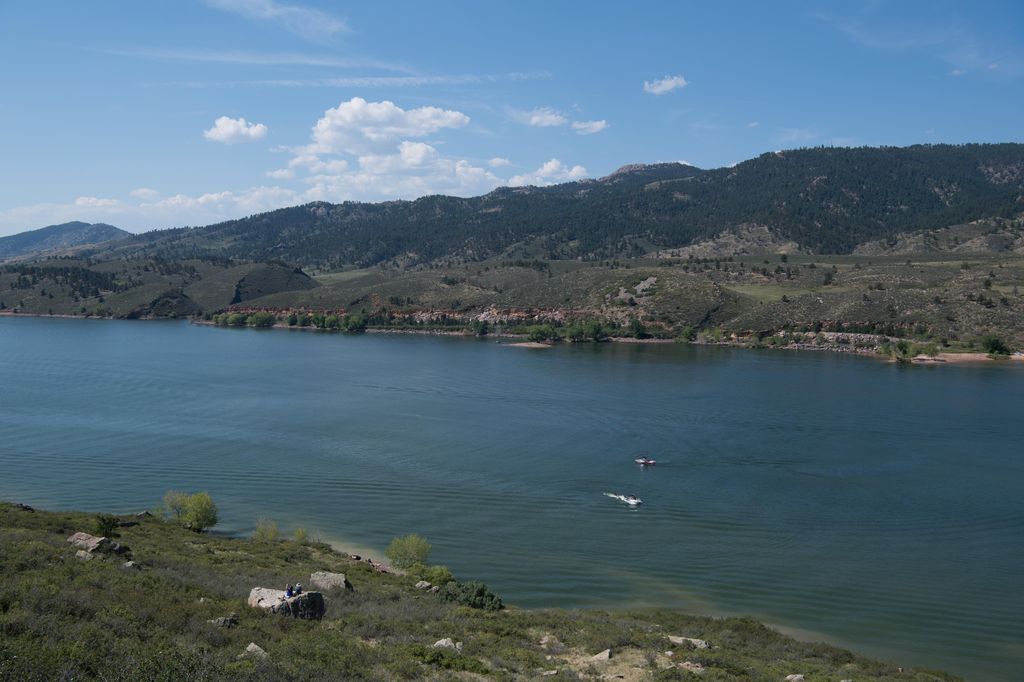
Horsetooth is a 6.5-mile-long tongue of water tucked between walls of pink sandstone on the western edge of Fort Collins. It’s one of the busiest boating lakes in Colorado for good reason – the setting is striking, the water warms up faster than most mountain reservoirs, and the city’s craft brewery scene is 10 minutes away.
The reservoir has a dedicated power zone for waterskiing, wakeboarding, and tubing, plus quieter arms where kayakers and stand-up paddleboarders can escape the wakes. The Inlet Bay Marina rents pontoons and motorboats, and several outfitters in Fort Collins offer kayak and SUP rentals you can haul to the water yourself. Surface temps can reach the mid-60s by July – cold compared to a Texas lake, but downright tropical by Colorado standards.
Surrounding the reservoir is Horsetooth Mountain Open Space, with trails that climb the ridgeline for panoramic views of the water below. Fort Collins itself is about an hour north of Denver, making Horsetooth a realistic day trip from the metro area. Arrive early on summer weekends – the parking lots fill up fast, and the entrance gate has been known to close by mid-morning.
Dillon Reservoir
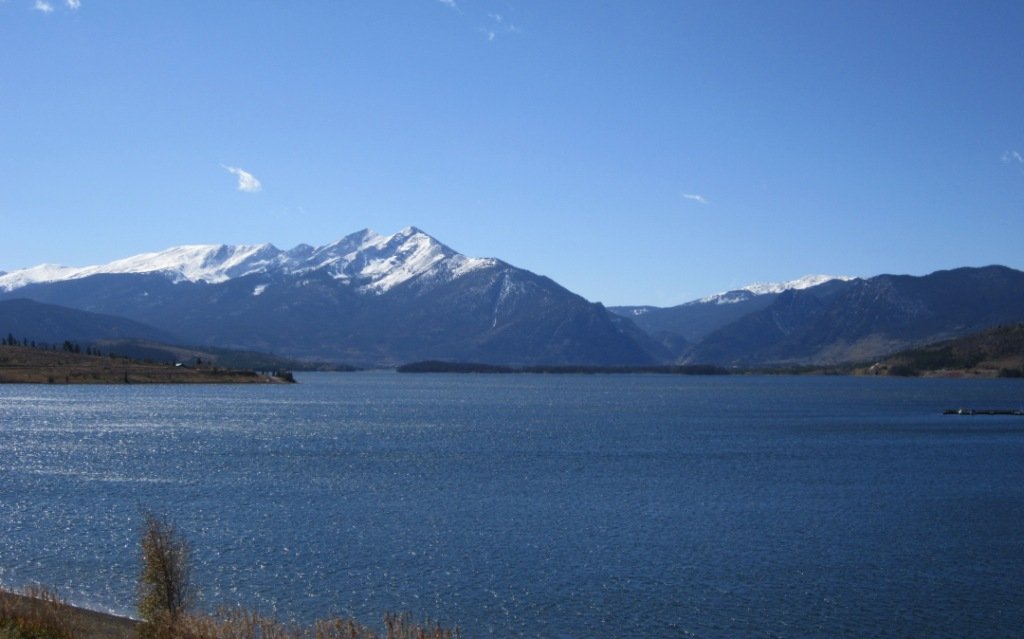
Dillon Reservoir – locals call it Lake Dillon – is the boating lake in Colorado that’s easiest to stumble into. It sits right off I-70 in Summit County, about 75 minutes from Denver. You can literally see it from the highway. Two marinas (Dillon Marina and Frisco Bay Marina) make this one of the most accessible mountain lakes in the state.
Sailing is the main event here. The Dillon Marina operates the highest yacht club in North America, and the afternoon thermal winds that sweep across the reservoir make it a natural sailing venue. Both marinas offer pontoon and motorboat rentals, though a 10 HP engine limit keeps things calm – no waterskiing or wakeboarding. Kayaks and SUPs are also available, and the relatively protected bays near Frisco are good for beginners.
The surrounding towns – Frisco, Dillon, and Silverthorne – offer plenty of restaurants, shops, and outlet stores. It’s also a strong base for day hikes along the Gore Range or a mountain bike ride on the many trails that web through the area. The 7.5-mile paved recreation path around the reservoir is flat and family-friendly. At 9,017 feet, this is one of the higher lakes on this list, so drink lots of water and respect the afternoon storm window.
Lake Granby
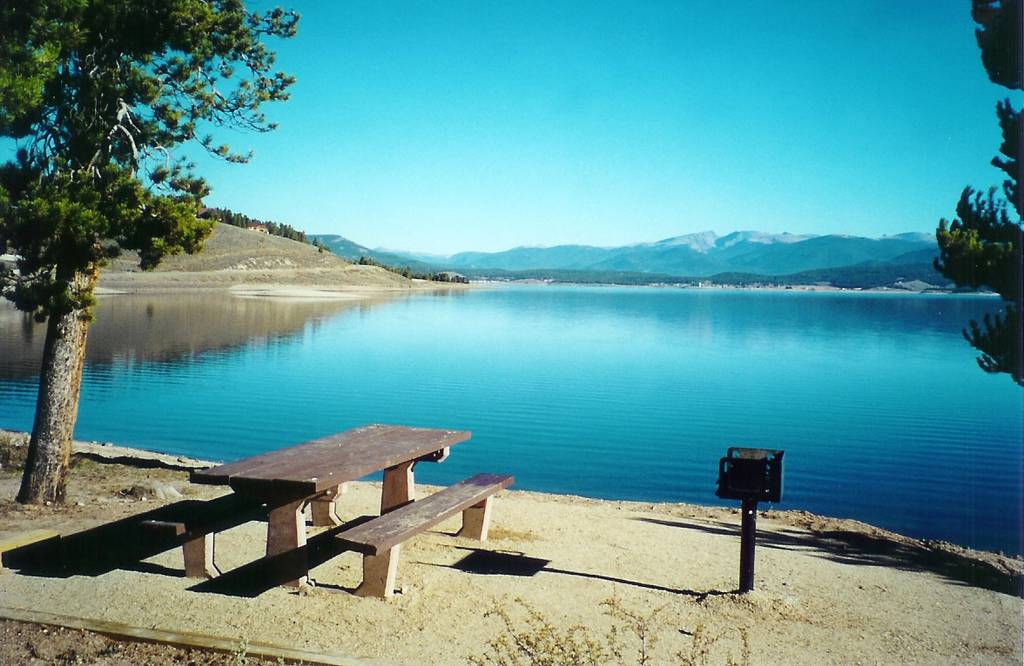
Lake Granby is Colorado’s third-largest body of water and one of the highest major lakes in the world at 8,280 feet. It sits just south of Grand Lake, connected by a short channel, but the vibe is different. Granby is bigger, more open, and more oriented toward fishing and powerboating than its smaller neighbor.
The lake covers more than 7,000 acres, which gives it a spacious feel even on busy summer weekends. Multiple marinas offer pontoon, motorboat, and kayak rentals. Lake Granby is also one of the state’s top spots for mackinaw (lake trout) fishing – trophy-size fish come out of here regularly. Because the lake allows motorized boats with no horsepower restrictions on most of its surface, it’s a solid pick for tow sports if you bring your own boat.
The Arapaho National Recreation Area surrounds much of the shoreline and offers campgrounds, hiking trails, and picnic areas. The town of Granby, about 15 minutes south, has grocery stores and gas stations for resupply. From Denver, it’s roughly a two-hour drive – the same route as Grand Lake. Combining a day on Granby with an evening on the Grand Lake boardwalk is a classic Colorado weekend move.
Chatfield Reservoir
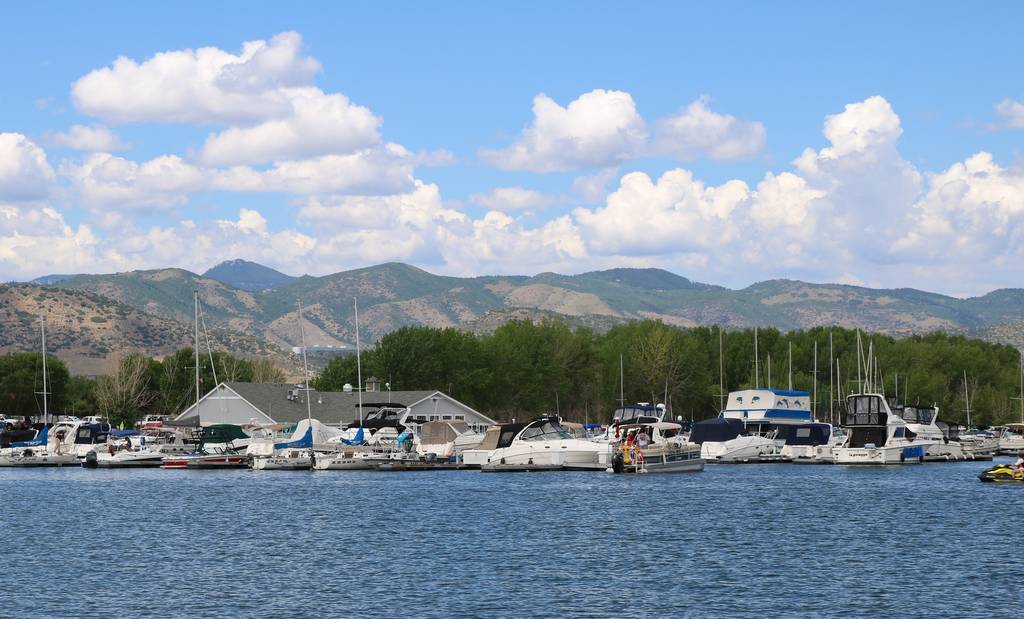
If you live in the Denver metro area and want to be on the water in under an hour, Chatfield is probably your best bet. This 1,400-acre reservoir sits at the southern edge of the city inside Chatfield State Park, and it’s the closest large body of water to downtown with a full-service marina.
Chatfield has a designated power zone for waterskiing and wakeboarding, plus calmer zones for pontoon cruising and fishing. The marina rents pontoons, fishing boats, and pedal boats – it’s one of the more family-friendly rental setups on this list. Water temperatures run warmer than the mountain reservoirs, typically reaching the upper 60s by mid-summer, which makes swimming and tubing more comfortable.
Beyond boating, the state park has a swim beach, a network of paved bike paths, horseback riding, and a model airplane field. The reservoir is also a surprisingly good birding spot – great blue herons, white pelicans, and bald eagles are all regulars. It’s roughly a 30-minute drive from downtown Denver, making it the go-to option for a spontaneous lake day.
Pueblo Reservoir
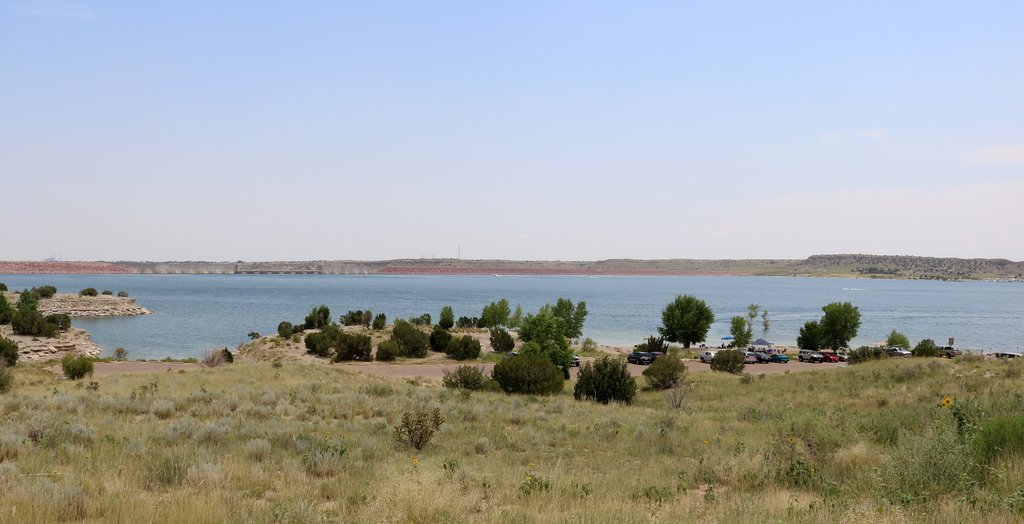
Pueblo Reservoir is where Colorado boaters go when they want warmer water. Sitting at 4,900 feet – well below the mountain reservoirs – Lake Pueblo State Park sees nearly 1.7 million visitors a year, making it one of the busiest outdoor destinations in the state. The lower elevation means longer seasons, more sunshine, and water temperatures that can push into the low 70s by August.
The reservoir stretches across 4,600 acres with roughly 60 miles of shoreline. Two marinas rent pontoons, ski boats, and fishing boats. There’s no horsepower limit, so this is one of the best lakes in Colorado for boating at full throttle. Wakeboarding, waterskiing, and tubing are all popular. Anglers target walleye, bass, and wiper (a hybrid striped bass) that thrive in the warmer water.
On the north shore, the Arkansas Point campground overlooks the reservoir with walk-in tent sites. The city of Pueblo – about 15 minutes east – has a revitalized downtown with restaurants and a riverwalk along the Arkansas River. From Denver, it’s about a two-hour drive south on I-25. If cold water has been keeping you from fully enjoying Colorado boating, Pueblo is the answer.
Navajo Reservoir
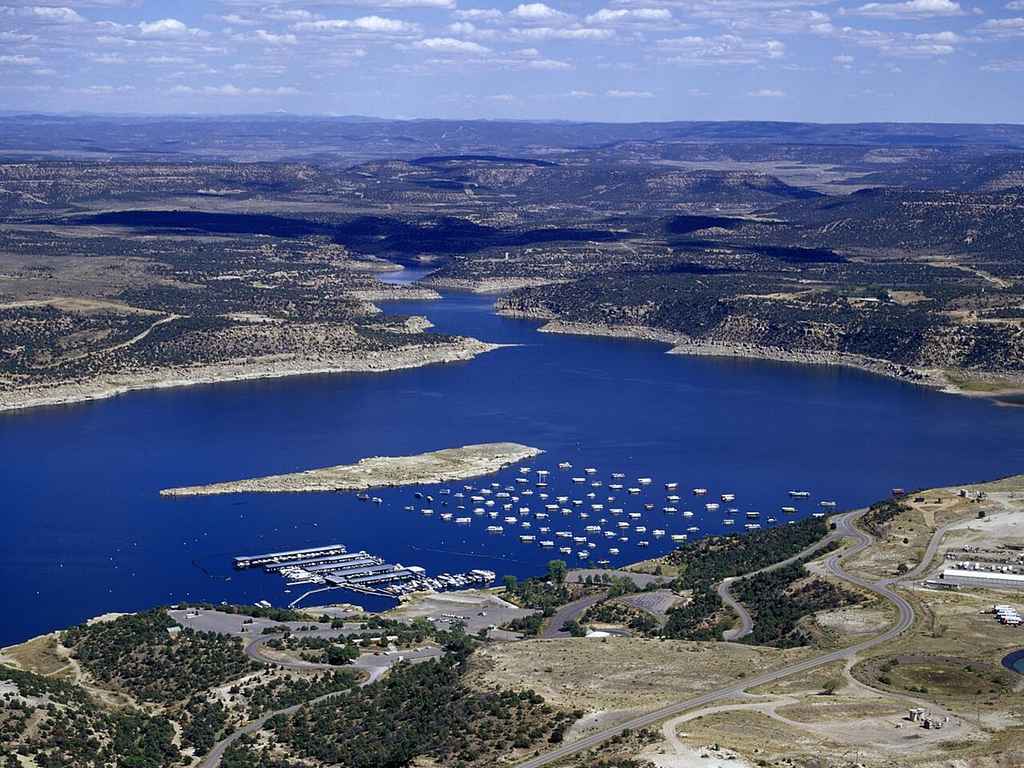
Navajo State Park sits in Colorado’s far southwest corner, right on the New Mexico border, and it feels like a different state entirely. The reservoir stretches 34 miles long and covers roughly 15,000 acres – big enough that you can boat for hours without retracing your route. Red rock canyon walls rise from the waterline, and the sparse desert vegetation gives the landscape a Lake Powell quality at a fraction of the crowds.
Houseboating is the signature experience here. Multi-day houseboat rentals let you anchor in quiet coves, swim off the back deck, and fall asleep to absolute silence. The marina also rents pontoons, fishing boats, and ski boats. Because the reservoir sits at a relatively low 6,100 feet, water temperatures are more moderate than the mountain lakes. It’s still not warm by any stretch, but swimmable in July and August.
The nearest town of any size is Pagosa Springs, about 30 miles east, known for its natural hot springs. It’s perfect way to end a day on cold water. Navajo is a solid four-and-a-half-hour drive from Denver, so plan on at least a two-night trip. The reward for that drive time is space. Even on peak summer weekends, you’ll find stretches of the reservoir where you’re the only boat in sight.
Eleven Mile Reservoir
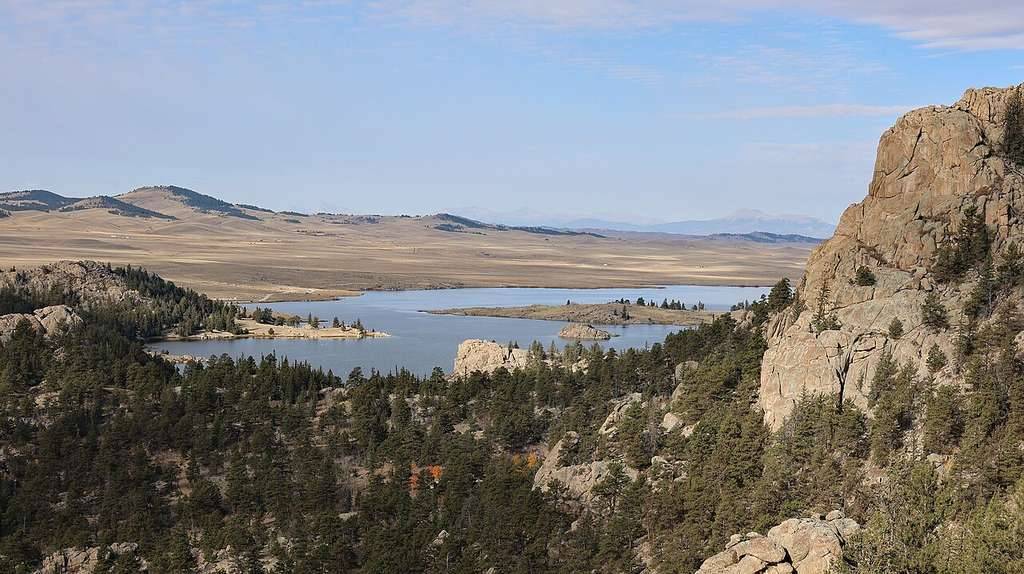
Eleven Mile Reservoir sits in the South Park Basin, a high-altitude grassland ringed by mountains that feels like it belongs in Montana. The lake covers about 3,400 acres and is managed primarily as a fishing destination. It’s one of the best trophy trout waters in the state, with kokanee salmon, northern pike, and carp also in the mix.
Motorized boats are allowed, but most people here fish from small craft or troll at low speeds. Kayaking, canoeing, and windsurfing are popular thanks to the reliable afternoon winds that funnel through the basin. There’s no marina with pontoon rentals, so you’ll need to bring your own boat or paddle craft. What you lose in rental convenience, you gain in solitude – the lake rarely feels crowded.
The views are the real draw beyond the fishing. On clear days, Pikes Peak dominates the eastern horizon, and the Tarryall Mountains frame the western shore. Eleven Mile State Park has several campgrounds along the water, some with walk-in sites right at the shoreline. It’s about two hours from Denver via Highway 24 through Woodland Park. Pack layers – at 8,600 feet, mornings can be cold enough for a fleece even in August.
Steamboat Lake
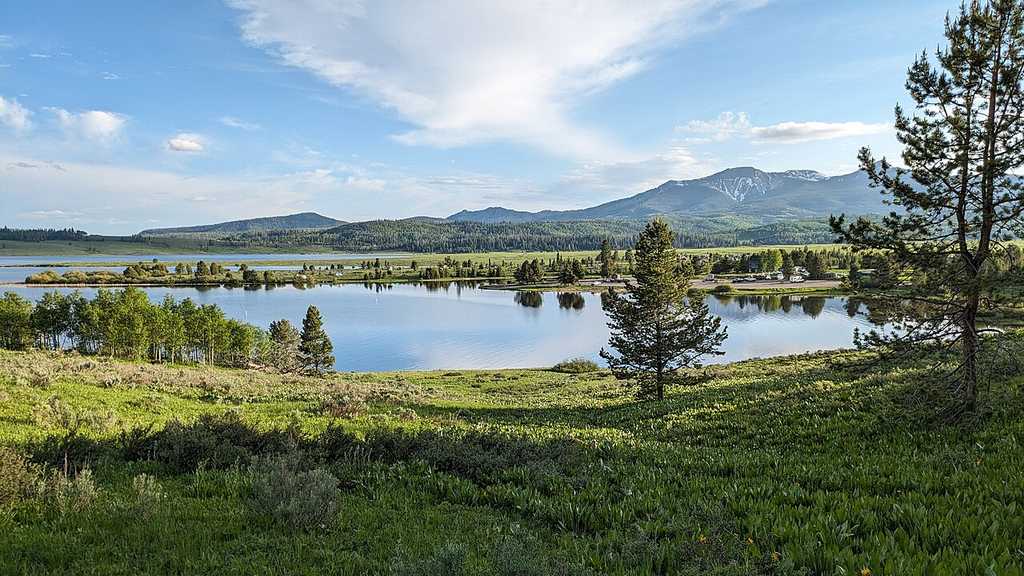
Steamboat Lake is the kind of place that locals don’t always advertise. Tucked into the Routt County backcountry about 30 miles north of Steamboat Springs, this 1,053-acre reservoir sits in a forested valley surrounded by flat-topped Hahn’s Peak and rolling meadows. It’s seldom crowded, and the facilities are clean and well-maintained.
The marina rents pontoons – some outfitted with gas grills for on-water cookouts – along with fishing boats and kayaks. Motorized boats are welcome, though the mellow atmosphere discourages aggressive watersports. This is a lake for slow cruising, fishing for rainbow trout and Snake River cutthroats. Oh, and watching moose wade through the willows along the shore. The water is cold (this is 8,000 feet in northern Colorado), so swimming is a quick-dip situation at best.
Steamboat Lake State Park has two campgrounds and a swim beach. The town of Steamboat Springs, about 45 minutes south, offers hot springs, restaurants, and a Western heritage vibe that’s more authentic than many Colorado resort towns. From Denver, it’s a three-and-a-half-hour drive. That’s long enough to feel like a getaway, short enough to pull off in a weekend. If your idea of a perfect lake day involves a pontoon boat, a grill, and very few other people, Steamboat Lake belongs at the top of your list.
Plan Your Colorado Lake Day
Colorado’s boating lakes reward a little planning. The variety is real. From the warm, busy waters of Pueblo Reservoir to the alpine quiet of Steamboat Lake, there’s a lake here for every kind of boater. Most of these destinations are within a two-to-three-hour drive of Denver, making them realistic for a long weekend or even a day trip if you get an early start.
Keep in mind that the boating season is shorter than in most states. Ice-off dates vary by elevation, and afternoon thunderstorms are a daily reality from June through August. Build your schedule around morning departures, carry your ANS stamp and registration, and pack for temperatures 20 degrees cooler than whatever the Denver forecast says. For ideas beyond Colorado, BoatBooker’s best boating lakes guide covers top picks across the country.
Frequently Asked Questions about Colorado Boating
Have you boated on any of these Colorado lakes? I’d love to hear which ones you’d add to this list – or if any of these descriptions are off the mark. Drop your tips and corrections in the comments, especially if you’ve found a hidden marina or a secret cove that deserves more attention.