
What Is a Jet Boat? A Beginner’s Guide to How They Work, What They Cost, and Where to Ride One
If you’ve ever seen a boat spin 360 degrees in its own length, throwing a wall of spray while passengers scream with delight, you were probably watching a jet boat. So what is a jet boat, exactly? It’s a powerboat that uses an internal jet drive instead of an external propeller to move through the water. That single difference – no prop hanging below the hull – changes everything about how the boat handles, where it can go, and what it feels like to ride one.
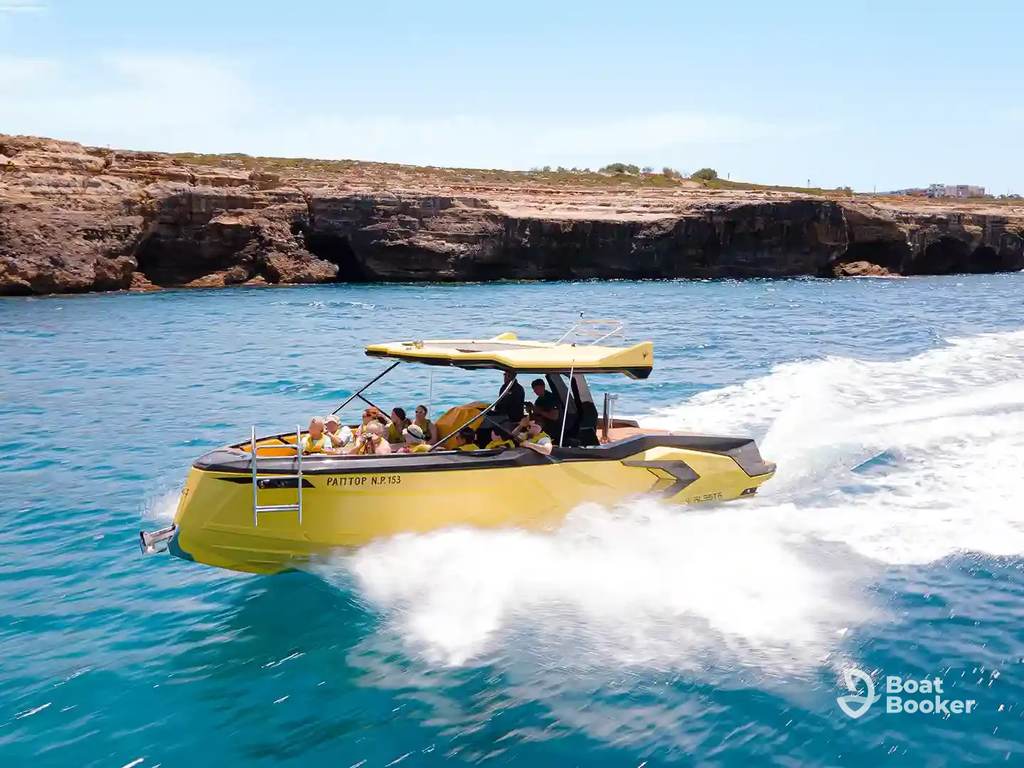
Jet boats are a favorite for families, thrill-seekers, and shallow-water explorers alike. They’re nimble, surprisingly safe around swimmers, and capable of maneuvers that would be impossible in a traditional prop boat. Whether you’re thinking about renting one for a weekend, booking a jet boat tour, or just trying to figure out what all the fuss is about, this guide covers how jet boats work, what they cost, and what to expect when you climb aboard.
What Is a Jet Boat?
A jet boat is any boat powered by a water jet rather than an external propeller. Instead of spinning a prop behind or beneath the hull, a jet boat draws water in through an intake on the bottom. It then pressurizes that water with an internal impeller and shoots it out through a nozzle at the stern. That stream of pressurized water is what pushes the boat forward.
The result is a boat with nothing poking below the hull – no prop, no rudder, no skeg. That flat bottom means jet boats can run in remarkably shallow water, sometimes as little as 12 inches of depth. There’s also no exposed propeller to injure swimmers, which is a big deal for families with kids who want to jump off the back and splash around.
Recreational jet boats typically range from 16 to 27 feet in length. You’ll find them on lakes, rivers, and coastal waters, used for everything from wakeboarding to fishing to scenic thrill tours. They look a lot like conventional bowriders from the outside – the magic is all hidden inside the hull.
How Does a Jet Boat Work?
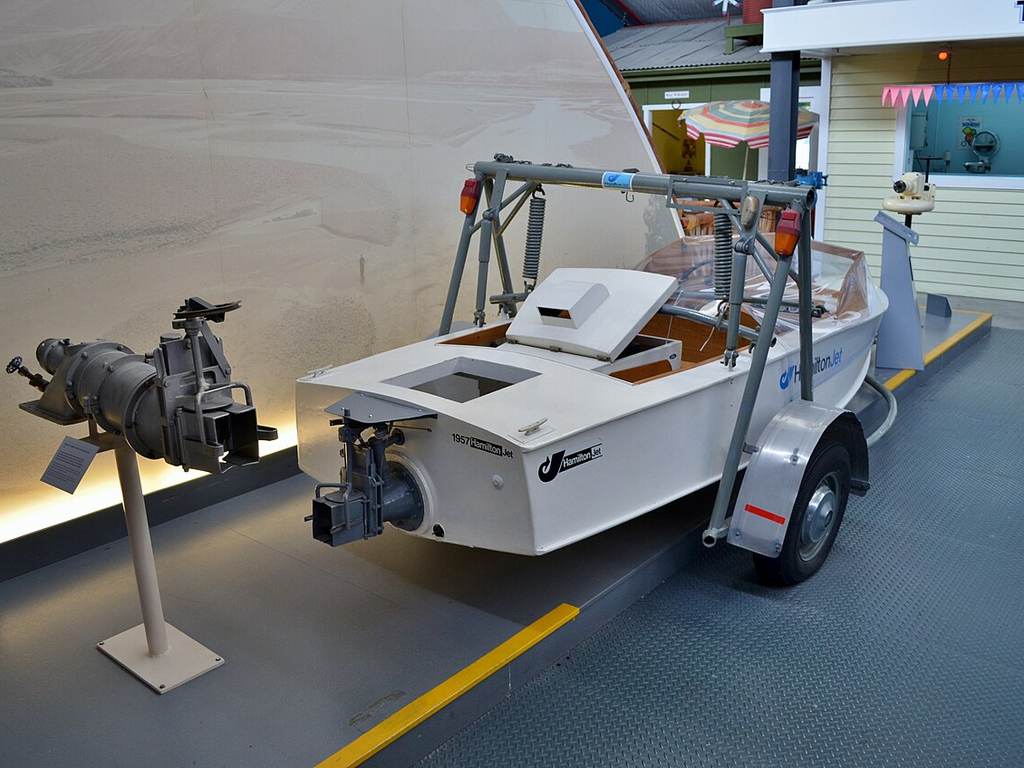
The jet drive system is elegant in its simplicity. Here’s the sequence:
- Water intake – A grate on the bottom of the hull channels water up into the pump housing as the boat moves forward.
- Impeller – Inside the pump, a spinning impeller (think of it as an internal propeller) pressurizes the water and speeds it up.
- Nozzle – The pressurized water exits through a steerable nozzle at the stern. This is where thrust – and steering – happen.
Steering a jet boat works differently from steering a prop boat. There’s no rudder. Instead, the nozzle itself pivots left and right, aiming the jet of water wherever the driver wants to go. Turn the wheel left and the nozzle swings left, pushing the stern right and the bow left. It’s responsive and precise – at speed.
There’s an important catch, though. Because all steering comes from the direction of the water jet, a jet boat has very little steering control at idle or low speed. No thrust means no steerable force. If you’re used to prop boats that respond to the wheel even when barely moving, jet boats feel different at the dock. This is the single biggest adjustment for first-timers.
Reverse and the Hamilton Turn
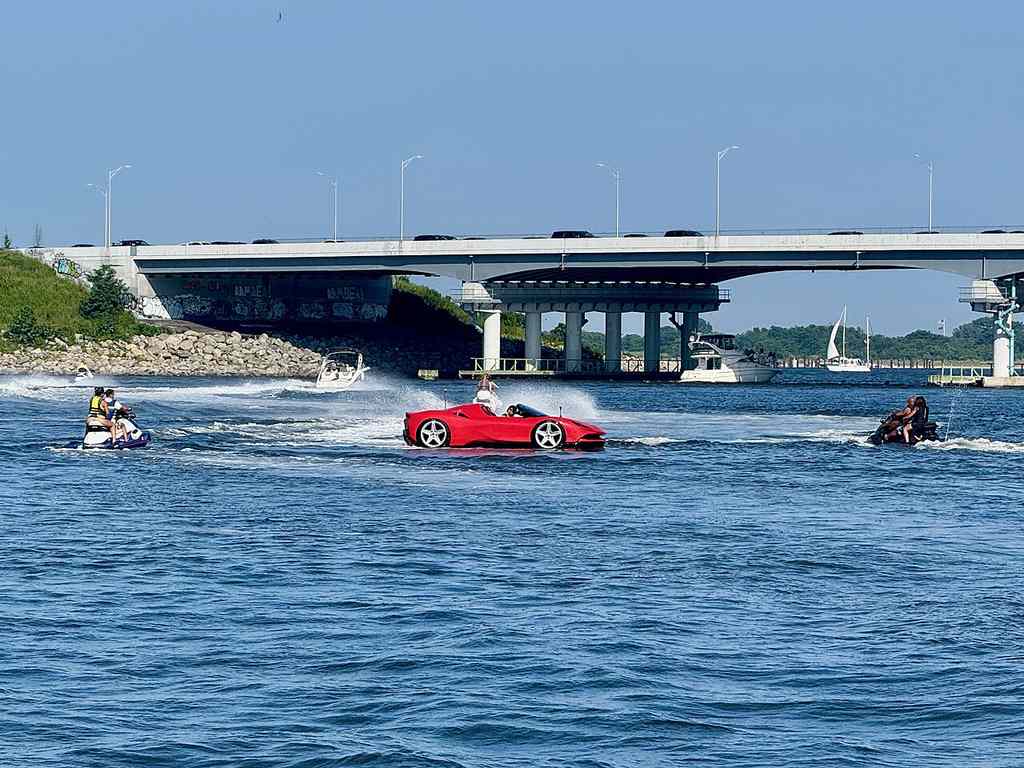
A hinged metal cover called the reverse bucket drops down over the nozzle and redirects the water jet forward, pushing the boat backward. It’s effective, but reverse handling in a jet boat takes practice – the boat doesn’t track as predictably as a propeller boat in reverse.
The most dramatic maneuver jet boats are known for is the Hamilton turn. It’s a high-speed, flat spin where the captain cuts the throttle and cranks the wheel. The boat enters a full 360-degree rotation in barely more than its own length. Tour operators love this one.
A Brief History of Jet Boats
The modern jet boat was born out of necessity, not luxury. In the 1950s, New Zealand engineer Sir William Hamilton needed a boat that could navigate the braided, shallow rivers of the Canterbury Plains on New Zealand’s South Island. These rivers were fast-flowing, full of rocks, and far too shallow for conventional propellers. A prop would shear off within minutes.
Hamilton’s solution was to move the propulsion system inside the hull entirely. After years of development, he perfected a water-jet pump that could propel a flat-bottomed boat at speed across water barely deep enough to wade in. His first commercially viable jet units went into production in the mid-1950s, and they transformed river transport across New Zealand.
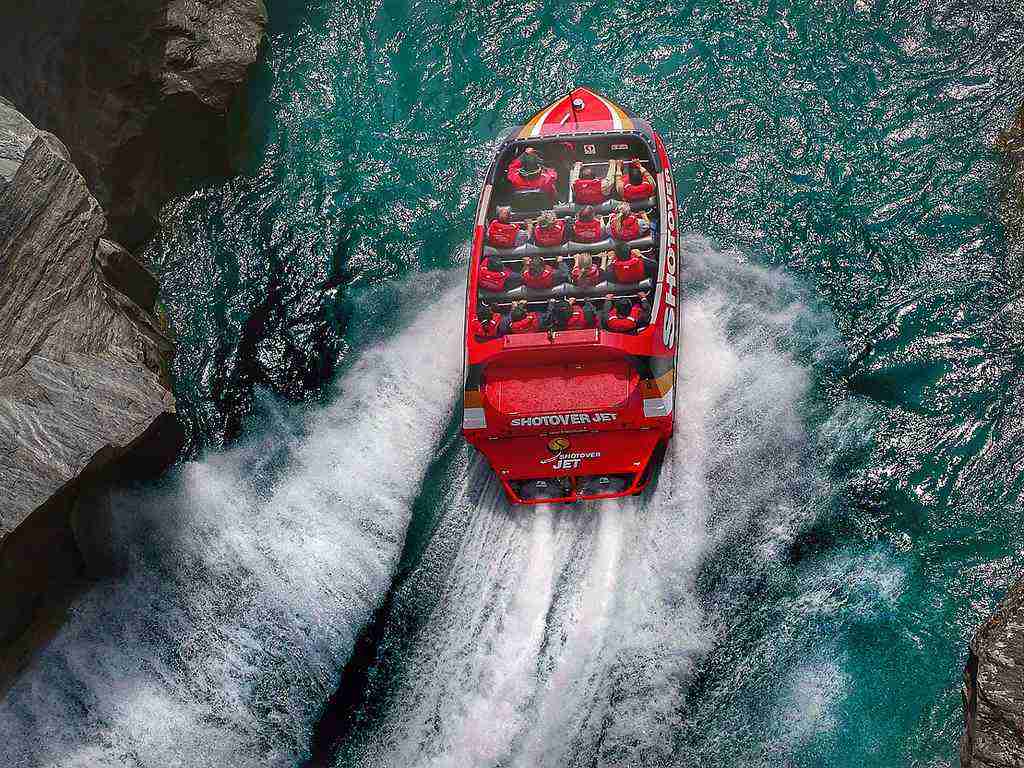
The technology spread quickly. By the 1960s and 70s, jet boats were being used for river rescue, farming, and exploration in remote areas. Queenstown, New Zealand, became the birthplace of commercial jet boat tourism – Hamilton Jet still manufactures marine jet propulsion systems today. The concept eventually crossed over into recreational boating. By the 1990s, Yamaha and other manufacturers were building affordable jet-powered bowriders for the family market.
Today, jet boats show up everywhere – from whitewater thrill rides at Niagara Falls to bass fishing on Ozark rivers to wakeboarding on Lake Tahoe. Hamilton’s shallow-water workhorse has come a long way.
Types of Jet Boats
Not all jet boats are built for the same purpose. Here are the main categories you’ll encounter.
Recreational Bowriders
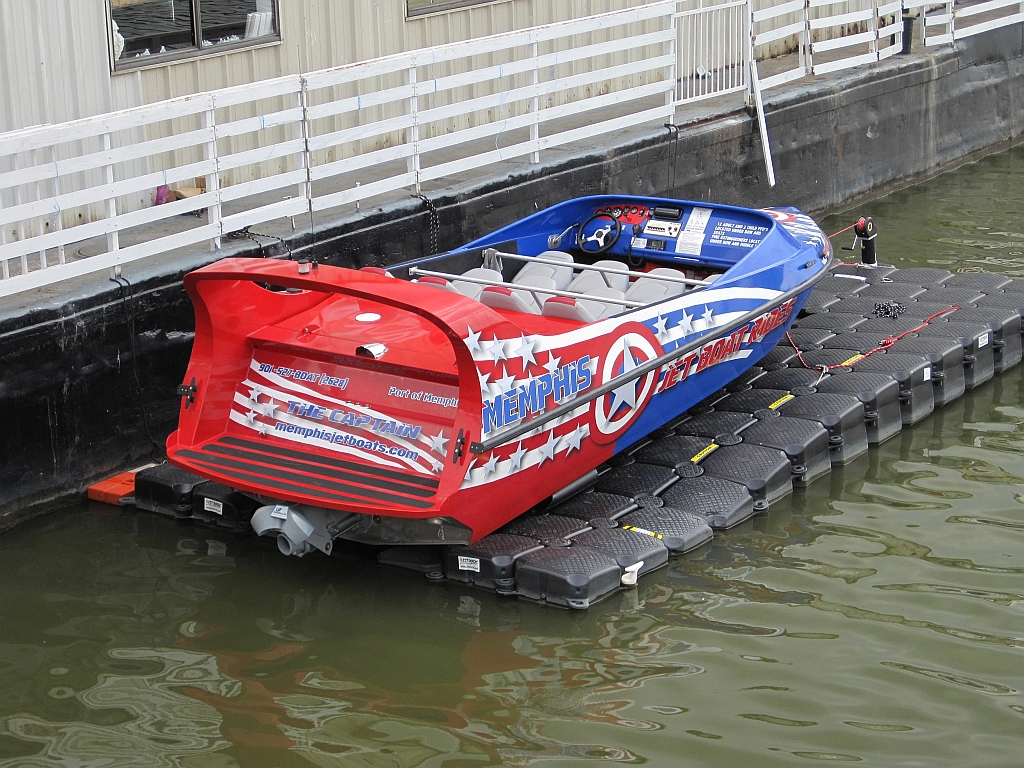
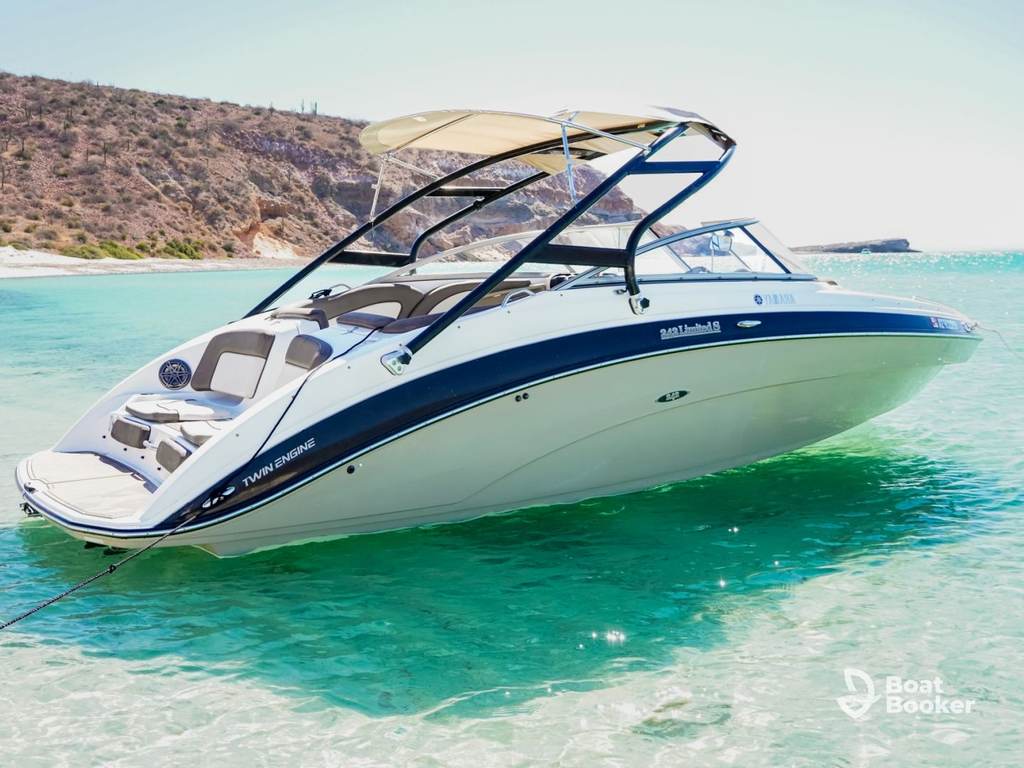
These are the jet boats most people picture – sporty, 19- to 24-foot bowriders designed for family fun on lakes and calm coastal waters. Major jet boat brands in this space include Yamaha (the AR series and SX series), Scarab (owned by Rec Boat Holdings), and Chaparral’s Vortex line. They seat 6 to 10 passengers and are built for tubing, skiing, wakeboarding, and cruising. Pricing starts around $35,000 and climbs past $80,000 for twin-engine models.
River Jet Boats
Purpose-built for shallow, rocky rivers, these are closer to Hamilton’s original vision. Brands like Rogue Jet Boats and North River build heavy-duty aluminum hulls with powerful jet drives designed to handle rapids, gravel bars, and water that would destroy a prop. They’re popular with anglers and guides in the Pacific Northwest, Alaska, and New Zealand.
Commercial Tour Boats
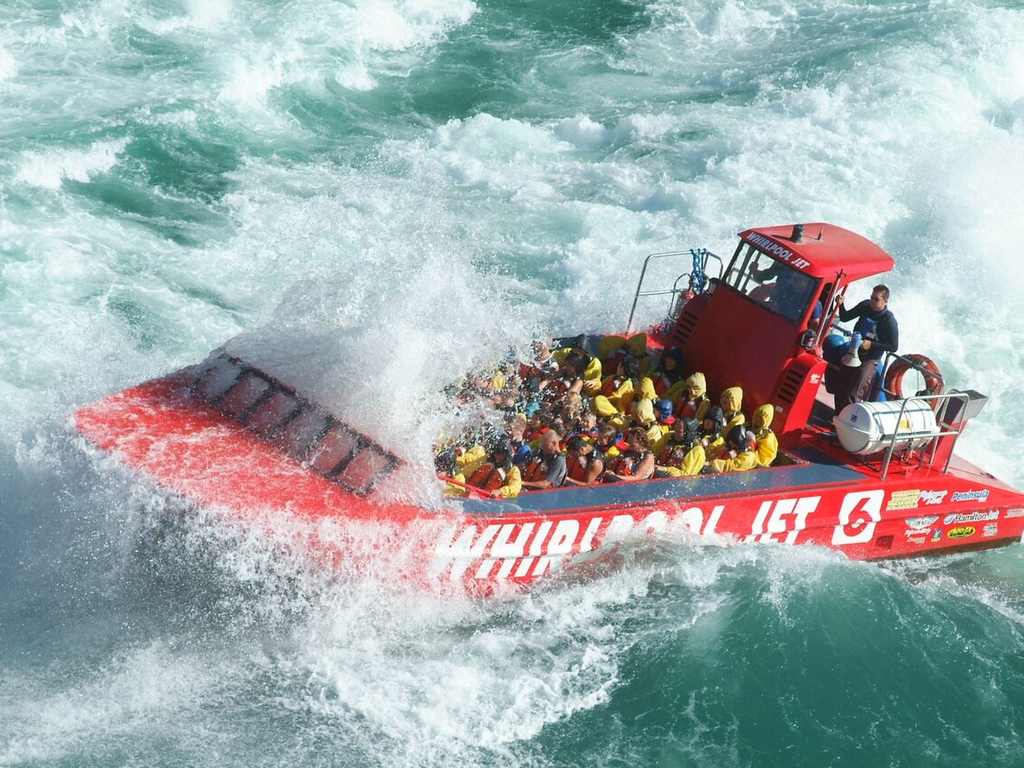
The big, loud, thrilling jet boats you see on tourist rides – Niagara Falls, Queenstown, the Chicago River – are commercial jet boats built for capacity and spectacle. They carry 20 to 50+ passengers and are designed for dramatic maneuvers, high-speed runs, and guaranteed soakings.
Mini Jet Boats
This is a smaller, more niche category – compact one- or two-person jet boats that sit low to the water and feel closer to a jet ski than a traditional boat. They’re less common but popular for river running and recreational use in tight waterways.
Jet Boat vs. Propeller Boat: Key Differences
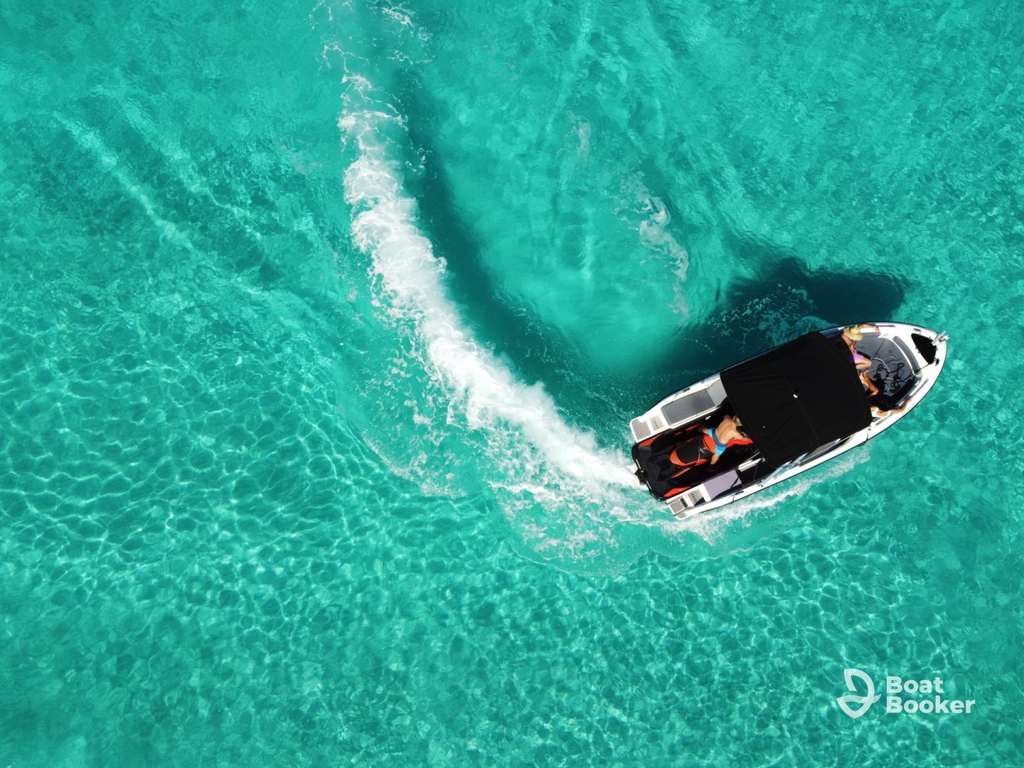
This is the comparison most people are really after when they want to know what a jet boat is. Here’s how the two stack up.
| Feature | Jet Boat | Propeller Boat |
|---|---|---|
| Draft | 12–17 inches – great for shallow water | 2–4 feet typical – needs deeper water |
| Swimmer safety | No exposed prop below hull | Exposed propeller is a serious hazard |
| Maneuverability (at speed) | Exceptional – tight turns, 360 spins | Good, but wider turning radius |
| Low-speed handling | Poor – loses steering without thrust | Good – rudder/prop provide control at idle |
| Top speed | 40–55 mph (recreational); some exceed 60 | Similar range, depends on hull and power |
| Fuel efficiency | Less efficient, especially below 20 knots | More efficient at low to moderate speeds |
| Reverse | Reverse bucket – effective but less precise | Direct reverse gear – more predictable |
| Maintenance | Impeller inspection, intake clearing | Prop maintenance, lower unit service |
| Noise | Generally louder at cruising speed | Quieter with sterndrive or outboard setups |
| Shallow water | Built for it | Risky – prop and lower unit vulnerable |
The short version: jet boats win on shallow-water access, safety, and agility. Propeller boats win on fuel efficiency, low-speed control, and quieter cruising. Neither is universally “better” – it depends on where and how you boat.
Here’s one nuance worth knowing: prop drives are generally more efficient at low speeds up to about 20 knots. But as speed increases, jet drives close the gap. Above 40–50 knots, jets actually become more efficient. So if you’re mostly cruising at moderate speeds, a prop boat sips less fuel. If you’re running fast on shallow rivers, a jet boat is hard to beat.
Pros and Cons of Jet Boats
Pros
- Shallow-water freedom. With draft as low as 12 inches, jet boats access rivers, sandbars, and skinny water that would ground a prop boat.
- No exposed propeller. This is the biggest safety advantage for families. Kids can swim behind the boat without the risk that comes with a spinning prop.
- Incredible maneuverability. At speed, jet boats can make turns, crash stops, and spins that feel almost impossible. The Hamilton turn is genuinely thrilling.
- Easy trailering. The compact, self-contained jet drive means nothing hangs off the back. Many jet boats also use smaller four-cylinder engines that are lighter than comparable sterndrives, so the whole package is easier to tow.
- Self-draining in winter. Unlike a sterndrive, which requires careful winterization to prevent freeze damage, a jet drive is self-draining and doesn’t hold water in the same way.
Cons
- Higher fuel consumption. Jet drives are thirstier than comparable prop setups. The effective horsepower is roughly a third lower than the rated engine output because of energy losses in the pump.
- Intake clogging. The pump intake can suck in weeds, sand, and debris. A stray ski rope or dock line drawn into the pump is a real headache – and a repair bill.
- No steering at idle. At low speeds with minimal thrust, you’re essentially drifting. Docking takes practice and patience.
- Fewer mechanics. Jet boat mechanics are less common than outboard or sterndrive technicians. Finding qualified service can be harder, especially in areas where jet boats aren’t popular.
- More cabin noise. The internal jet pump tends to produce more noise and vibration at cruising speed than an outboard setup of similar power.
What Are Jet Boats Used For?
Jet boats are versatile, but they really shine in a few specific roles.
- Watersports are the sweet spot for recreational jet boats. Tubing, wakeboarding, and water skiing all work well behind a jet boat, and many models come with tow pylons or towers from the factory. Because there’s no exposed prop, it’s also safer to pick up fallen riders.
- River fishing and exploration is where jet boats have no equal. Anglers chasing steelhead in Pacific Northwest rivers or exploring shallow backcountry waterways rely on jet boats to reach spots that would shred a propeller. Yamaha even makes a dedicated fishing jet boat – the FSH series – with livewells, rod holders, and casting decks.
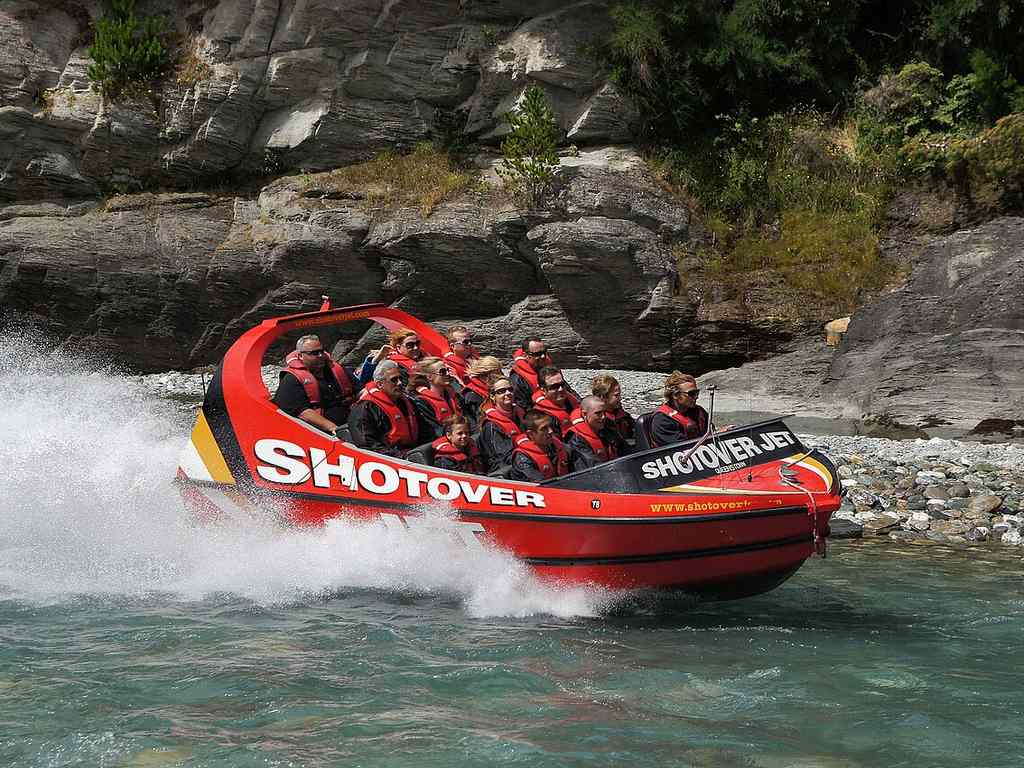
- Scenic thrill tours are a massive commercial market for jet boats. From Queenstown’s Shotover Canyon to Niagara Falls to Oregon’s Rogue River, jet boat tours combine sightseeing with adrenaline. The tight turns and crash stops are part of the show.
- Family day cruising rounds out the list. The swim-safe stern platform, easy handling at speed, and roomy bowrider layouts make jet boats a practical choice for a day on the lake with kids.
How Much Does a Jet Boat Cost?
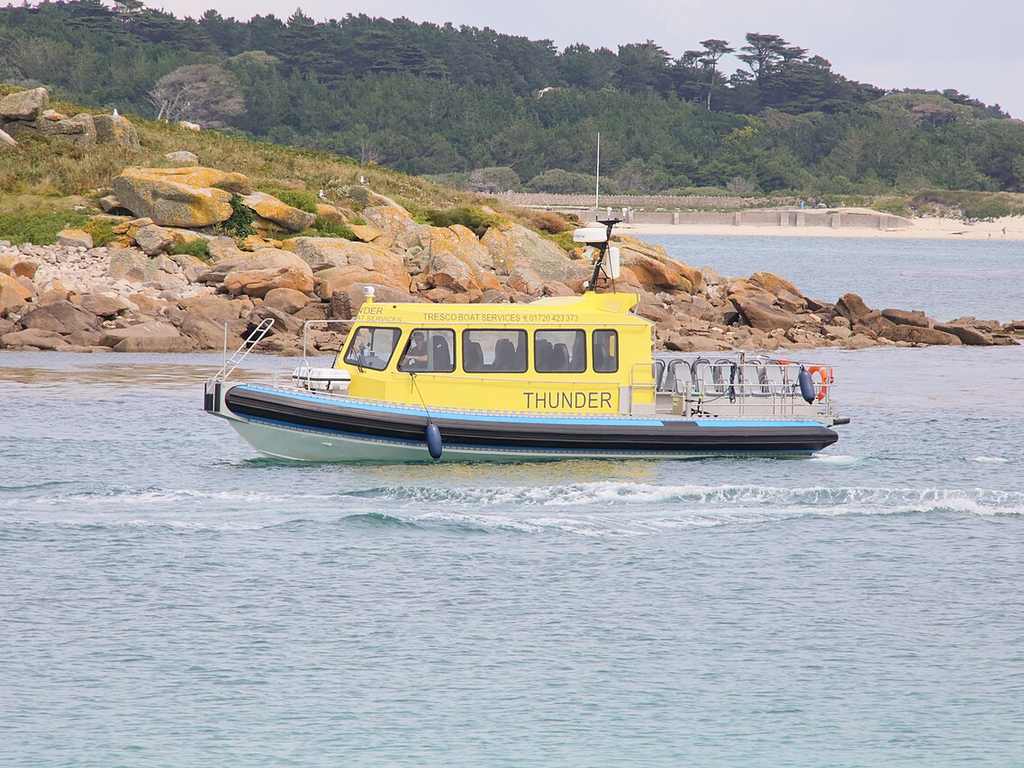
New recreational jet boats sit in a wide range depending on size, power, and features.
Entry-level single-engine models from Scarab or Yamaha start around $25,000–$35,000 for a basic 16- to 19-foot boat. Mid-range models – like the Yamaha AR195 at $47,799 or the Scarab 195 SE at $49,995 – are the most popular segment. Larger twin-engine models from Yamaha (SX240, 275SD) and Chaparral’s Vortex line push into the $60,000–$80,000+ range.
Used jet boats offer better value. You can find well-maintained models from the 2015–2020 era for $20,000–$40,000 depending on hours and condition. Check the impeller wear and ask about any intake clogging history.
Chartering a Jet Boat
If you want to ride a jet boat without buying one, chartering or booking a jet boat tour is the easiest entry point. Half-day jet boat charters typically run $300–$800 depending on location and boat size. Guided jet boat tours – the thrill-ride variety – usually cost $50–$150 per person for a 30- to 60-minute experience.
What to Expect on a Jet Boat Charter
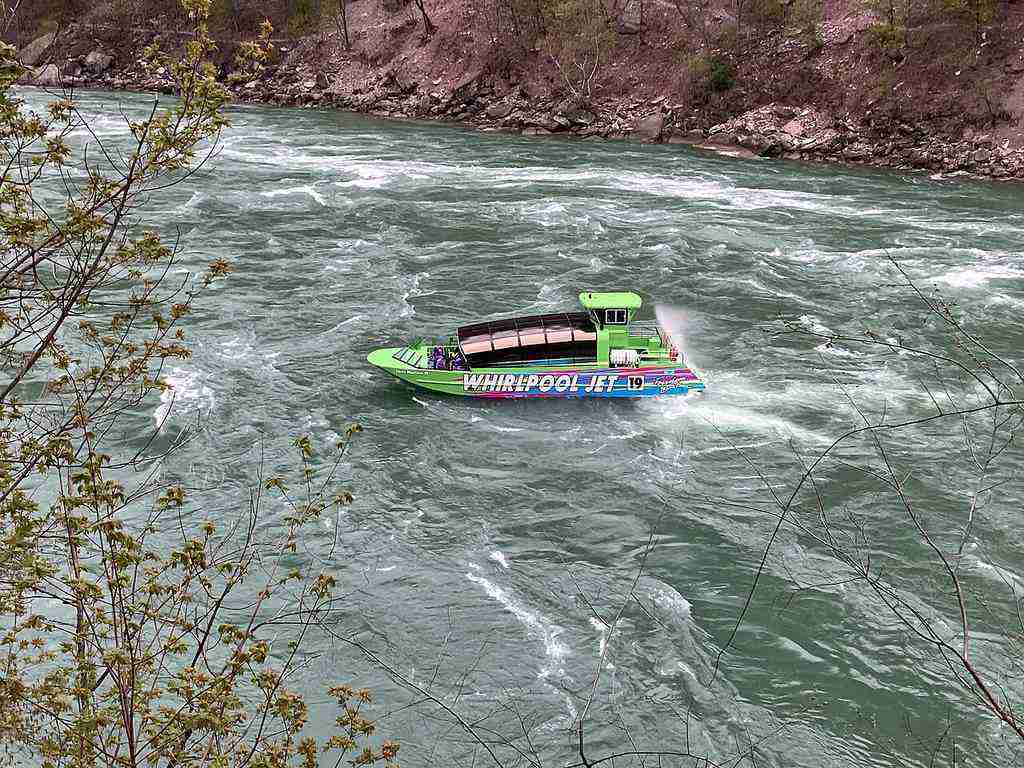
If you’ve never been on a jet boat before, here’s what the experience is actually like.
The acceleration is the first thing you notice. Jet boats feel quick off the line. The power delivery is smooth – there’s no gear shifting, just a steady surge as the impeller spins up. Most captains will ease into it at first, then open up the throttle once everyone’s settled.
Turns feel different. Because the steering comes from the jet nozzle rather than a rudder, the boat carves into turns with the stern sliding slightly outward. It’s a sensation closer to a car on a rally stage than a traditional boat. On a thrill tour, expect tight spins, sudden stops, and plenty of spray. The crash stop – where the reverse bucket drops and the boat goes from full speed to a halt in a startlingly short distance – is a highlight.
What to Bring
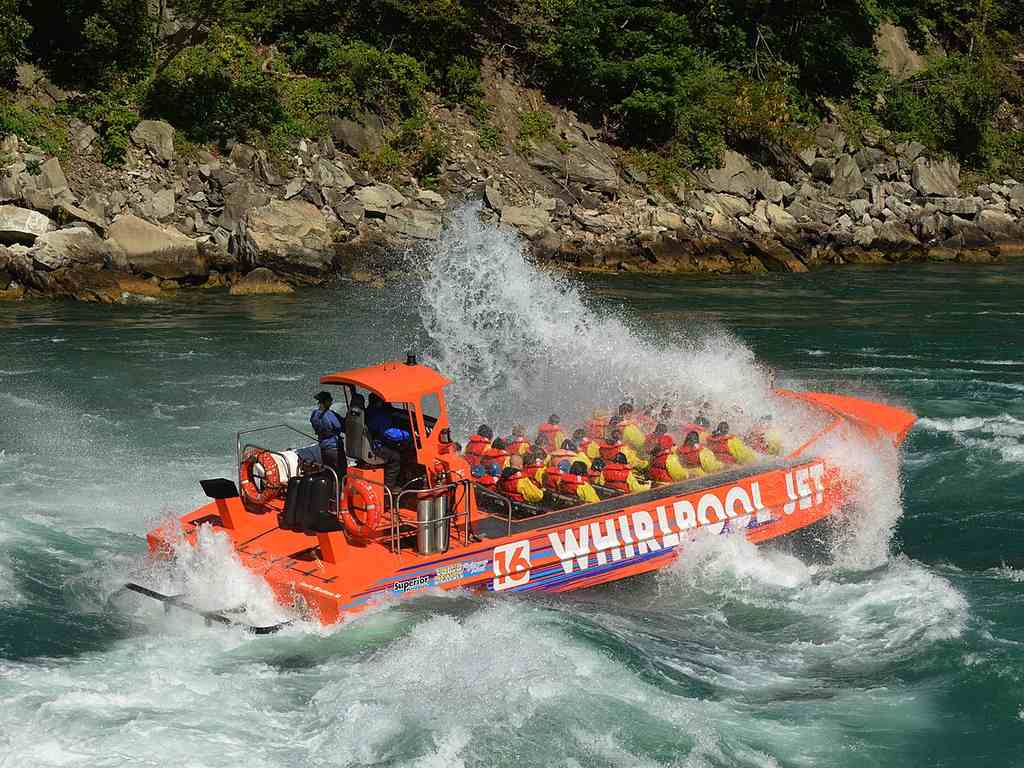
Bring a change of clothes. On thrill tours, you will get wet. On a calmer charter, you’ll stay drier, but spray from turns is part of the package. Wear clothes you don’t mind getting soaked, bring sunscreen, and leave your phone in a waterproof case or dry bag.
Trips range from 30 minutes to a full day. Guided thrill tours are usually 30–60 minutes of nonstop action. Private charters can run half-day or full-day, with time for swimming, tubing, or just cruising. Check whether the tour includes watersports gear – many jet boat charters come with tubes, skis, or wakeboards.
Tipping your captain 15–20% is standard on private charters in the U.S. On group tours, tips aren’t always expected but are appreciated. Check our boating guide for more first-timer tips that apply across boat types.
Frequently Asked Questions about Jet Boats
Have you ridden a jet boat – whether on a Queenstown thrill tour, a river fishing trip, or just messing around on a lake? We’d love to hear how it compared to other boats you’ve been on. And if anything in this guide seems off or outdated (especially the pricing – that moves fast), drop a note in the comments so we can keep it accurate.