
What Is a Bay Boat? A Beginner’s Guide to the Shallow-Water Boat Built for Coastal Fishing
If you’ve been browsing inshore fishing charters and spotted “bay boat” in the vessel description, you might be wondering what exactly that means – and whether it’s the right boat for your trip. A bay boat is a type of center console boat designed for fishing in shallow coastal waters like bays, estuaries, and tidal flats. These boats typically range from 19 to 26 feet long, draw less than a foot of water, and pack serious fishing features into a hull that can handle both skinny water and moderate chop.
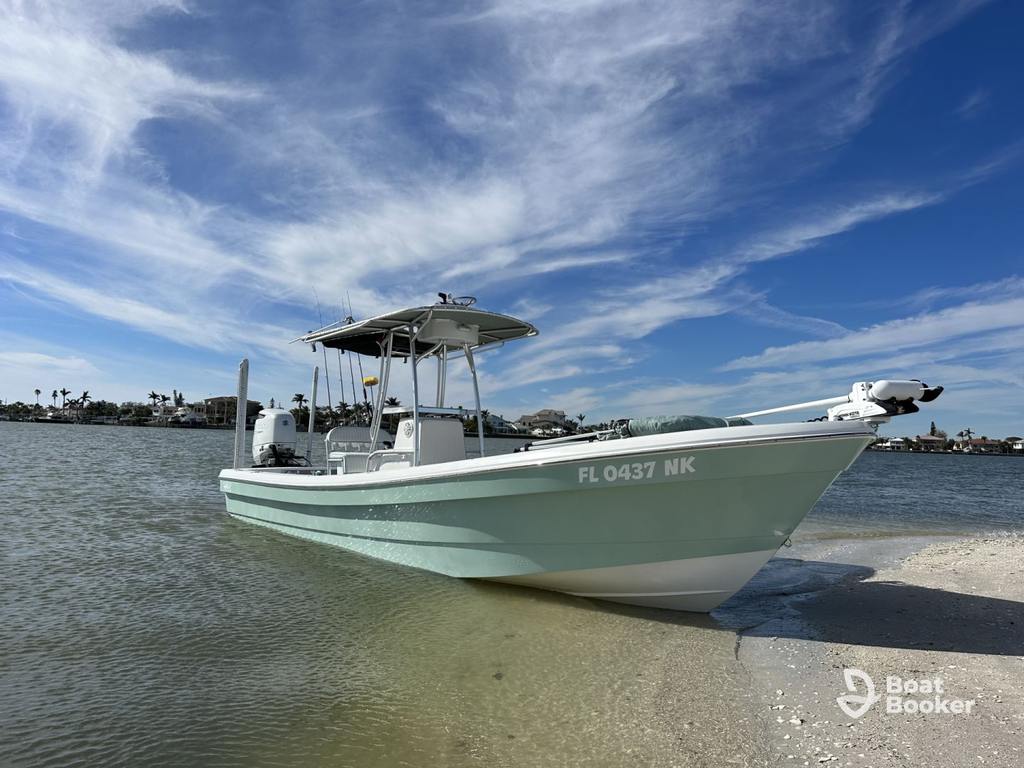
Bay boats were developed by and for inshore anglers along the Gulf Coast. These fishermen needed something purpose-built for chasing redfish, speckled trout, flounder, and other species through coastal bayous. The term “bay boat” as a distinct category only emerged around 2003, but the concept – a shallow-drafting, fishable center console – had been evolving for years before that. Today, bay boats are one of the most popular inshore vessel types in the U.S. They’re a common sight on charter listings from Florida to the Carolinas to the Texas coast.
This guide covers everything you need to know about bay boats: how they’re built, how they compare to flats boats and other center consoles, and what to expect if you book a bay boat charter for your next fishing trip.
What Is a Bay Boat?
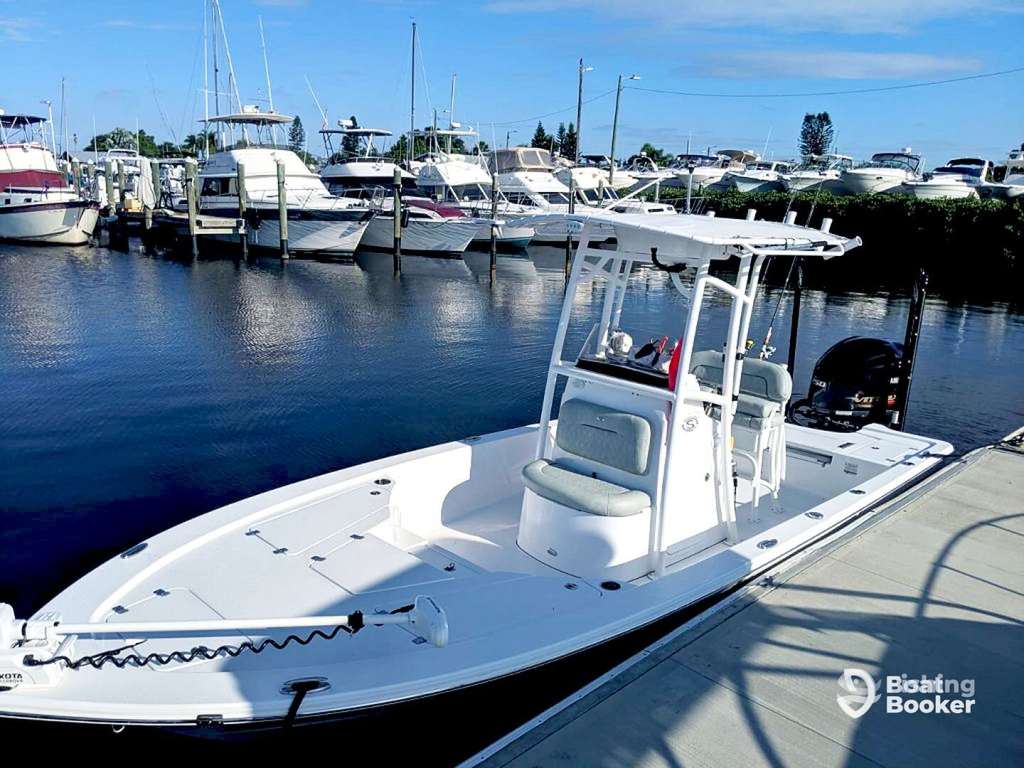
A bay boat is a shallow-draft fishing boat built around a center console layout, sized between 18 and 26 feet. It sits in a sweet spot between a tiny flats skiff and a full-size offshore center console. It’s shallow enough to access backwater flats, yet sturdy enough to cross open bays and handle light chop on nearshore waters.
The design traces back to Gulf Coast anglers who needed a boat that could do more than one thing well. A pure flats boat could pole across six inches of water but felt sketchy in a whitecapped bay. A bigger offshore rig could handle rough seas but couldn’t get anywhere near the skinny water where redfish tail. Bay boats were the answer – a compromise hull that gave up a few inches of draft for much more capability in open water.
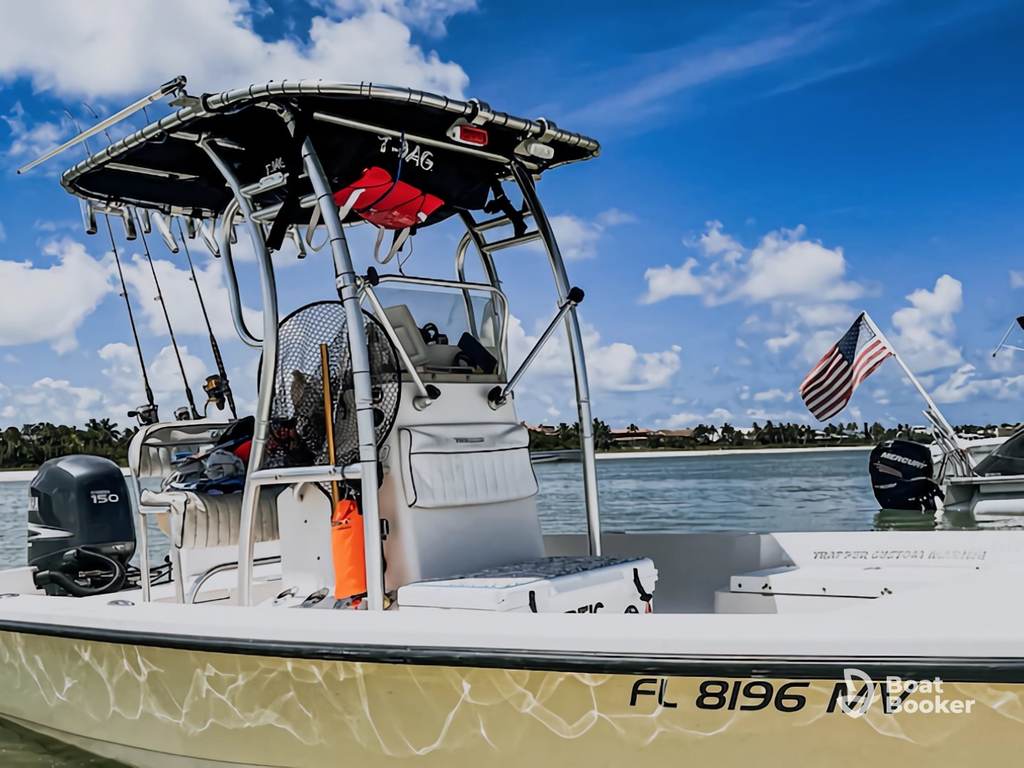
What makes a bay boat different from a generic center console boat is its focus. Every design decision – hull shape, deck layout, freeboard height, engine size – is optimized for inshore and nearshore fishing in coastal environments. You’ll find large casting decks, integrated livewells, shallow-water anchors, and trolling motor setups that an offshore-focused center console simply doesn’t prioritize.
Key Features of a Bay Boat
Hull Design and Draft
The hull is where a bay boat earns its keep. Most use a modified-V design – not as deep as the sharp V-hull on an offshore boat, but not pancake-flat like a dedicated flats skiff. The deadrise (the angle of the hull bottom) typically runs between 14 and 20 degrees at the transom (back). This gives you enough V to cut through chop without pounding your teeth loose, while still letting the boat settle into shallow water.
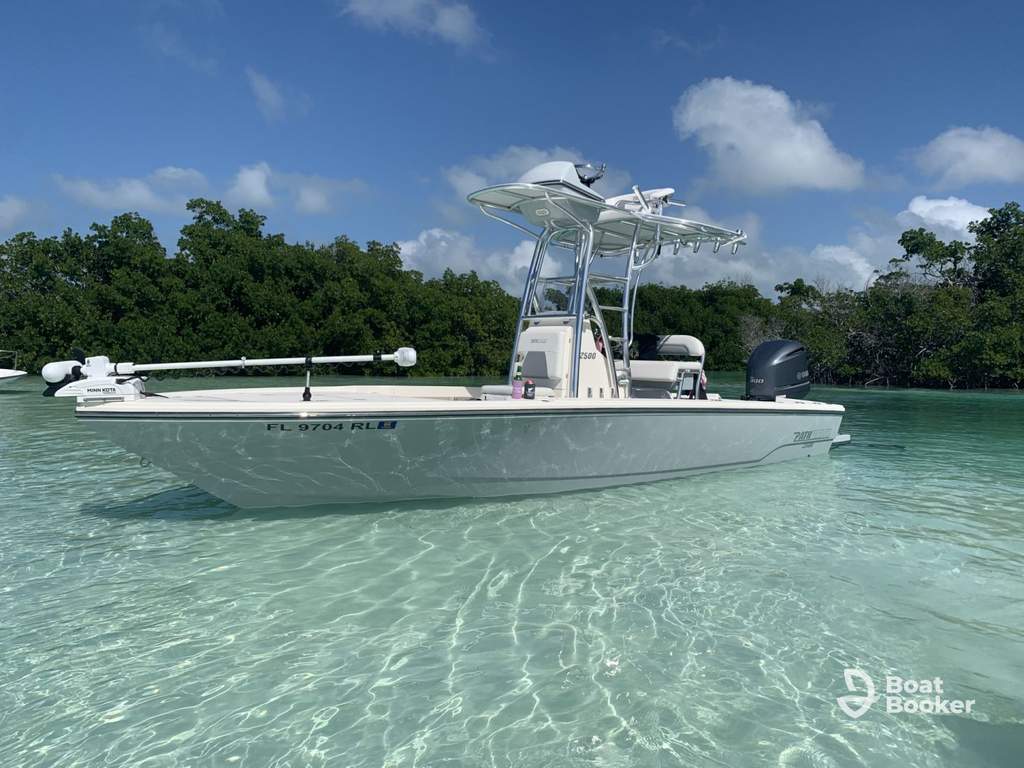
A quality bay boat can float in as little as 10 to 13 inches of water when fully loaded. That’s shallow enough to access most inshore fishing spots – oyster bars, grass flats, mangrove shorelines, and marsh drains – without running aground. It’s not quite as skinny as a true flats skiff (which can float in 6 to 8 inches). However, the tradeoff is a boat that won’t leave you white-knuckling the console when the wind picks up on the open bay.
Size and Weight
Most bay boats fall between 18 and 26 feet in length, with dry weights (hull plus motor) running roughly 3,000 to 5,000 pounds. That’s light enough to tow behind a standard truck or SUV with a regular trailer, which is a big deal for anglers who fish different waters throughout the season.
The beam (width) typically runs 7 to 8.5 feet. This gives you a stable fishing platform without making the boat too wide for a standard trailer. Because of this size and weight, you can launch at shallow ramps that bigger boats can’t use. Another practical advantage for inshore fishing.
Fishing Features
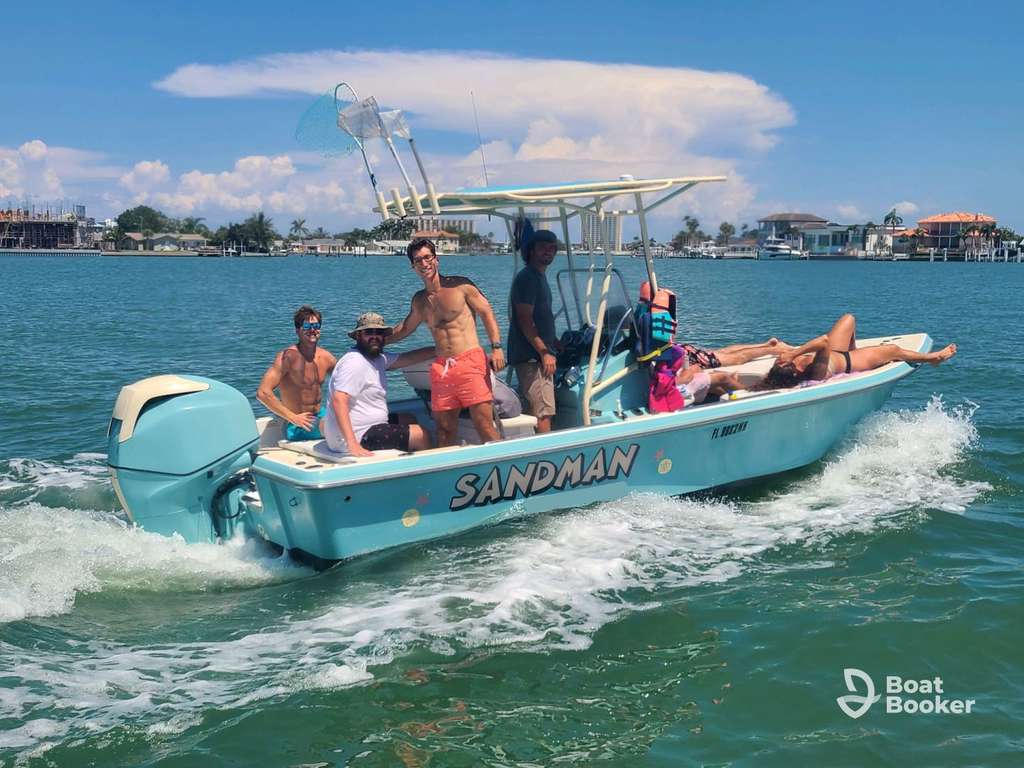
Bay boats are fishing machines first and everything else second. You’ll typically find:
- Large casting decks in front and at the back, raised nearly to the gunwale (boat’s edge) for clear sightlines and casting room
- Livewells built into the hull for keeping bait alive
- Multiple rod holders – both flush-mount and vertical
- Trolling motor compatibility on the bow for silent positioning
- Shallow-water anchors (like Power-Pole or Talon systems) that stake the boat in place without dragging
- Under-gunwale and under-deck rod storage to keep rods secure while running
These aren’t afterthoughts bolted on later. On a well-designed bay boat, every feature is integrated into the layout from the start.
Engine and Performance
Most bay boats run single outboard engines in the 150 to 300 HP range. A single engine is standard because it keeps weight down, simplifies maintenance, and leaves more transom space. Fuel capacity typically sits between 50 and 75 gallons.
Fuel efficiency is one of the bay boat’s underrated strengths. A well-designed single-engine bay boat will get 3.5 to 4 miles per gallon at cruising speed. That’s enough range to cover a lot of water in a day without worrying about fuel stops. Top speeds vary by hull and engine pairing. However, most bay boats cruise comfortably in the mid-30s and top out between 45 and 55 mph.
Bay Boat vs. Flats Boat
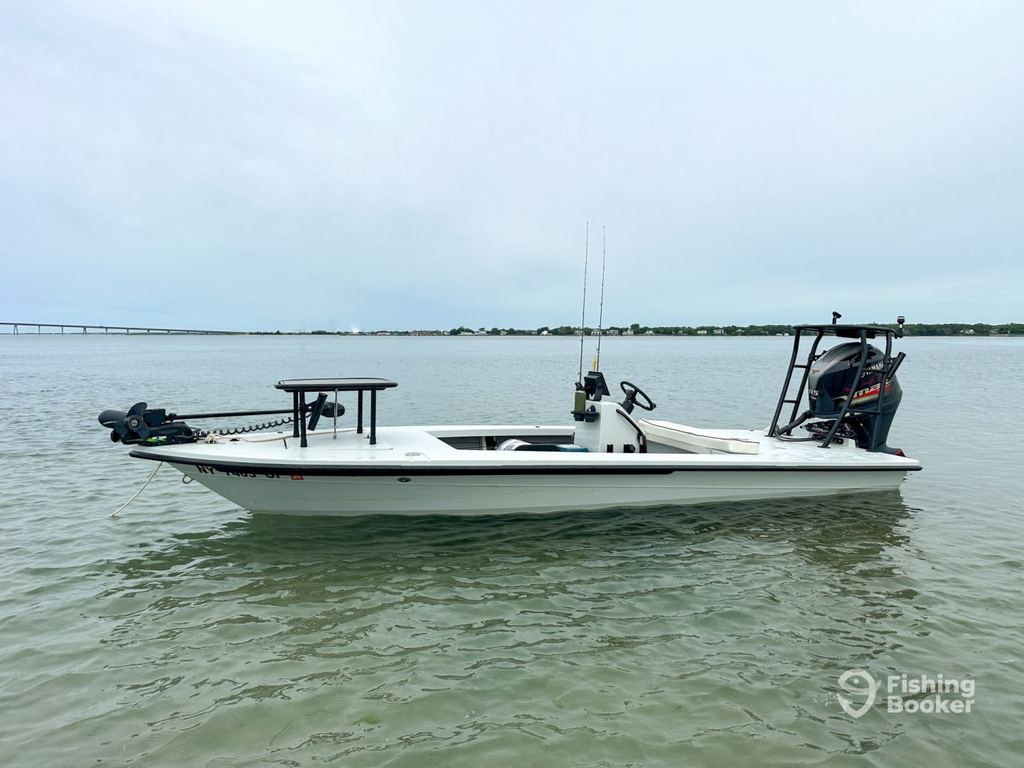
This is the comparison most people ask about first, and it comes down to a simple tradeoff: draft versus open-water capability.
A flats boat (or flats skiff) is built to go as shallow as possible. Many float in just 6 to 8 inches of water. They’re lighter, narrower, and lower to the water. They excel at poling across turtle grass flats in dead calm conditions, stalking bonefish or tailing redfish in water you could practically wade.
A bay boat gives up a few inches of draft (10 to 14 inches instead of 6 to 8) in exchange for a bigger, more stable platform that handles rougher water. Bay boats have higher freeboard, more storage, larger fuel tanks, and more powerful engines. So if you need to cross a choppy bay to reach your fishing spot – or if the weather turns while you’re out – a bay boat handles it far more comfortably than a flats skiff.
Choose a flats boat if you’re fishing dead-calm, ultra-shallow water and want maximum stealth. Choose a bay boat if you need to cover more ground, fish a variety of spots in a single trip, or want a boat that can handle some weather.
On a charter, your captain will already have the right hull for the waters you’re fishing. Still, understanding the difference helps you know what to expect when a listing says “bay boat” versus “flats skiff.”
Bay Boat vs. Center Console
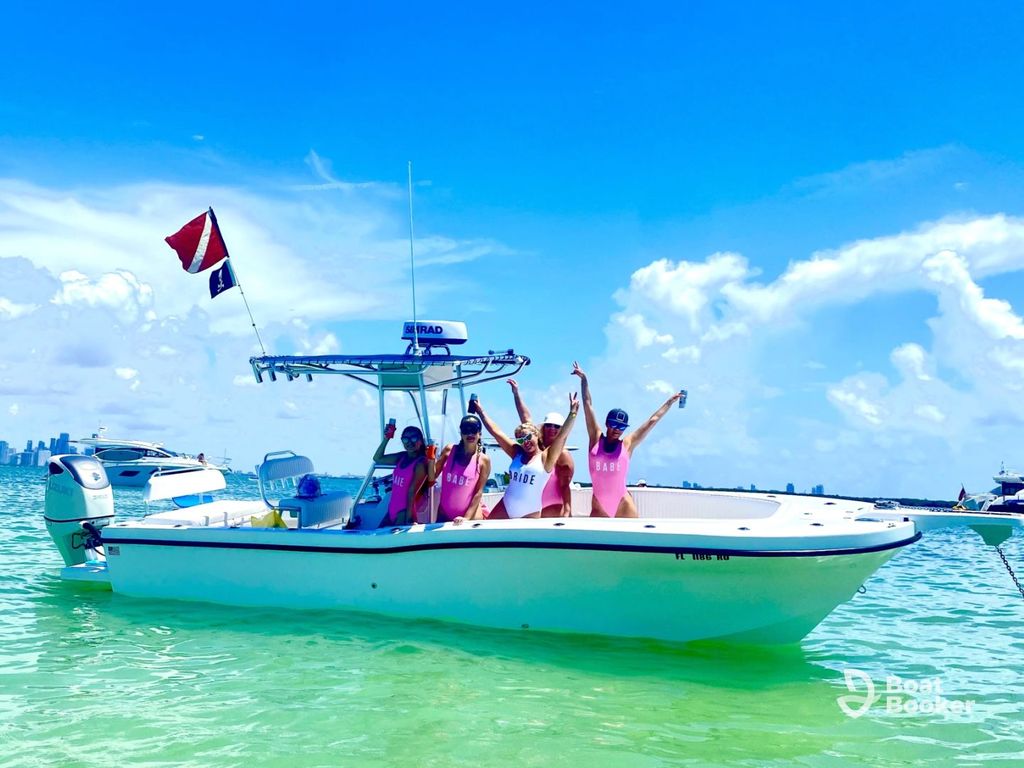
Here’s the thing – a bay boat is a center console. It’s the inshore specialist within the broader center console family.
The term “center console” describes any boat with the helm station mounted on a console in the center of the deck, leaving the sides and bow open. That category spans everything from 17-foot bay boats to 42-foot offshore fishing machines. In other words, a bay boat is simply a center console purpose-built for the 18-to-26-foot inshore niche.
The practical differences show up in the details. A bay boat will have a shallower draft, integrated trolling motor wiring, shallow-water anchors, and casting decks designed for sight-fishing. An offshore center console of similar length will instead have a deeper V-hull, larger baitwells, heavier-duty rod holders and outriggers, more freeboard. Sometimes it will also have a small cabin or head compartment.
Think of it this way: if “center console” is the umbrella, “bay boat” is one of the handles. Other handles include offshore center consoles, jon boats (some of which use a center console layout), and walkaround center consoles with small cabins.
Pros and Cons of Bay Boats
Pros:
- Versatility – shallow enough for backwater flats, yet capable enough for open bays and nearshore waters
- Easy to tow and launch – fits on a standard trailer and can use shallow ramps
- Excellent deck space – large casting platforms and open layouts make fishing comfortable for 2 to 4 anglers
- Fuel efficient – single-engine setup keeps fuel costs reasonable for full-day trips
- Beginner-friendly – stable platform, predictable handling, and a forgiving hull design
- Freshwater capable – bay boats work just as well on lakes and rivers as they do in saltwater
Cons:
- Not built for serious offshore conditions – in seas above 3 to 4 feet, you’ll be uncomfortable and potentially unsafe
- Wetter rides – lower gunwales and freeboard mean more spray in choppy conditions
- No cabin or head – there’s nowhere to get out of the sun or rain, and no bathroom onboard (some have a small console head, but it’s cramped)
- Less storage than larger center consoles – you’re working with a smaller footprint
- Not as shallow as a flats skiff – if you need to fish in less than 10 inches of water, a bay boat won’t get you there
The honest summary: a bay boat does many things well and very few things perfectly. That versatility is both its greatest strength and its only real limitation.
What to Expect on a Bay Boat Charter
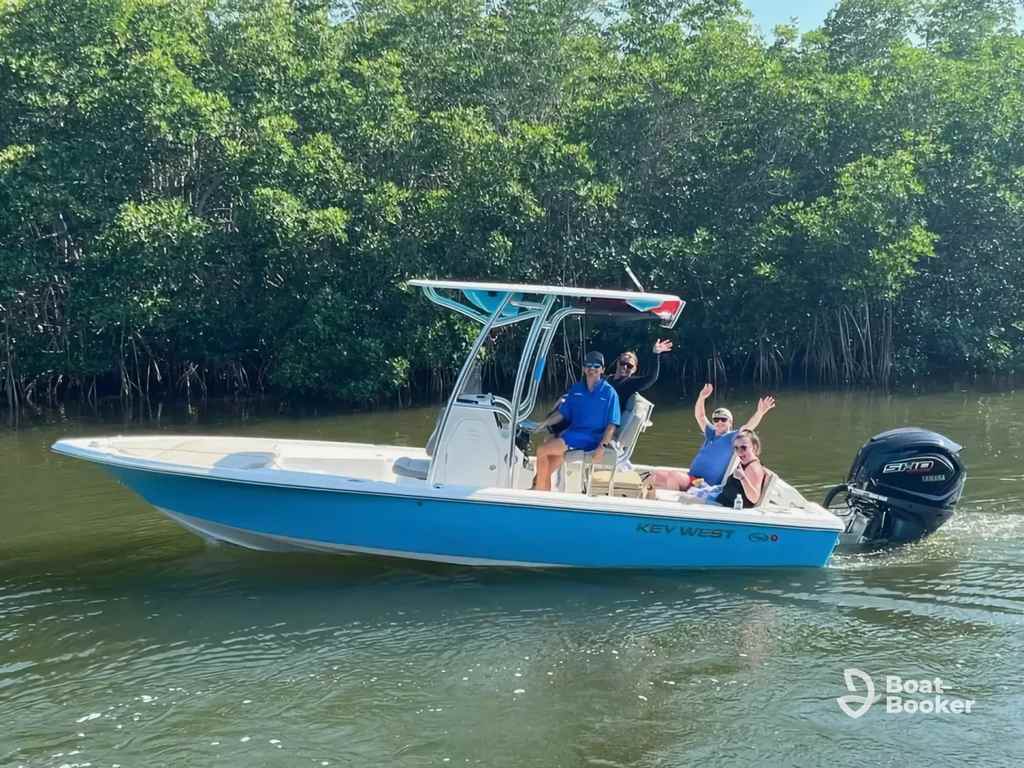
If you book an inshore fishing charter and the listing shows a bay boat as the vessel, here’s roughly how the day will go.
Most bay boat charters are half-day (4 hours) or full-day (6 to 8 hours) trips focused on inshore species. Your captain will trailer the boat to a launch ramp near the fishing grounds, or depart from a marina if the boat stays in the water. From there, you’ll run across open water to reach your first spot. That’s usually a grass flat, oyster bar, mangrove shoreline, or tidal creek mouth.
Target Species by Region
The species you’ll target depend entirely on the region. In Florida, expect redfish, snook, speckled trout, and tarpon (seasonally). Along the Texas Gulf Coast, it’s redfish, speckled trout, flounder, and sheepshead. In the Carolinas, you might also add striped bass, black drum, and flounder to the mix. Your captain knows the local patterns and will adjust based on the tide, season, and conditions.
The Fishing Experience
The pace feels different from offshore fishing. You’re not trolling for hours waiting for a strike. Instead, inshore fishing on a bay boat is active. The captain poles or uses the trolling motor to position the boat quietly, you sight-cast to fish you can often see, and the action tends to come in bursts. It’s engaging, visual, and a lot of fun even if you’re new to fishing.
What’s Included
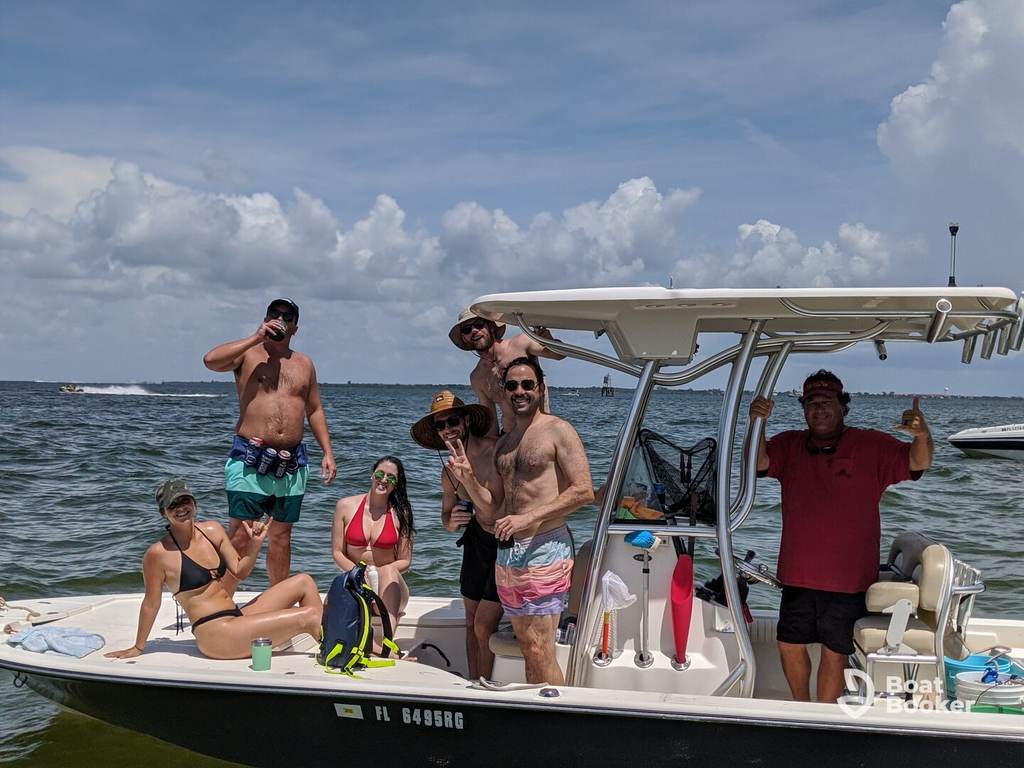
Bay boats typically accommodate 2 to 4 anglers comfortably. The open deck layout means everyone has room to cast without getting tangled. Captains usually provide all tackle, bait, and safety gear, but check your listing details. Some charters ask you to bring your own drinks and sunscreen. A fishing license may or may not be covered under the captain’s charter license.
If you’re completely new to boating, our boating 101 guide covers the basics of what to wear, what to bring, and how to prepare for a day on the water.
Best Places to Book a Bay Boat Charter
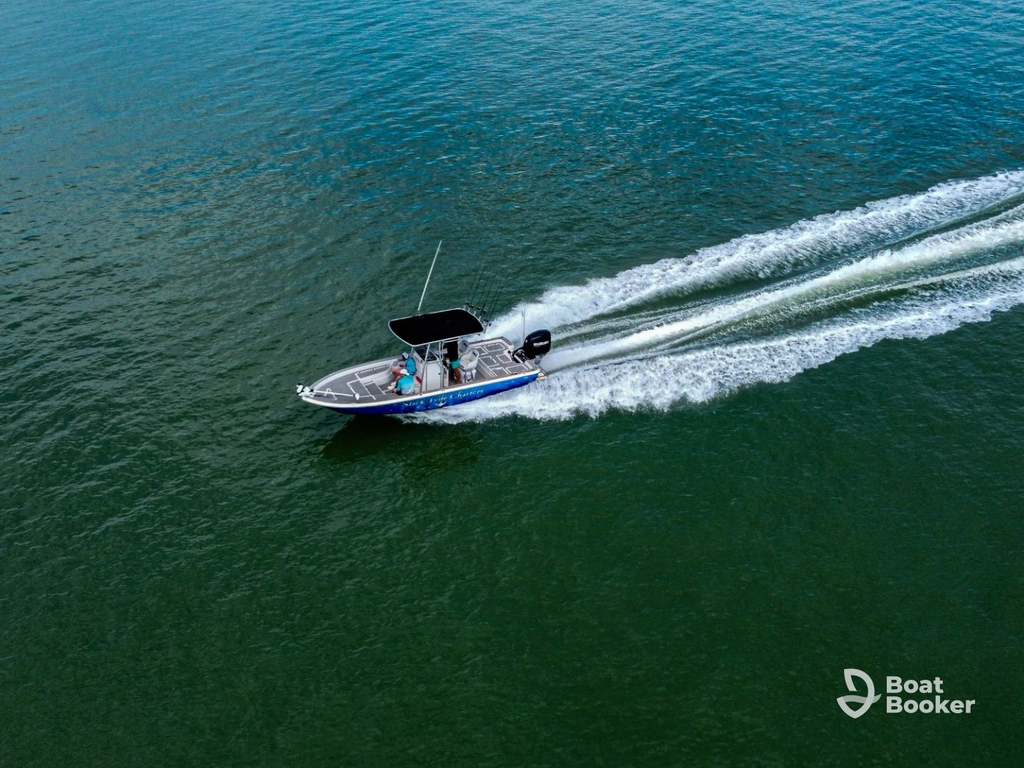
Bay boats are built for the kind of shallow, warm-water coastline that the Gulf of Mexico and Southeast Atlantic serve up in abundance. Here are some of the best spots to book one.
- Tampa Bay, Florida – One of the largest estuaries in Florida, Tampa Bay is a bay boat playground. The mix of grass flats, mangrove islands, and deep channels means your captain can target redfish, snook, and speckled trout all in a single trip. Because the bay’s waters are relatively protected, it’s also a great option for families and first-time charter guests.
- Fort Myers, Florida – The waters around Fort Myers and Pine Island Sound offer some of the most productive inshore fishing in Southwest Florida. Snook fishing here is especially strong, and the mangrove-lined backcountry is tailor-made for bay boats.
- Key West, Florida – While Key West is famous for offshore fishing, the backcountry flats on the Gulf side are prime bay boat territory. Permit, bonefish, tarpon, and barracuda all patrol these shallow waters. It’s a unique fishery you won’t find anywhere else in the continental U.S.
- Port Aransas, Texas – Sitting at the gateway to the Texas Gulf Coast’s vast bay systems, Port Aransas gives you access to Aransas Bay, Corpus Christi Bay, and the Laguna Madre. Redfish and speckled trout are the main draw, and the shallow, grassy flats are perfect bay boat water.
- Charleston, South Carolina – Charleston’s network of tidal creeks, cordgrass marshes, and barrier island shorelines makes it one of the best inshore fisheries on the East Coast. Red drum (redfish), flounder, and speckled trout are the primary targets, and the Lowcountry’s scenic beauty doesn’t hurt, either.
Frequently Asked Questions about Bay Boats
Have you fished from a bay boat before – on a charter or your own? We’d love to hear what waters you were on and what you were targeting. If anything in this guide seems off or outdated, drop a note in the comments and we’ll get it updated.