
What Is a Kayak? A Beginner’s Guide to the World’s Most Accessible Paddle Craft
So you’ve seen people gliding through mangroves, coasting along shorelines, or paddling across glassy lakes – and you’re wondering: what is a kayak, exactly? Whether you’re thinking about booking a guided tour or just curious about the slim boats you keep spotting on car roof racks, this guide covers everything a beginner needs to know.
We’ll break down the different types, explain how kayaks differ from canoes, and walk you through what your first kayak tour actually looks like – no experience or equipment required.
So What Exactly Is a Kayak?
A kayak is a narrow, lightweight watercraft designed for one or two paddlers. You sit low in the hull with your legs stretched forward and propel yourself using a double-bladed paddle – one stroke on the left, then one on the right. That low center of gravity and slim profile give kayaks their signature speed and maneuverability.
The word “kayak” comes from the Inuktitut word qajaq, meaning “hunter’s boat.” It’s a fitting name. For thousands of years, Arctic peoples built these vessels to move quickly and quietly through frigid waters. Today, kayaks come in dozens of shapes and materials, but the core idea hasn’t changed: a small, human-powered boat that puts you right at the waterline.
If you’ve ever confused a kayak with a canoe, you’re not alone – we’ll clear that up in a dedicated section below. The short version: kayaks use a double-bladed paddle and have a closed or semi-closed deck, while canoes use a single-bladed paddle and sit fully open.
A Brief History of the Kayak
Kayaks have been around for over 4,000 years. The Inuit, Yup’ik, and Aleut peoples of the Arctic originally built them by stretching seal or other animal skins over frames made from driftwood or whalebone. These boats were designed for a specific purpose – hunting seals, caribou, and whales in some of the most unforgiving waters on the planet.
The design was remarkably efficient. Hunters could move silently, stay low to avoid wind, and roll the kayak upright if a wave flipped them – a technique still practiced today as the “Eskimo roll.” Each kayak was also custom-built to fit its paddler’s body, almost like a wearable boat.
Europeans encountered kayaks through Arctic exploration and adopted the design for sport in the mid-1800s. By the 20th century, fiberglass and then polyethylene plastic replaced animal skin. Modern inflatable and folding kayaks have since made the craft more portable than ever. But the basic hull shape? That’s still the same geometry the Inuit perfected millennia ago.
Types of Kayaks
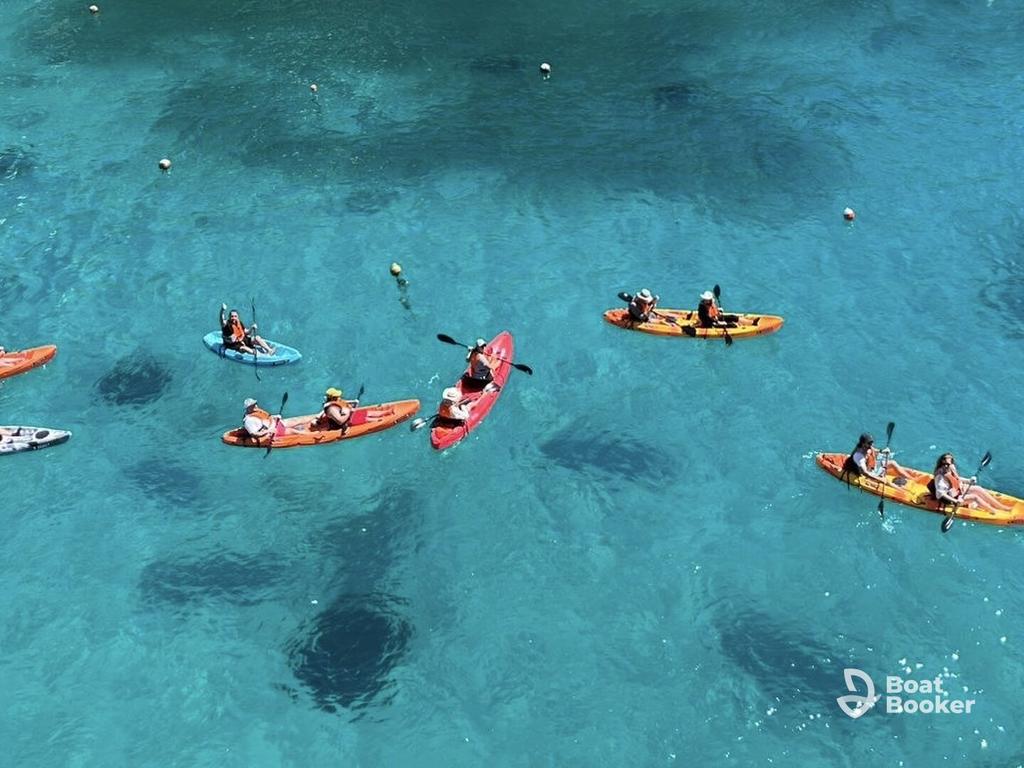
Not all kayaks are built for the same purpose. Here’s a rundown of the main categories you’ll encounter.
Sit-on-Top Kayaks
These have an open, molded deck with no enclosed cockpit. You sit on top rather than inside, which makes them the easiest type to get on and off – especially in the water. They’re self-draining, warm-weather favorites and the most common choice for guided kayak tours in tropical and subtropical destinations. If you’re a first-timer, this is likely the kayak you’ll paddle.
Sit-Inside Kayaks
Sit-inside kayaks have an enclosed cockpit that your lower body slides into. They keep your legs and hips shielded from splashes and wind, which makes them better for cooler conditions. You can also attach a spray skirt around the cockpit rim to seal out water almost entirely. They feel more secure to some beginners, though getting in and out takes a bit more practice.
Recreational Kayaks
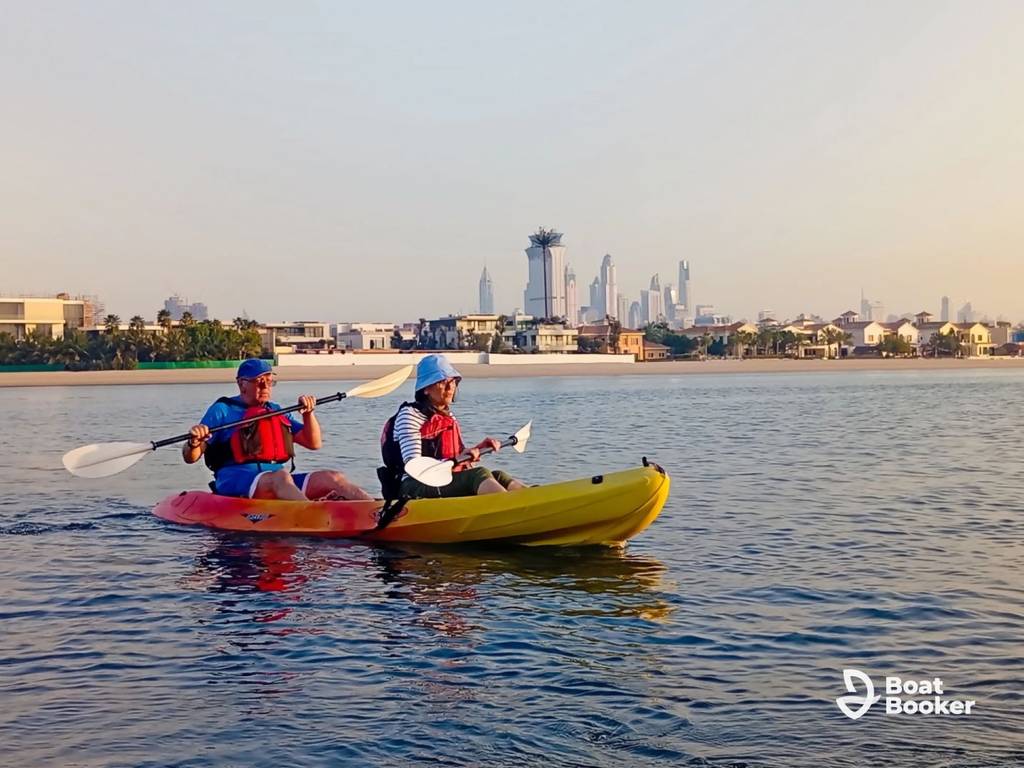
These are the wide, stable, “hard to tip” kayaks that most beginners start with. They typically measure 9–12 feet long with a beam of about 27–30 inches. That extra width trades speed for stability – perfect for calm lakes, slow rivers, and sheltered bays. If a friend invites you to “go kayaking,” this is probably what’s waiting at the dock.
Touring (Sea) Kayaks
Longer and narrower than recreational models, touring kayaks are built for covering distance on open water. They track straighter, handle waves better, and include sealed storage compartments for multi-day trips. Experienced paddlers use these for coastal expeditions, so you won’t typically encounter them on a beginner tour.
Whitewater Kayaks
Short, stubby, and ultra-maneuverable, whitewater kayaks are designed for navigating rapids. Their rounded hulls let paddlers spin, brace, and roll through turbulent water. This is a specialized discipline with its own skill progression – not where most beginners start.
Fishing Kayaks
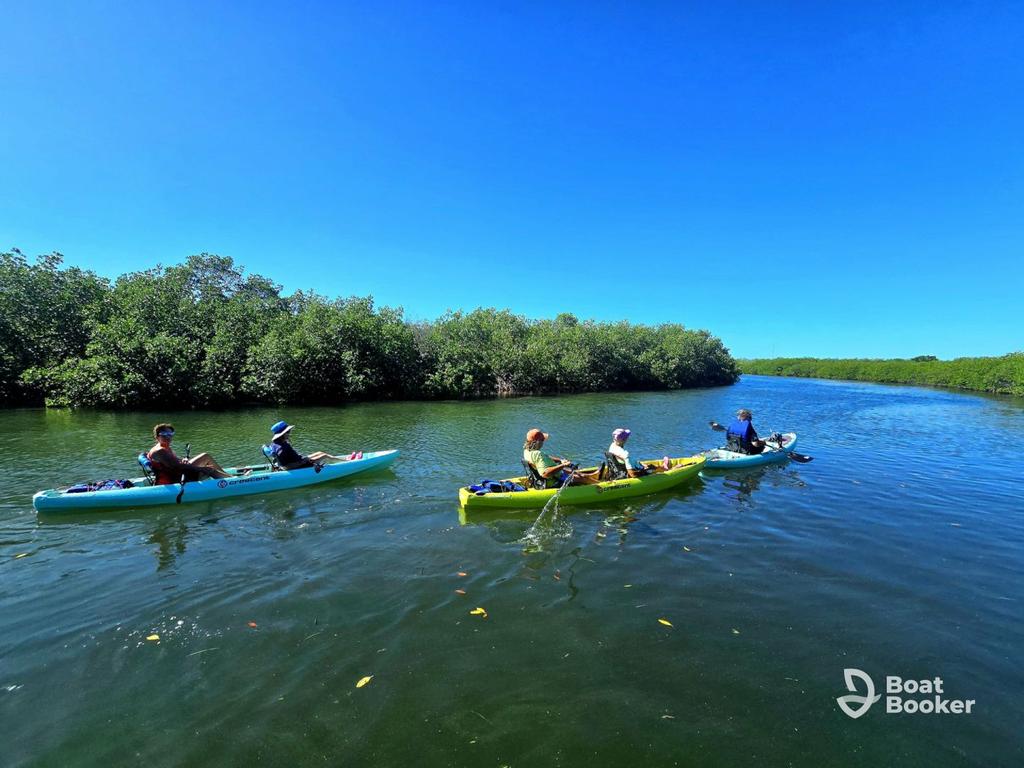
Fishing kayaks come loaded with rod holders, gear tracks, and extra storage. Many feature pedal-drive systems so your hands stay free for casting. Kayak fishing has surged in popularity because it offers a quieter, more affordable, and more environmentally friendly alternative to motorized fishing boats.
Inflatable and Folding Kayaks
If you live in an apartment or travel frequently, inflatables and folding kayaks solve the storage problem. Modern inflatable kayaks use tough PVC and can be ready to paddle in under ten minutes. They won’t match the performance of a hard-shell boat, but for casual paddling and travel, they’re hard to beat.
Tandem Kayaks
Tandem kayaks seat two paddlers and are a popular choice for couples, parents with kids, and guided tours where the operator wants to keep groups together. They’re longer and more stable than solo kayaks, though coordinating paddle strokes with your partner takes a few minutes to figure out.
Kayak vs. Canoe – What’s the Difference?
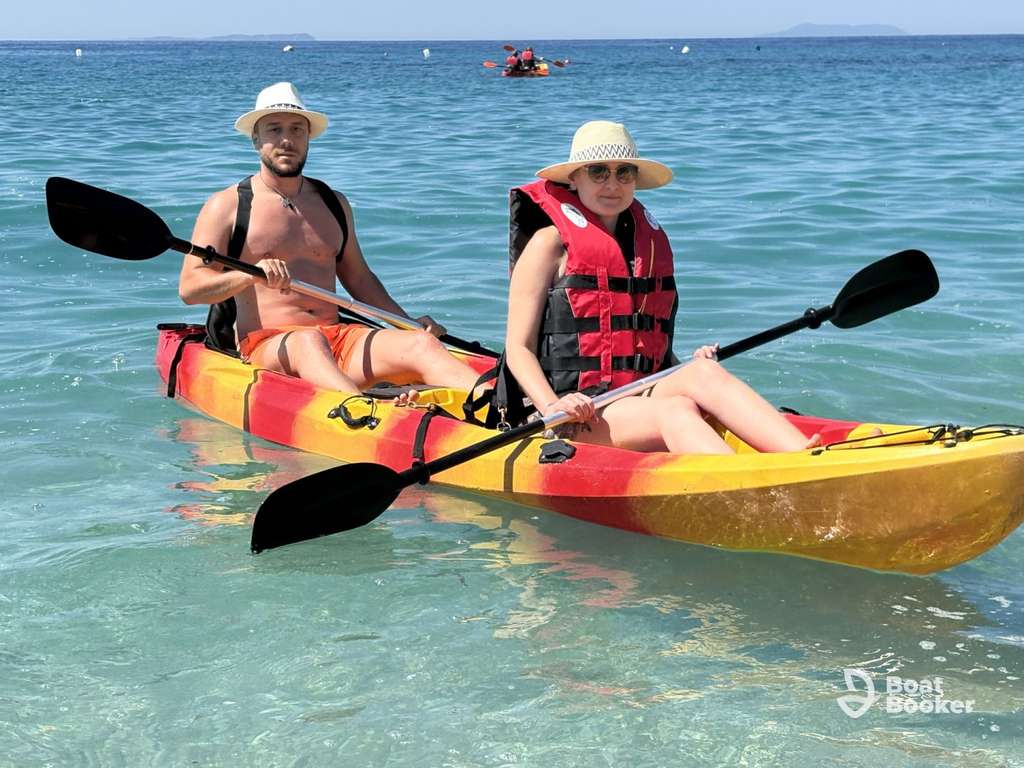
This is one of the most common questions beginners ask, and the differences are straightforward once you see them side by side.
| Feature | Kayak | Canoe |
|---|---|---|
| Paddle | Double-bladed (blade on each end) | Single-bladed |
| Seating | Low seat, legs extended forward | Bench seat or kneeling position |
| Deck | Closed or semi-closed | Fully open |
| Speed | Generally faster | Generally slower |
| Stability | Narrower, lower center of gravity | Wider, higher sides |
| Capacity | 1–2 people (most models) | 2–4 people, more cargo space |
| Typical use | Ocean touring, rapids, fitness paddling | Lake trips, river floats, portaging |
In short, kayaks are sleeker and faster. Canoes are roomier and carry more gear. For a solo workout or a guided coastal tour, a kayak is usually the better fit. For a lazy river float with the family and a cooler full of snacks, a canoe gives you more space. For a more in-depth comparison, check out our full guide on canoes versus kayaks.
What to Expect on a Guided Kayak Tour
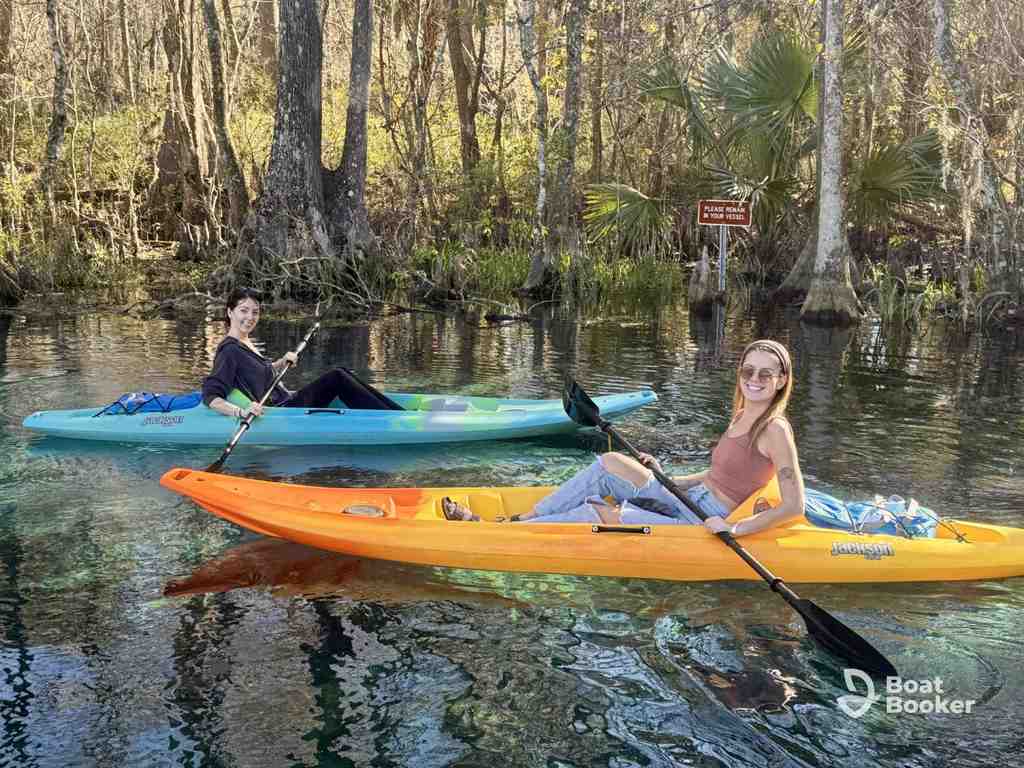
If you’ve never paddled before, a guided kayak tour is the easiest way to try it. You don’t need to own any equipment, and you don’t need any prior experience. Here’s what a typical outing looks like.
Before you launch, the guide runs a short safety briefing. You’ll learn how to hold the paddle, how to steer, and what to do if you feel unsteady. The outfitter provides everything – the kayak, a double-bladed paddle, and a personal flotation device (PFD). You just show up.
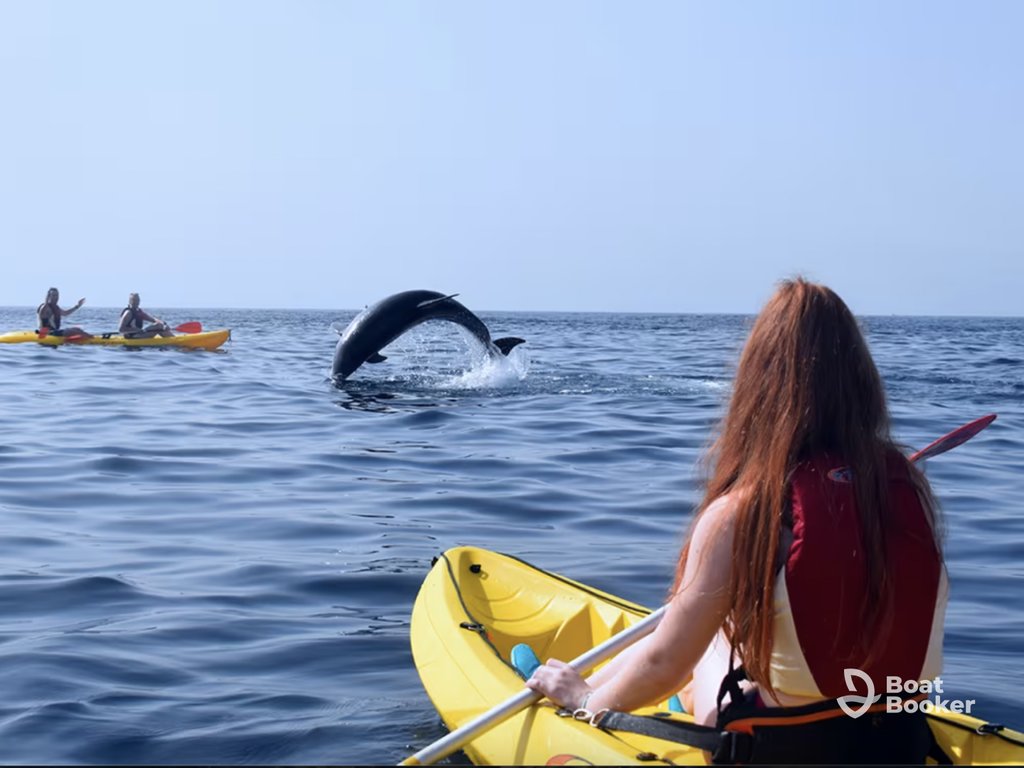
On the water, most tours last between two and three hours. Common settings include mangrove tunnels, bioluminescent bays, coastal caves, and wildlife-rich estuaries. Guides handle the navigation and point out birds, marine life, and local landmarks. Tandem kayaks are standard on many guided tours, so you’ll often paddle with a partner.
Skill level required? Virtually none. Recreational kayaks on calm water are extremely stable – they’re very hard to tip. Even if you did end up in the water, you’d be wearing a PFD. You don’t need to be a strong swimmer, and you don’t need a boating license. You just need to be comfortable getting a little wet.
Beyond the fun, kayaking is genuinely good exercise. It’s a low-impact cardio workout that engages your core, shoulders, and back. Many people also find the rhythmic paddling meditative – it’s a surprisingly effective stress reliever.
What to Wear Kayaking
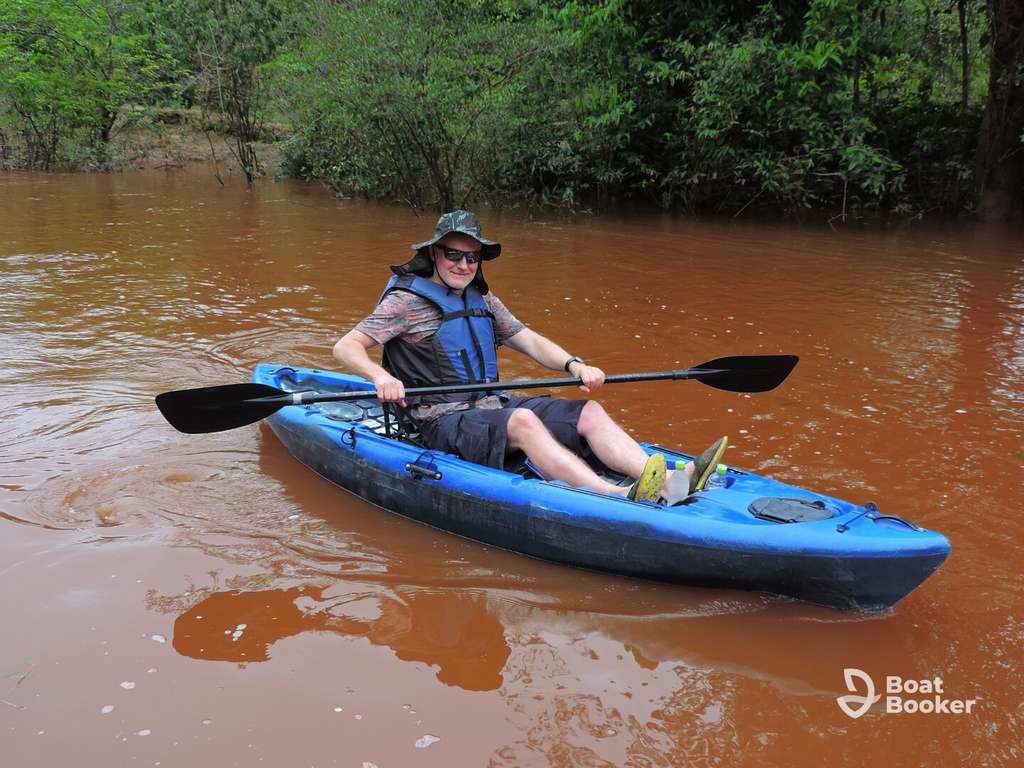
You will get at least a little wet, so dress for it. Cotton absorbs water and stays heavy, which means you should skip the jeans and cotton t-shirts.
Warm weather (most guided tours):
- Quick-dry shorts and a moisture-wicking top (nylon or polyester)
- Water shoes or sport sandals with a heel strap – flip-flops tend to float away
- A hat with a chin strap
- Sunglasses with a retainer strap
- Reef-safe sunscreen (SPF 30+)
Cooler weather:
- A base layer of synthetic or merino wool
- A light waterproof jacket or paddling top
- Neoprene booties if the water is cold
You don’t need to buy a spray skirt, PFD, or dry bag for a guided tour – the outfitter provides those. Just focus on wearing things you don’t mind getting splashed. A small dry bag for your phone and car keys is the only extra most people bring, just in case.
Best Places to Book a Kayak Tour
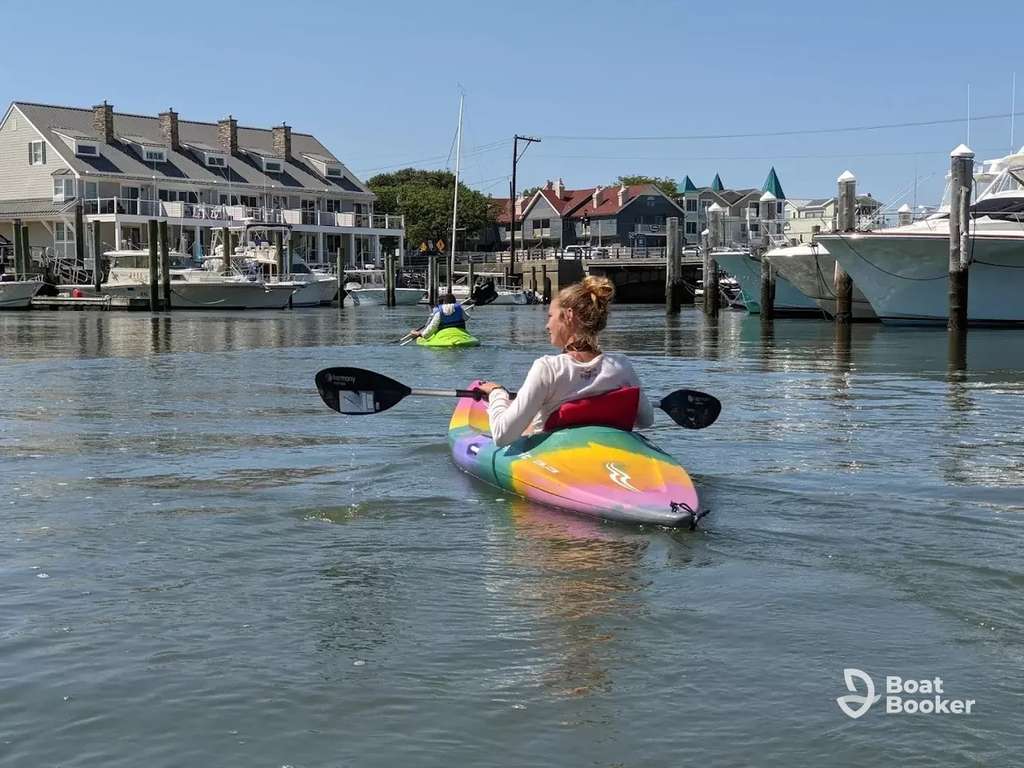
Ready to try it? Here are some of the best destinations where you can book a guided kayak tour through BoatBooker.
- Miami, Florida. Paddle through the mangrove trails of Biscayne Bay or explore the calm waters around Virginia Key. Miami’s year-round warmth makes it a reliable pick any time of year, and the marine life – manatees, dolphins, sea turtles – keeps things interesting.
- Key West, Florida. The clear, shallow flats around Key West are ideal for beginners. Many tours pair kayaking with snorkeling along the coral reef, so you get two activities in a single outing.
- Cabo San Lucas, Mexico. Kayak along the dramatic rock formations of Land’s End and paddle near the famous El Arco arch. The calm waters on the Sea of Cortez side are especially beginner-friendly.
- Belize City, Belize. Mangrove-lined cayes and the world’s second-largest barrier reef make Belize a dream for kayak touring. Guided trips often include stops for snorkeling or wildlife spotting.
- Bali, Indonesia. Coastal kayaking in Bali ranges from calm lagoons to sea cave explorations. Some tours head inland to paddle along rivers through lush tropical scenery.
- Airlie Beach/Whitsundays, Australia. The Whitsunday Islands offer turquoise water, white sand beaches, and coral reefs you can paddle right over. It’s one of the most scenic kayak settings in the world.
Frequently Asked Questions about Kayaks
Is Kayaking Right for You?
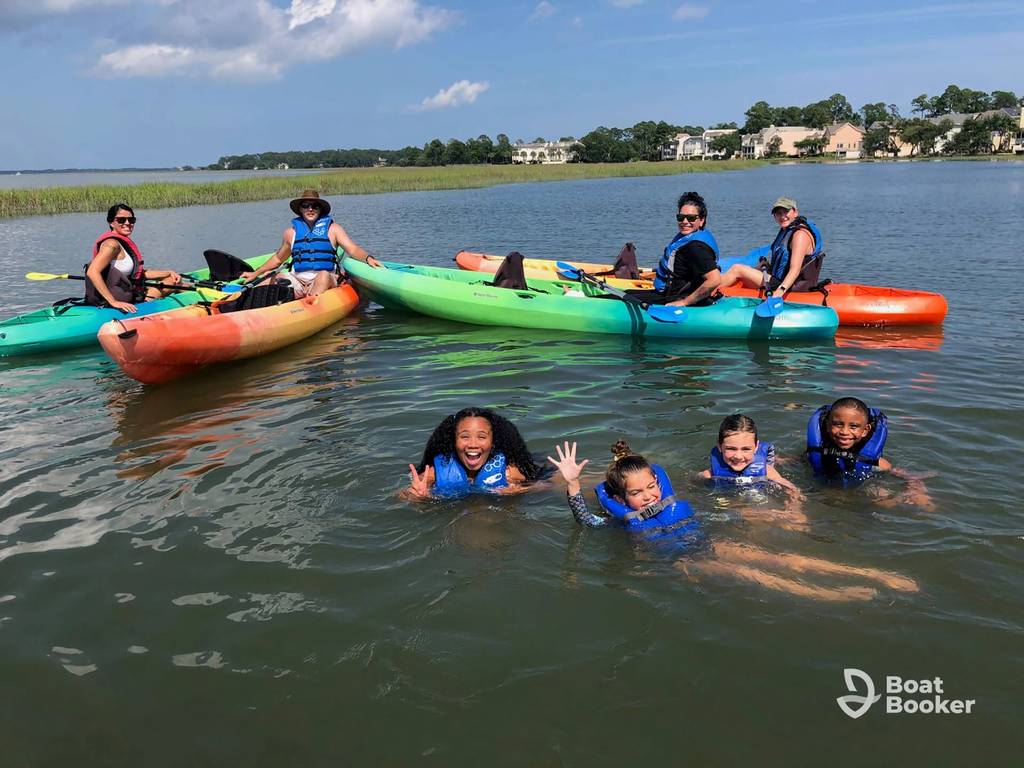
If you can sit, hold a paddle, and enjoy being outdoors, the answer is almost certainly yes. Kayaking is one of the few water activities with virtually no barrier to entry. You don’t need to own a boat, pass a test, or be in peak physical shape.
Booking a guided kayak tour through BoatBooker is the simplest way to find out if you love it – show up, get a quick lesson, and spend a couple of hours on the water. If it clicks, you can always explore other water activities or upgrade to longer, more adventurous paddles down the road.
Have you tried kayaking before – guided tour, rental, or your own boat? We’d love to hear where you paddled and whether you went sit-on-top or sit-inside. If you’re still on the fence, drop your questions in the comments. And if anything in this guide seems off or outdated, flag it.