
Florida Boating License: Who Needs One, What It Costs, and How to Get It
Planning a boating trip in Florida? Before you hit the water, you’ll need to understand the state’s boating education requirements – especially if you were born on or after January 1, 1988. Florida doesn’t actually issue a traditional “boating license,” but it does require something similar: a Boating Safety Education ID Card. Whether you’re a Florida resident or a visitor planning a charter vacation, this guide covers who needs one, how to get it fast, and how to skip the requirement entirely if you’d rather let someone else drive.
Florida has more than one million registered vessels – more than any other state. With that much boat traffic, the Florida Fish and Wildlife Conservation Commission (FWC) takes boating education seriously. The rules aren’t complicated once you understand them, but there are a few nuances around age, engine size, and visitor reciprocity that trip people up. Let’s break it all down.
Does Florida Actually Require a Boating License?
Technically, no. Florida does not issue a boating license the way it issues a driver’s license. What it requires is a Boating Safety Education ID Card, administered by the FWC. This card proves you’ve completed an approved boating safety course and passed a proctored exam.
People call it a “boating license” because it works like one in practice – you need it to legally operate a motorboat on Florida’s public waterways. But it’s a one-time education credential, not a renewable license. Once you earn it, it’s valid for life with no renewals, no continuing education, and no expiration date.
The requirement took effect on January 1, 2010. It applies to anyone born on or after January 1, 1988 who operates a vessel powered by 10 horsepower or more. Those two thresholds – birth date and engine size – are the foundation of the entire law.
Who Needs a Florida Boating License?
The rule is straightforward. You need a Boating Safety Education ID Card if all three of the following apply:
- You were born on or after January 1, 1988
- You’re operating a vessel with 10 or more horsepower
- You’re on Florida’s public waterways (rivers, lakes, intracoastal, ocean)
This applies equally to Florida residents and out-of-state visitors. It doesn’t matter whether you own the boat, rent it, or borrow it from a friend.
Who Is Exempt?
Several groups can skip the education requirement entirely:
- Born before January 1, 1988 – No card needed, regardless of the boat
- USCG-licensed captains – Your Coast Guard credential satisfies the requirement
- Operating a vessel under 10 HP – Small motors are exempt
- Boating on a private lake or pond – The rule only applies to public waterways
- Supervised operation – You can operate without a card if you’re directly supervised by someone 18 or older who holds a valid card (or is themselves exempt)
- Non-residents with a valid NASBLA-approved card from their home state
- Within 90 days of purchasing a vessel – You must carry the bill of sale as proof
- Canadian boaters with a valid Pleasure Craft Operator Card
If you fall into one of these categories, you’re good to go. Everyone else needs to complete a course or grab a temporary certificate before operating.
How to Get a Florida Boating License
The process has three steps: choose an FWC-approved course, complete it and pass the exam, then receive your card. You have three main options depending on your timeline and budget.
Online Course (Lifetime Card)
This is the most common route, and it’s entirely self-paced. Expect to spend 3–6 hours working through the material, though you can spread it across multiple sessions.
The final exam requires a score of at least 80% to pass. Once you do, you’ll receive a digital card within 1–4 days. A physical card arrives by mail in 3–4 weeks.
Cost varies by provider:
| Provider | Cost | Notes |
|---|---|---|
| BoatUS Foundation | Free | Only free FWC-approved online course |
| BoatSkill | $29.97 | Mid-range paid option |
| Boat-Ed | $54.95 | Well-known provider, widely used |
The BoatUS Foundation course is the only free option approved by the FWC. If you’re not in a rush, it’s the obvious choice. The paid courses cover the same material – you’re paying for a different interface, not better content.
Your card is valid for life once issued. There are no renewals and no fees down the road.
Temporary Certificate (90-Day Option)
If you’re visiting Florida and need to get on the water fast, the temporary certificate is designed for you. It’s a shorter process – a 25-question online exam that takes 15–30 minutes to complete.
You need to score at least 76% (19 out of 25 correct) to pass. Costs range from about $3 to $20 depending on the provider. You can find the FWC’s list of approved temporary certificate providers on their website.
There are two important limitations. The temporary certificate is only valid for 90 days, and it’s only valid in Florida. You can’t convert it into a permanent card, and other states won’t accept it. If you think you’ll boat again – in Florida or elsewhere – the lifetime card is worth the extra time.
In-Person Classroom Course
Prefer learning in a group setting? America’s Boating Club and the U.S. Coast Guard Auxiliary offer in-person courses at locations throughout Florida. These are typically one-day sessions.
Classroom courses are also the only option for mandatory violator education – if you’ve been cited for a boating safety violation, you can’t satisfy the requirement with an online course.
Here’s a quick comparison of all three options:
| Feature | Online Course | Temporary Certificate | In-Person Course |
|---|---|---|---|
| Duration | 3–6 hours (self-paced) | 15–30 minutes | One day |
| Cost | Free – $60 | $3 – $20 | Varies (often free) |
| Passing score | 80% | 76% (19/25) | Varies |
| Validity | Lifetime | 90 days (Florida only) | Lifetime |
| Accepted outside FL | Yes (NASBLA states) | No | Yes (NASBLA states) |
What About Renting a Boat or Jet Ski in Florida?
The same rules apply to rentals. If you were born on or after January 1, 1988 and the vessel has 10+ HP, you need a valid Boating Safety Education ID Card or temporary certificate before operating it.
Some rental companies offer pre-rental instruction or orientation. That’s helpful for learning the specific boat, but it does not replace the legal education requirement. You still need the card.
Jet ski (PWC) rules are stricter. You must be at least 14 years old to operate a personal watercraft in Florida – no exceptions, even with adult supervision. To rent a jet ski, you must be at least 18. The boating safety education requirement applies on top of these age minimums.
The Captained Charter Workaround
Here’s something most guides don’t mention: if you book a captained charter, you don’t need the card at all. The captain holds the required credentials, and you’re a passenger – even if you’re the one who booked the trip.
This is a practical option for visitors who don’t want to take an exam before their vacation. BoatBooker offers captained charters across Florida, including boat tours in Miami, Key West, Tampa, Fort Lauderdale, Destin, and dozens of other ports. You get the full on-water experience without any pre-trip paperwork.
Age Requirements for Boating in Florida
Florida’s age rules are more relaxed than many states – with one major exception for jet skis.
- Regular boats: There is no minimum age to operate a motorboat. However, anyone born after 1988 still needs the boating safety card (or must be supervised by a qualified adult).
- Personal watercraft (jet skis): Must be 14 or older to operate. No exceptions for supervision.
- Renting any vessel: Must be 18 or older to sign a rental agreement.
A 12-year-old can legally drive a pontoon boat on a Florida lake – as long as a qualified adult is supervising. But that same 12-year-old cannot touch a jet ski, period. It’s a distinction worth knowing if you’re planning a family boating trip with kids.
What Happens If You Don’t Have the Card?
Law enforcement officers can request your Boating Safety Education ID Card and a photo ID at any time on the water. If you’re required to have one and can’t produce it, you’re looking at a non-criminal infraction with fines up to $1,000.
Beyond the legal risk, there’s a safety argument. According to FWC data, 80% of operators involved in fatal boating accidents in 2023 had no formal boating education. The course material covers navigation rules, right-of-way, weather awareness, and emergency procedures – so it’s not just a box to check.
If you’ve lost your card and need a replacement, contact the FWC at 850-488-5600. For more on staying safe once you’re on the water, check out our boating safety tips.
Is a Florida Boating License Valid in Other States?
Your permanent Boating Safety Education ID Card is NASBLA-compliant, which means most other states that require boating education will recognize it. NASBLA (the National Association of State Boating Law Administrators) sets the national standard for boating safety courses. States that follow this standard generally accept each other’s cards.
The temporary certificate is a different story – it’s only valid in Florida and won’t be accepted anywhere else.
Before operating in another state, check that state’s specific requirements. Some states have different age thresholds or additional rules beyond the NASBLA card. The education card gets you most of the way, but local regulations can vary.
What If You’re Visiting Florida from Another State?
If you already hold a NASBLA-approved boating safety card from your home state, bring it with you. Florida accepts it, and you won’t need to take any additional courses.
Don’t have one? Your fastest option is the temporary certificate. You can complete the 25-question exam online in about 15–30 minutes, and it costs between $3 and $20. Do it the night before your trip and you’ll be legal by morning.
Canadian visitors can use their Pleasure Craft Operator Card – Florida accepts it.
Skip the License – Book a Captained Charter Instead
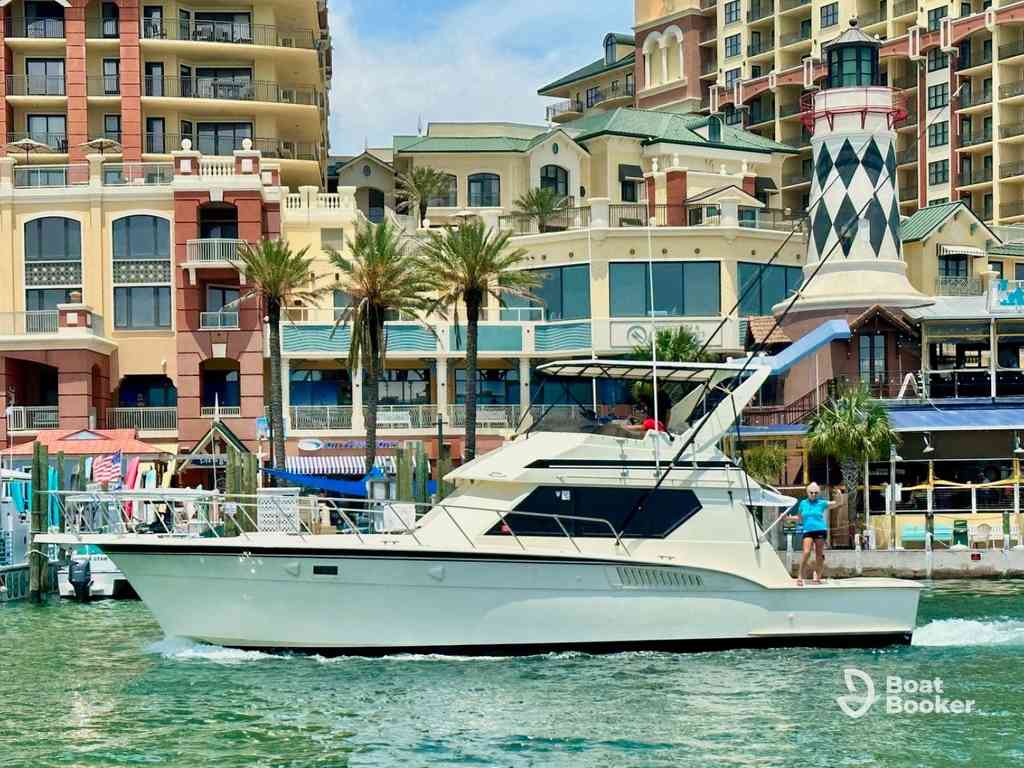
Not everyone wants to take a course before their vacation. If you’re visiting Florida for a few days and just want to get on the water, booking a captained charter means you skip the education requirement entirely. The captain is licensed and insured, and your only job is to relax.
BoatBooker has captained options across Florida’s most popular boating destinations – from Miami’s Biscayne Bay to the turquoise waters around Key West, and everywhere in between. Whether you’re after a sunset cruise, a fishing charter, or a full-day island-hopping adventure, a captained trip gets you on the water with zero paperwork.
Frequently Asked Questions about Florida Boating Licenses
Have you gone through the Florida boating safety course? If you’ve rented a boat or jet ski in Florida, we’d love to hear how the process went – whether the rental company asked for your card, if the temporary certificate was as quick as advertised, or anything else that might help other readers. Drop your experience in the comments, and if anything in this post is outdated or off, let me know so we can update it.