
Alabama Boating License: Who Needs One, What It Costs, and How to Get It
Whether you’re cruising the turquoise waters off Orange Beach, fishing Lake Martin’s 750 miles of shoreline, or exploring the Tennessee River system up north, Alabama offers some of the best boating in the Southeast. But before you turn the key, you need to know the rules – and one big rule changed recently.

Alabama requires an Alabama boating license – technically a “V” endorsement on your driver’s license – for anyone 12 or older operating a motorized vessel. That includes pontoon boats, bass boats, jet skis, and everything in between. The certification is managed by the Alabama Law Enforcement Agency (ALEA) Marine Patrol Division and has been in effect statewide since the Boating Safety Reform Act of 1997.
Here’s the timely part: as of October 1, 2024, Alabama eliminated its old 45-day grace period for out-of-state boaters. Non-residents now need proof of boater education before they touch a throttle on Alabama waters. Now let’s get into more details.
Who Needs an Alabama Boating License?
Alabama Residents
If you live in Alabama and want to operate any motorized vessel – from a 10-horsepower jon boat to a 40-foot cabin cruiser – you need the V endorsement on your Alabama driver’s license. This applies to all Alabama waters: Gulf Coast, inland lakes, rivers, and reservoirs.
The requirement kicks in at age 12. There’s no upper age limit, though Alabama does have a grandfather clause: anyone born before April 28, 1954 is exempt from the boater education requirement.
Out-of-State Visitors (October 2024 Rule Change)
This is the one that catches people off guard. Before October 2024, non-residents had a 45-day window to boat in Alabama without any certification. That grace period is gone.
Non-residents must now carry a valid boater safety certification from their home state or country before operating a motorized vessel on Alabama waters. If your home state doesn’t require certification – or you never got one – you’ll need to obtain an Alabama nonresident certification before you head out.
The change wasn’t arbitrary. ALEA data showed that 25% of boating accidents in the most recent fiscal year involved non-resident operators. The new rule closes a significant safety gap.
Who’s Exempt?
Not everyone needs to go through the process. You’re exempt if you:
- Were born before April 28, 1954
- Are operating a non-motorized vessel (kayaks, canoes, paddleboards, sailboats without an auxiliary motor)
- Are renting from a licensed Alabama boat rental business that provides a safety briefing (more on this below)
- Are operating a vessel on private waters not open to the public
- Hold a valid U.S. Coast Guard captain’s license
If you’re booking a captained charter the captain holds the required credentials. You just show up and enjoy the ride.
How to Get Your Alabama Boating License
The process has three steps. Most people finish the whole thing in a single day.
Step 1 – Complete an Approved Boating Safety Course
Start with a NASBLA-approved boating safety course. Alabama accepts both online and in-person options. Most people go the online route because it’s self-paced, and most students finish in 3 to 4 hours.
Popular online providers include:
- Boat-Ed (official partner with many state agencies) – $79.95
- BoaterExam – $49.95
- Recademics – $39.99 (or $19.99 if you’re military or a first responder)
You’ll need a score of 80% or higher on the final exam to pass. If you don’t pass the first time, you can retake it. Once you pass, you’ll receive a completion certificate. Print it or save the PDF – you’ll need it for Step 2.
Step 2 – Visit a Driver License Examining Office
Here’s where Alabama does things differently from most states. Instead of issuing a separate boater education card, Alabama adds your certification directly to your driver’s license. That means you need to visit a physical ALEA Driver License Examining Office.
Bring your boating course completion certificate and a valid form of ID. The office will process your V endorsement on the spot.
Don’t have an Alabama driver’s license? You can still get certified. ALEA issues a standalone “Vessel Only” (V) license for people who don’t hold – or aren’t eligible for – an Alabama driver’s license. This option is relevant for non-residents who boat in Alabama regularly and want state-issued proof rather than relying on their home-state card.
Step 3 – Get Your “V” Endorsement
Once processed, your updated license will display a “V” class endorsement. That’s your Alabama boating license – it’s literally your driver’s license with one extra letter on it, so you always have it in your wallet.
People often ask “what does an Alabama boating license look like?” The answer: it looks exactly like your regular Alabama driver’s license, just with a V printed in the class section.
The certification is valid for life. It never expires and renews automatically each time you renew your driver’s license. There are no continuing education requirements, no refresher courses, and no additional fees down the road.
What Does an Alabama Boating License Cost?
Let’s break down the total cost, because most sources only list part of it.
| Fee | Amount |
|---|---|
| Online boating safety course | $39.99 – $79.95 |
| ALEA application fee | $5.00 (cash only) |
| License issuance fee | $36.25 |
| Total | $81.24 – $121.20 |
The application fee and issuance fee are paid at the Driver License Examining Office. The $5.00 application fee must be paid in cash – card won’t work for that portion.
For what you get – a lifetime, never-expires certification that most other states recognize – $81–$121 all-in is reasonable. Compare that to states that charge renewal fees every few years, and Alabama’s one-and-done approach starts to look like a genuine bargain.
Age Requirements and Rules for Young Operators
Alabama takes a graduated approach to young boaters:
- Under 12: Cannot operate a motorized vessel under any circumstances
- Ages 12–13: Can operate a motorized vessel but must have a licensed adult (21 or older) on board at all times. The adult must be within arm’s reach of the controls
- Ages 14 and up: Can operate unsupervised after completing the boater education course and obtaining the V endorsement
One more rule applies to everyone regardless of age: children under 8 must wear a U.S. Coast Guard–approved life jacket at all times while the vessel is underway. No exceptions, regardless of boat size or water conditions. It’s a smart rule that keeps the youngest passengers safe without relying on adult judgment in the moment.
PWC and Jet Ski Rules
Jet skis and personal watercraft fall under the same licensing rules as all other motorized vessels. If you’re 12 or older and you want to ride a PWC on Alabama waters, you need the V endorsement. No separate PWC certification exists – one license covers everything.
Alabama does add a few PWC-specific restrictions worth knowing:
- Operating hours: PWCs can only operate between sunrise and sunset. No night riding.
- Age rules: Same graduated system as boats – 12–13-year-olds need a licensed adult 21+ on board; 14+ can ride solo.
- Wake jumping: Operating a PWC within 100 feet of another vessel, shore, dock, or swimmer is prohibited.
Renting a PWC on the Gulf Coast
Orange Beach and Gulf Shores are two of the most popular PWC rental spots in the state. If you’re renting from a licensed Alabama business, the rental exemption applies – but you’ll want to confirm the operator provides the required safety briefing before you head out.
What Happens If You Boat Without a License in Alabama?
Operating a motorized vessel without the required certification is a violation of Alabama law. Marine Patrol officers can – and do – check for certification during routine stops on the water.
BUI Laws and Penalties
Beyond the licensing issue, Alabama enforces strict boating under the influence (BUI) laws. The BAC limit is .08% – the same as for driving a car. A BUI conviction is a Class A misdemeanor carrying:
- Fines up to $2,100
- Up to one year in jail
- A 90-day suspension of boating privileges
These aren’t hypothetical penalties. ALEA Marine Patrol runs regular boating safety checkpoints, particularly on busy holiday weekends and along the Gulf Coast during peak season. So treat boating regulations the same way you’d treat traffic laws – because the consequences are comparable.
Renting a Charter Boat in Alabama? Here’s What You Need to Know
This is the section that matters most if you’re visiting Alabama for a vacation and just want to get on the water without navigating the full certification process.
Captained Charters
If you book a captained boat tour or fishing charter – the kind you’ll find on BoatBooker for Orange Beach, Gulf Shores, or Dauphin Island – you do not need any boating certification. The captain handles all the operating. You’re a passenger, and passengers have no certification requirement.
Self-Drive Rentals
Here’s where it gets nuanced. Alabama has a rental vessel exemption that still applies even after the October 2024 rule change. If you rent from a licensed Alabama boat rental business and the rental contract meets all statutory requirements – including a pre-departure safety briefing – you are exempt from the certification requirement during the rental period.
This exemption is a lifesaver for tourists who want to rent a pontoon boat for the day without going through a multi-hour course first. Just make sure the rental operator is properly licensed and provides the required briefing – reputable businesses handle this as standard practice.
The Bottom Line for Visitors
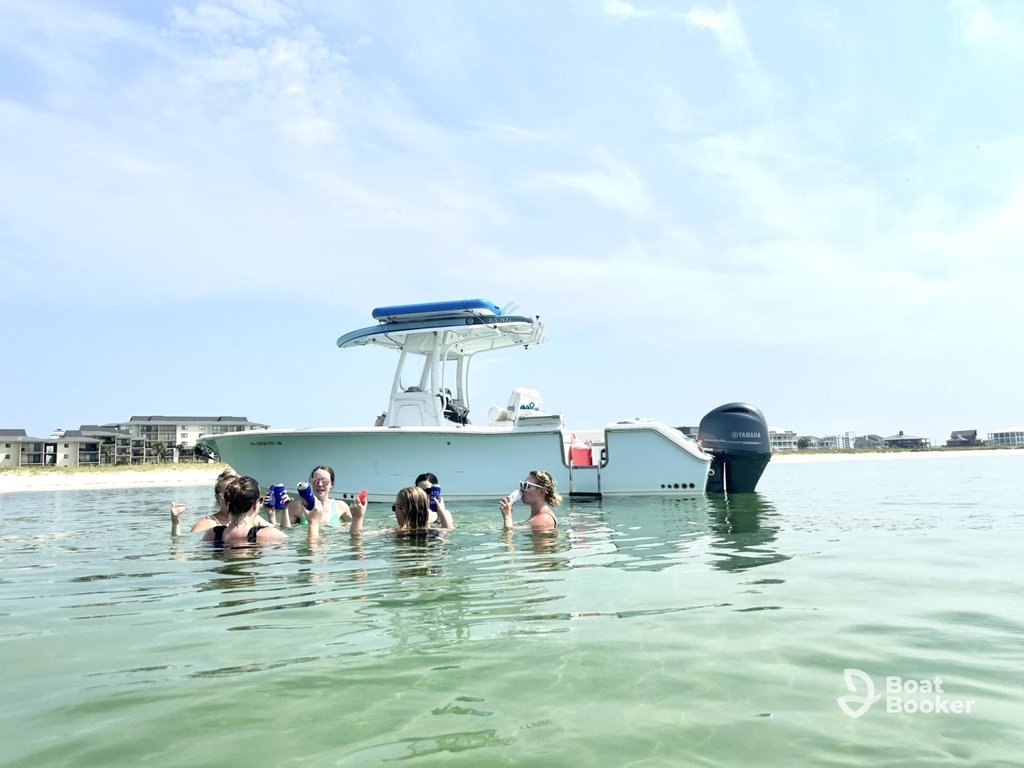
If you’re unsure about your status, book a captained experience. You’ll skip the paperwork entirely, get a local guide who knows the waters, and probably have a better time than you would navigating unfamiliar channels on your own.
Frequently Asked Questions about the Alabama Boating License
Have you gone through the Alabama boating certification process recently – especially since the October 2024 changes? I’d love to hear how it went, whether you hit any snags at the DPS office, or if you have tips for other readers navigating the system for the first time. If you’ve spotted anything in this post that’s out of date or not quite right, drop a note in the comments so we can keep it accurate.