


How to Paddleboard: A Beginner’s Guide to Your First Day on the Water
Paddleboarding – also called stand up paddleboarding or SUP – is one of the easiest water sports to pick up. You stand on a large, stable board and use a single paddle to move across the water. That’s really it. If you’re learning how to paddleboard for the first time on vacation, at a rental spot, or on a guided tour, this guide covers everything you need to know before you get your feet wet.
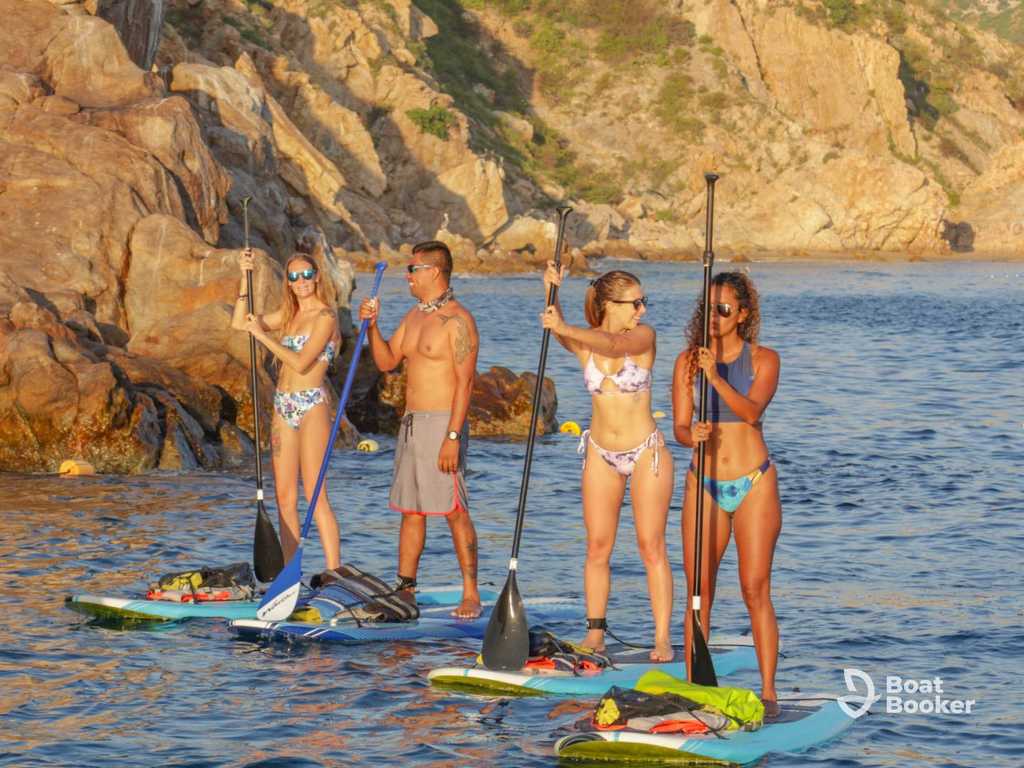
This isn’t a buying guide. You don’t need to own a board to have a great time. Most people try paddleboarding through a rental shop or guided tour that provides all the gear. We’ll walk you through the basics – how to stand up, how to paddle, what to wear, and where to go – so you can show up feeling confident instead of clueless.
Is Paddleboarding Hard?
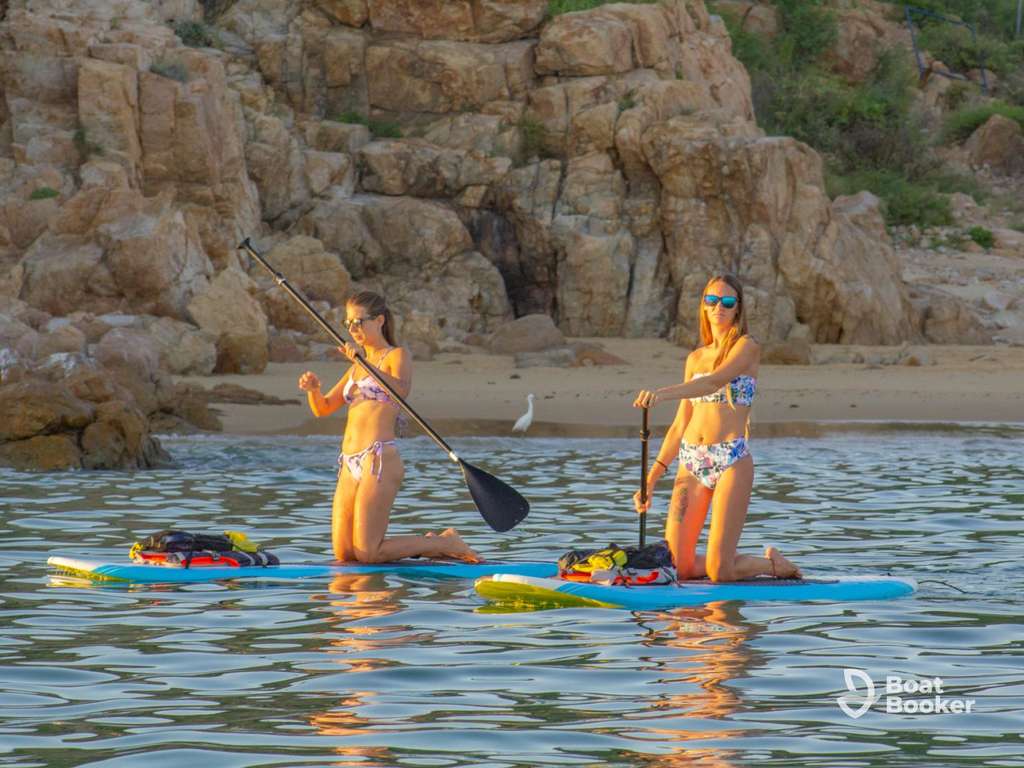
Not really. Most beginners are standing and paddling within their first hour on the water. Paddleboarding has a reputation for being tricky, but that comes from people who tried it on the wrong board, in choppy water, or without knowing the “start on your knees” trick.
Three things make the biggest difference for first-timers. First, the right board size – a wider, longer board is far more stable (more on that below). Second, calm water – a sheltered bay or flat lake is worlds easier than open ocean. Third, starting on your knees before you stand. Skip any one of those, and it feels hard. Nail all three, and it feels surprisingly natural.
If you’re deciding between paddleboarding and kayaking, here’s a quick distinction. Kayaking is more stable from the start because you’re seated low in the water. Paddleboarding asks more of your balance but less sustained upper-body effort. Most first-timers find paddleboarding more physically intuitive – your body already knows how to stand.
What You Need to Get Started
Gear You’ll Get at a Rental or Tour
If you’re booking a guided SUP tour or renting from a shop, everything is provided. You just show up. Here’s what they’ll hand you:
- Board – A beginner-friendly all-around board, typically 10’6″ to 11′ long and at least 32″ wide. Wider boards are more stable. Don’t worry about picking the “right” one – the staff will size it for you based on your weight and experience level.
- Adjustable paddle – Sized to your height. A common rule of thumb: stand the paddle upright next to you, raise your arm overhead, and your wrist should rest on the T-grip handle.
- Leash – This attaches to your ankle or calf and keeps the board from drifting away when you fall. Always wear it.
- PFD (life jacket) – The U.S. Coast Guard classifies paddleboards as vessels, so a PFD is legally required in many states. Even where it isn’t mandatory, it’s smart to wear one.
What to Wear
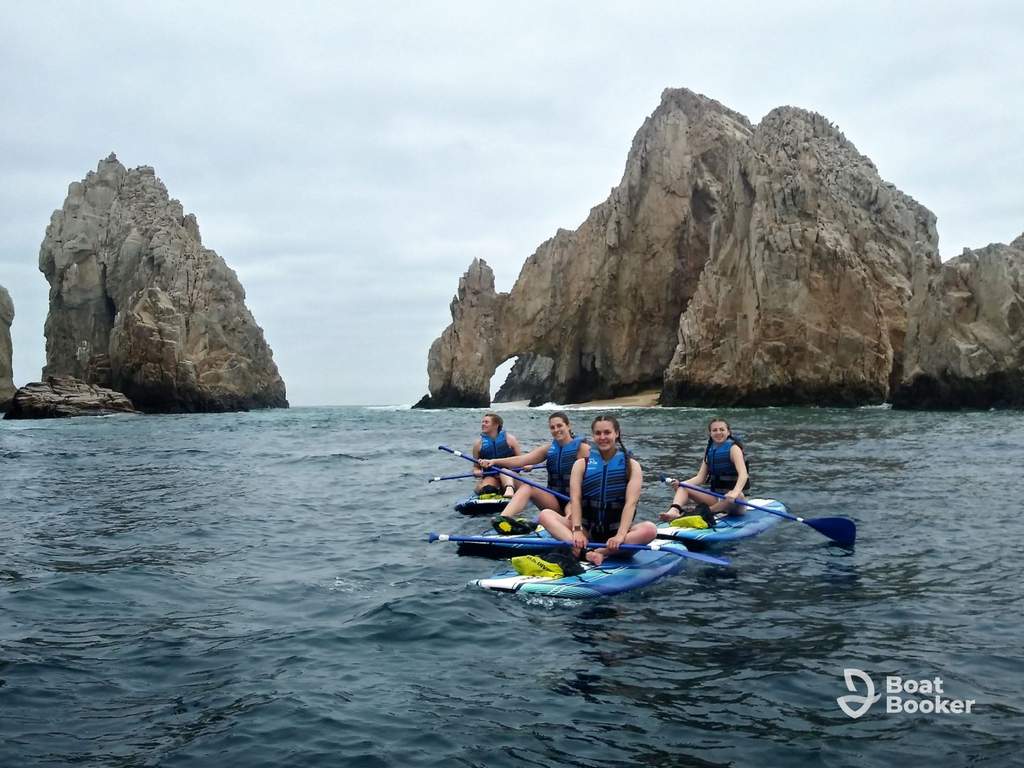
Keep it simple. A swimsuit or quick-dry athletic wear works for warm weather. Also add reef-safe sunscreen, a hat with a chin strap, and sunglasses with a retainer strap – because they will end up in the water otherwise.
In cooler conditions, a rash guard or light wetsuit keeps you comfortable. Water shoes are optional but helpful if you’re launching from a rocky shore. Leave the cotton t-shirt at home – it gets heavy and clingy the moment it’s wet.
How to Stand Up on a Paddleboard
This is the part that makes people nervous. It’s easier than it looks, though. Break it into three stages and take your time with each one.
Getting On the Board
Wade into knee-deep water – deep enough that the fin won’t scrape the bottom. Then place the board flat on the water and position yourself next to the center, near the carry handle. That handle marks the board’s balance point. Grip both sides of the board, press down slightly, and climb on from the side. Start on your knees, centered over the handle.
Standing Up
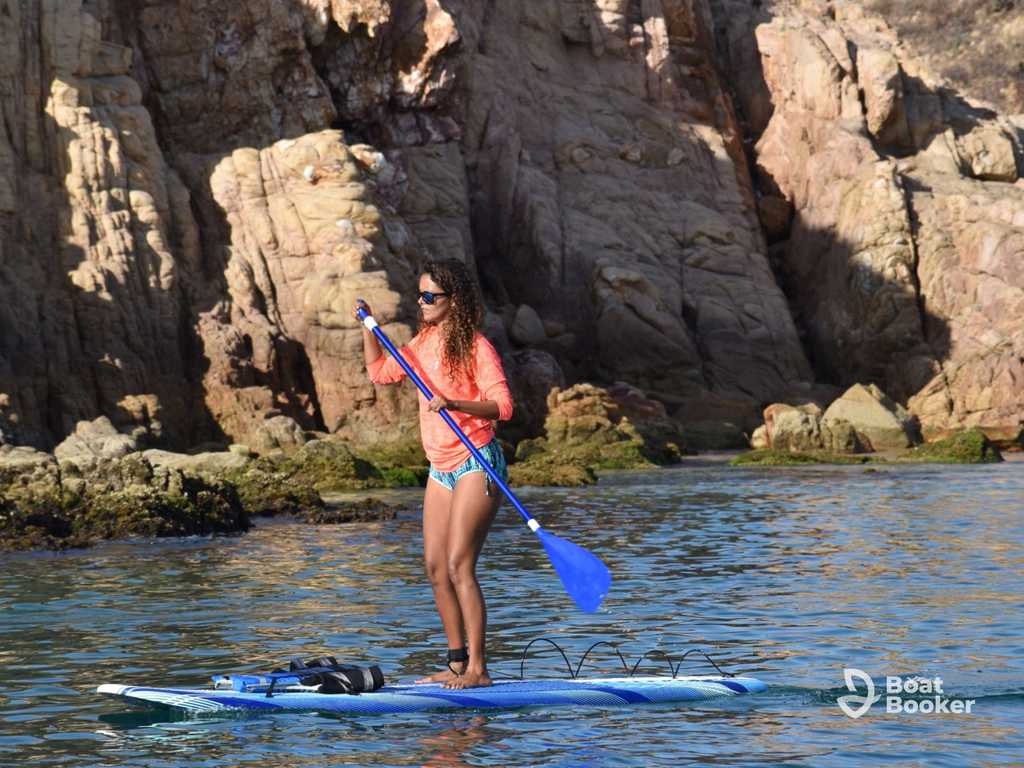
Don’t rush to stand. Paddle a few strokes from your knees first so you get a feel for how the board moves under you. When you’re ready, place your feet flat on the board right where your knees were. Rise into a low squat, eyes on the horizon (not your feet), and slowly straighten up. Keep your knees slightly bent – locked knees are the fastest way to wobble.
Your feet should be roughly shoulder-width apart, straddling the carry handle. Think “athletic stance,” like you’re about to catch a ball.
How to Hold the Paddle
This is the most common beginner mistake. The blade should angle forward, away from you – it looks “wrong,” but it’s correct. The curve of the blade scoops water more efficiently this way.
Your top hand grips the T-handle. Your lower hand grips the shaft about shoulder-width down. When you paddle on the right side, your left hand is on top (and vice versa). Switch your hand positions every time you switch sides.
Basic Paddling Techniques
Forward Stroke
Reach the paddle forward and plant the blade fully in the water near the nose of the board. Then pull it straight back alongside the board to about your feet. Don’t pull past your feet – that actually slows you down. Lift the blade out cleanly and repeat.
Switch sides every three to four strokes to keep yourself going straight. You’ll develop a rhythm quickly.
Turning
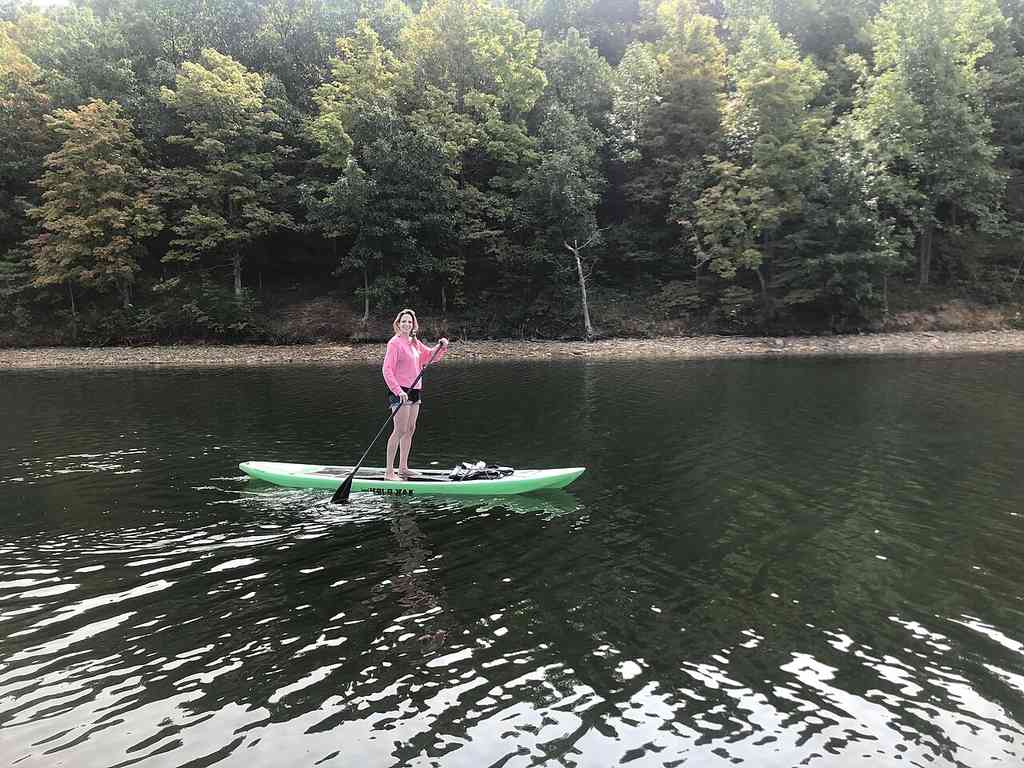
For a gradual turn, use a sweep stroke. Reach forward and sweep the paddle in a wide arc from the nose all the way back to the tail. The board will turn away from your paddle side. For a sharper turn, do a reverse stroke on one side – plant the paddle near the tail and push forward.
Stopping
Drag the flat of the blade alongside the board like a brake. For a quicker stop, take one or two reverse strokes. You’ll come to a halt faster than you’d expect.
Falling and Getting Back On
You will fall. Everyone does. The key is to fall away from the board, into the water – not onto the board itself. A belly flop into the water is harmless, while landing on a hard board can leave bruises.
To get back on, swim to the center of the board and grab the carry handle with one hand. Let your legs float to the surface behind you, then kick and pull yourself up onto the board on your belly. Once you’re on, swing back to a kneeling position and you’re good to go.
Is Paddleboarding Good Exercise?
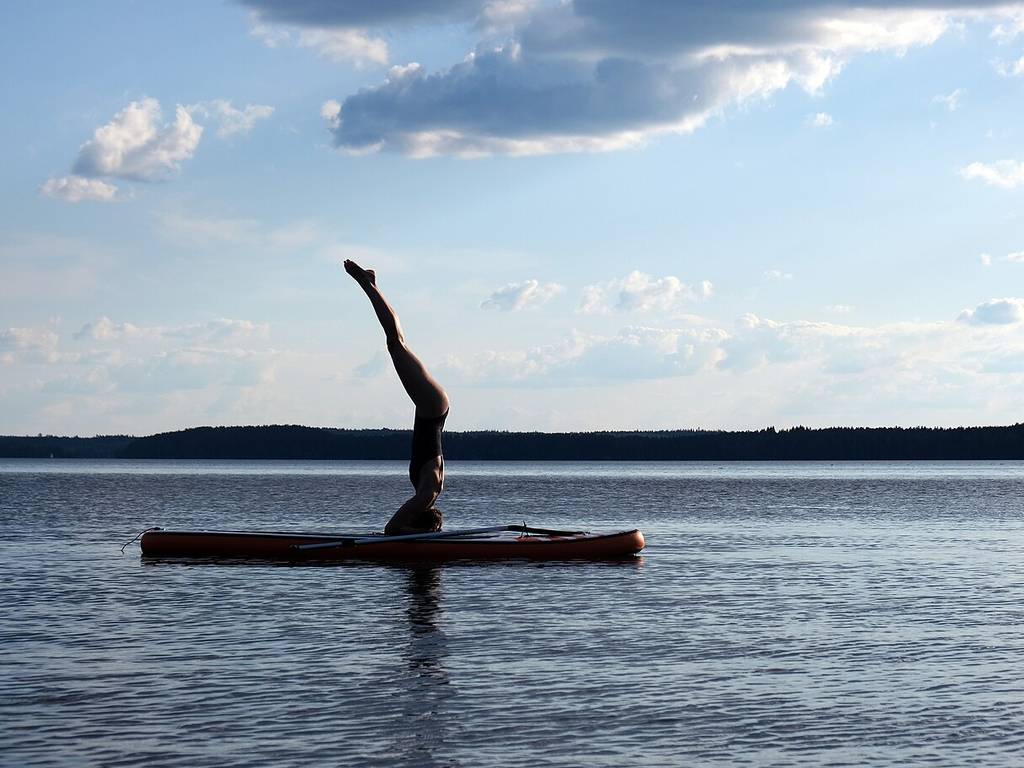
Yes – and it doesn’t feel like a workout until afterward. Leisurely paddleboarding burns roughly 300–430 calories per hour. That’s more than walking and comparable to casual cycling. Pick up the pace or paddle into a headwind, and that number climbs fast. Racing-pace SUP can burn upward of 700–1,000 calories per hour.
It’s a full-body workout disguised as fun. Your legs and core do constant micro-adjustments to keep you balanced. Your arms, shoulders, and back power each stroke. And your core engages more than you’d think – it’s the engine behind every paddle movement.
The best part for many people is that it’s low-impact. There’s no pounding on joints and no jarring landings. If you have knee or hip issues that make running uncomfortable, paddleboarding is worth a try.
There’s also a mental health angle. Something about being on the water, moving at your own pace, quiets the noise. Some people call it “moving meditation.” SUP yoga takes that idea further, combining yoga poses with the instability of the board for a serious core challenge.
Safety Tips for First-Time Paddleboarders
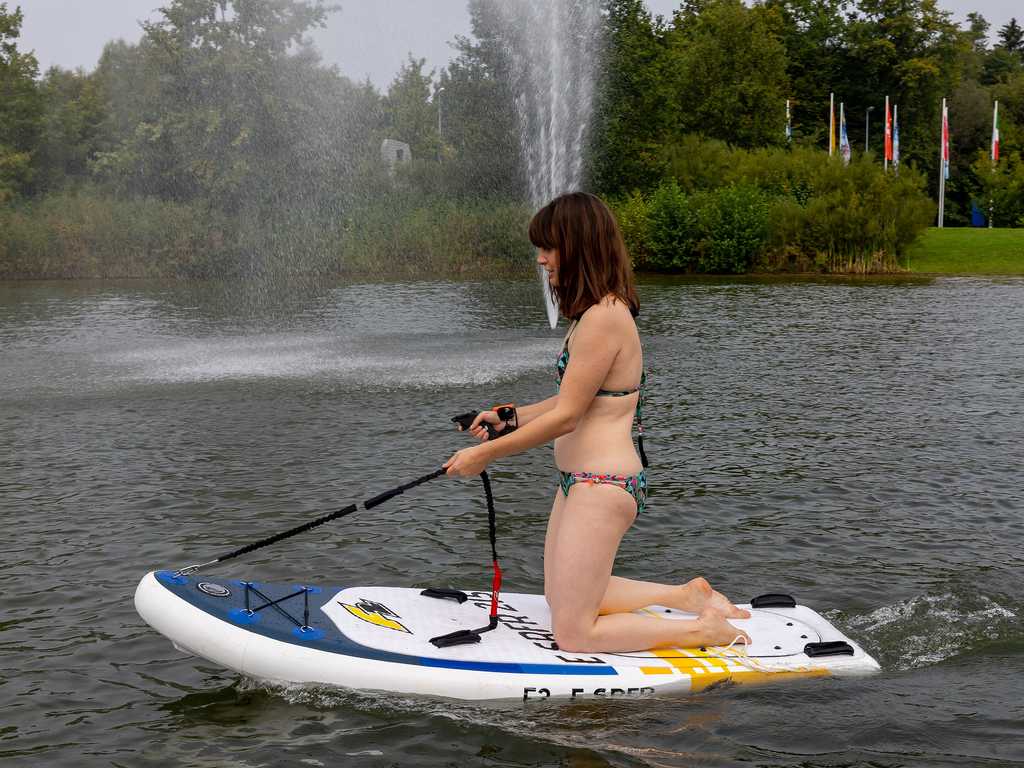
Paddleboarding is a low-risk activity, but a few precautions make a big difference – especially on your first outing.
- Wear your PFD. It’s legally required for SUP in many U.S. states and a good idea everywhere. A slim inflatable belt-pack PFD won’t restrict your movement.
- Always use the leash. Your board is your biggest flotation device. Without a leash, it can blow away from you in seconds. For more on staying safe on the water, check out our boating safety tips.
- Check wind and weather before you go. This matters more than most beginners realize. Light wind (under 10 mph) is fine, but anything over 15 mph makes it tough. Check a forecast from NOAA before heading out.
- Understand wind direction. Paddle into the wind on the way out so you have the wind at your back when you’re tired and heading home. Offshore wind – blowing from shore out to sea – is the most dangerous for beginners because it can push you out faster than you can paddle back.
- Stay close to shore. On your first few sessions, there’s no reason to be more than a couple hundred yards from the beach. You’re still learning, so stay where you can stand up if you need to.
- Go with a guide or a friend. A guided tour takes the guesswork out of everything – conditions, equipment, route, and safety. If you’re renting solo, at least go with a buddy.
Best Places to Try Paddleboarding
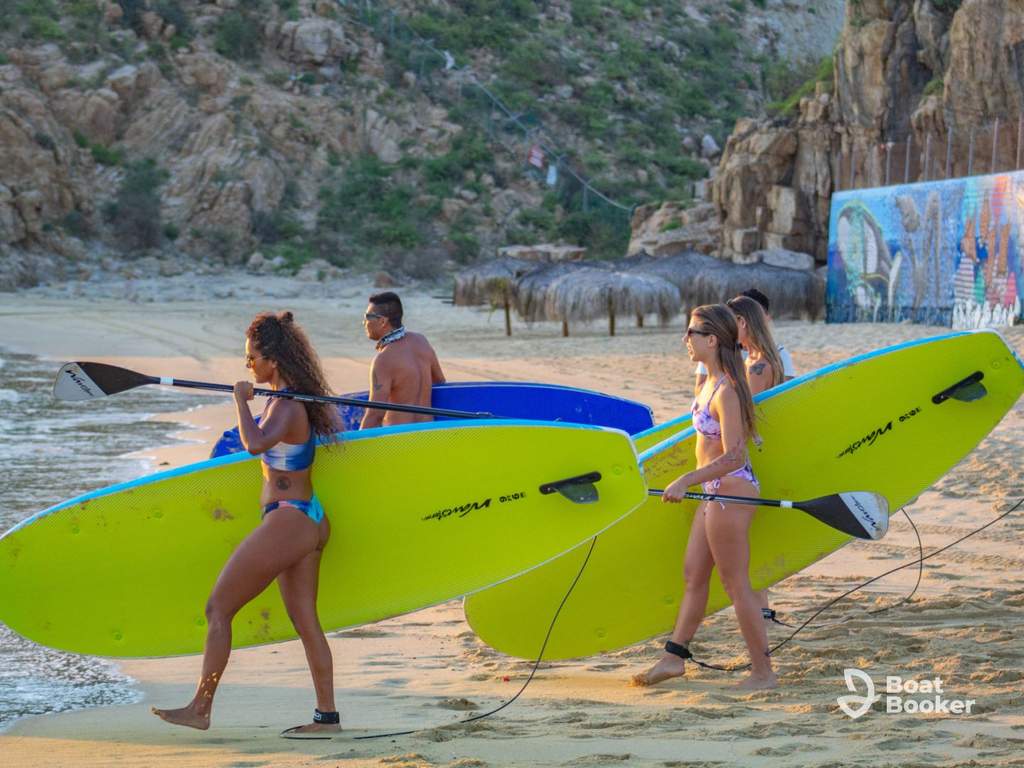
Paddleboarding works almost anywhere there’s calm water, but some spots are especially beginner-friendly. Here are six destinations where you can book a paddleboard tour or rental on BoatBooker.
- Miami, FL – Biscayne Bay offers flat, protected water with views of the downtown skyline. Many tours paddle through mangrove trails where you’ll spot manatees, stingrays, and tropical fish in water clear enough to see the bottom.
- Key West, FL – Warm, shallow water and year-round sunshine make Key West one of the easiest places to learn. Guided tours often combine paddleboarding with snorkeling stops along the reef.
- Nassau, Bahamas – The water here is so clear you can see the sand ripples beneath your board. Nassau’s sheltered bays and gentle currents are ideal for first-timers who want a tropical backdrop.
- San Juan, Puerto Rico – Condado Lagoon is the go-to spot: calm, warm, and surrounded by the city. Some tours paddle through bioluminescent bays at night – an experience that’s hard to find anywhere else.
- Honolulu, HI – Waikiki Beach is where modern paddleboarding got its start. The water is warm year-round, and the reef-protected areas near shore stay flat even when there’s surf further out.
- Key Largo, FL – Sitting at the top of the Florida Keys, Key Largo offers paddleboarding through mangrove channels and over shallow seagrass flats. It’s one of the best spots in the U.S. for combining SUP with wildlife viewing.
Paddleboarding vs. Kayaking: Which Should You Try?
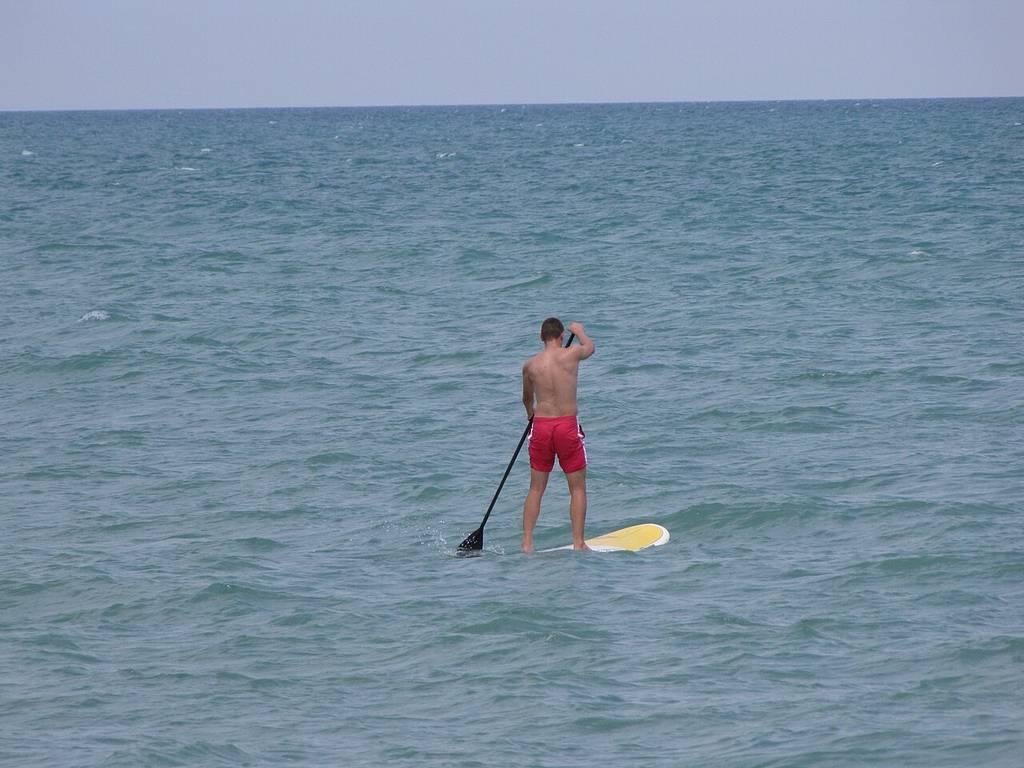
This is one of the most common questions from people planning a day on the water. Both are great, so the best choice depends on what you’re after.
Choose paddleboarding if you want a better workout, prefer standing with a 360-degree view, or you’re drawn to the versatility – SUP can lead to yoga, touring, even surfing. It’s also easier to hop on and off for swimming.
Choose kayaking if you want more stability from the start, you’re dealing with wind or choppy conditions, or you’re planning a longer-distance paddle where sitting is more comfortable. Kayaking also keeps you drier, which matters in cooler weather.
There’s no wrong answer, and many people try both. If you’re curious about kayaking, our guides on what a kayak is and how to kayak cover everything you’d want to know. You might also find our canoe vs. kayak comparison helpful if you’re weighing all your options.
Frequently Asked Questions about Paddleboarding
Have you tried paddleboarding? Whether it was a guided mangrove tour, a solo rental on a quiet lake, or a wobbly first attempt that ended in a spectacular splash – we’d love to hear how it went. Drop your tips, favorite spots, or questions in the comments. And if anything in this guide seems off or outdated, let me know so we can keep it accurate.



.jpg)